Hair extensions, like our own hair, rely on external nourishment once they leave the donor’s scalp. Using the best oil for hair extensions is the single most effective way to keep them soft, glossy, and tangle-free between washes.
The good oil for hair extensions is a lightweight, fast-absorbing oil applied only to the mid-lengths and ends. It replaces the natural scalp oils extensions never receive, protecting them from dryness, breakage, and premature dulling. This guide covers the best oil for hair extensions, how often to use them, and which formulas to avoid on 100% human hair.
The Reasons Why Hair Extensions Need Oil
Natural hair receives sebum, a waxy oil produced by the scalp, every single day. Hair extensions are cut off from this supply the moment they leave the donor’s head. Without sebum, the cuticle layer dries out, roughens, and starts tangling within weeks of installation.
Applying the best hair oil for extensions is not optional maintenance. It is the substitute for a nutrient source the hair physically no longer has access to. Only 100% human hair extensions can absorb oil in a meaningful way, because the cuticle structure is intact and porous.
Best Oil for Hair Extensions (5 Options)
What is the best hair oil for extensions? Here are some recommended oils for human hair extensions. Each oil works differently on the hair.
| Oil | Best Use | Suitable Textures | Avoid or Caution |
| Argan oil | Small amount on mid-lengths and ends; suitable for most methods | Straight, wavy, curly | Do not apply near tape, keratin bonds, beads, or weft stitching |
| Coconut oil | Occasional pre-shampoo treatment on removable hair or loose wefts | Thick, coarse, very dry hair | Avoid daily use on fine hair; avoid near tape or keratin because it can contribute to slippage |
| Jojoba oil | Lightweight finishing oil on lengths and ends | Fine through coarse; straight, wavy, curly, or coily | “Safe for all” only means safe when kept away from attachments |
| Almond oil | A small amount on dry ends | Fine to medium hair | Do not apply to tape tabs, bonds, beads, or the scalp if your hair gets oily easily |
| Rosemary oil | Scalp oil only when properly diluted, or a very small amount on removable hair | Not determined by texture | Do not use undiluted. Keep away from tape, keratin, micro-links, I-tips, or other bonded attachments |
Best Argan Oil for Hair Extensions
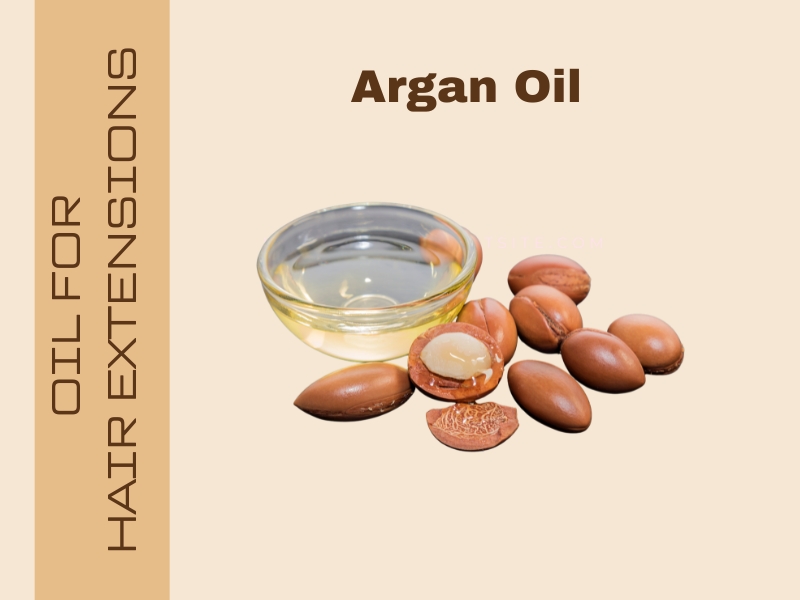
Argan oil is pressed from the kernel of the argan tree, native to southwestern Morocco. Its viscosity is lighter than most plant oils, so it penetrates the hair shaft. This makes argan oil the most versatile pick across textures, including bone straight, wavy, and loosely curled extensions.
Apply a few drops to damp or dry ends before bed, comb through evenly, and let it absorb overnight.
Coconut Oil Treatment for Hair Extensions
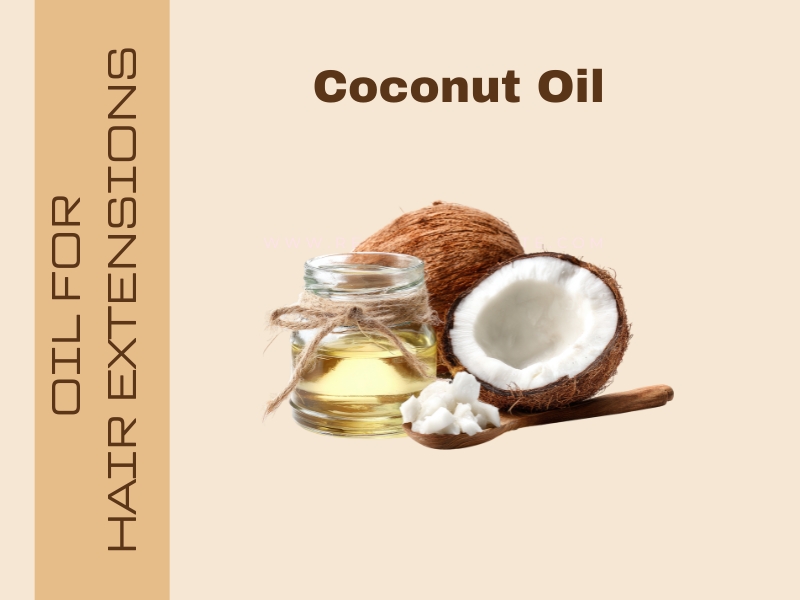
Can you put coconut oil in your extensions? Coconut oil contains lauric acid and vitamin E, two compounds that help rebuild the outer hair structure. Because it is a heavier oil, the best use case is a pre-wash treatment rather than a daily leave-in.
Apply coconut oil to the ends 15 to 20 minutes before shampooing to buffer the hair shaft from stripping surfactants. Keep it away from the wefts and attachment area, since a heavy oil left too close to the bonds can encourage slippage.
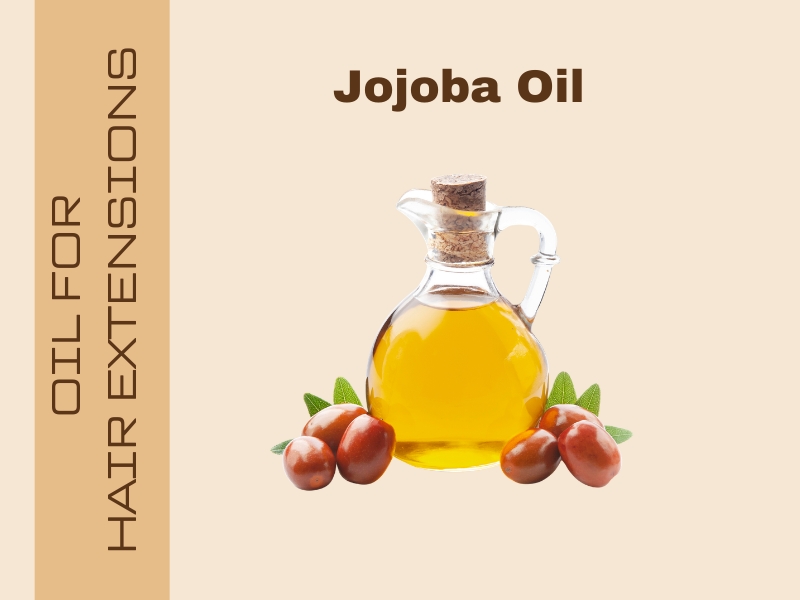
Jojoba Oil
Jojoba oil is similar to natural human sebum, so hair accepts it easily. It does not penetrate the hair shaft deeply. Instead, it works as a lightweight sealant. Jojoba oil forms a thin barrier that helps lock in moisture and smooths the cuticle. It is a good choice for curly and coily extensions because it controls frizz without making hair heavy.
Almond Oil
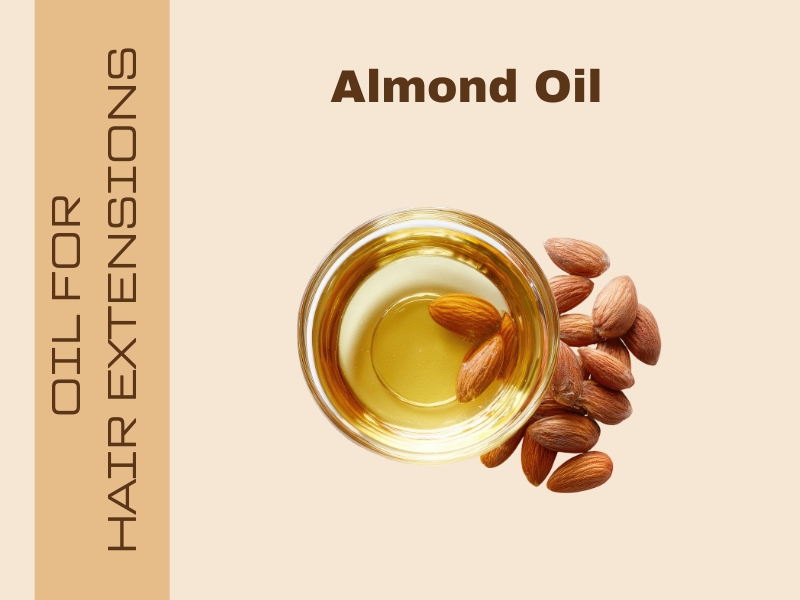
Almond oil contains vitamin E and fatty acids that help smooth the cuticle. Use almond oil on human hair extensions, including tape-ins, but only apply it to the mid-lengths and ends. Massage a small amount into the ends after styling or on damp hair. Do not apply almond oil to the scalp or near tape tabs or bonds to prevent slippage.
Rosemary Oil for Hair Extensions
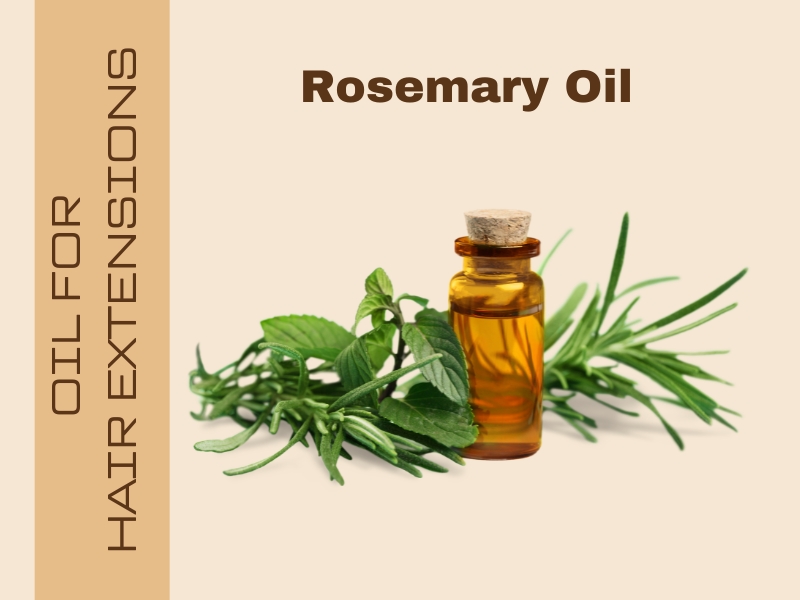
Rosemary oil is safe to use on natural hair and scalp if you have temporary, non-adhesive clip-in extensions. Do not use rosemary oil near the attachment points of tape-in, keratin bond, or glued wefts. There is not enough evidence that rosemary oil promotes hair growth. Use it mainly for shine and softness on natural hair. Do not rely on it as a main treatment for hair growth.
Hair Oils to Avoid on Extensions
Mineral oil, castor oil, and olive oil are the three most common mistakes buyers report back.
- Mineral oil sits on top of the hair shaft and builds into a heavy, greasy film that makes extensions look limp within days.
- Castor oil is thick and sticky, so it weighs down wefts and attracts dust and lint that dulls the natural shine.
- Olive oil behaves the same way, leaving a coating that traps debris instead of nourishing the strand.
None of these oils are unsafe for scalp use, but all three are too heavy for detached extension fibers that already lack scalp drainage.
Read more: How to Wash Tape-In Hair Extensions at Home
How Much Oil to Use – and How Often
Use a lightweight oil on the mid-lengths and ends of your extensions 1 to 3 times per week. Adjust how much and how often you apply oil based on the texture, length, dryness, and how often you wash your extensions.
Fine extensions usually need just 1 or 2 drops. Thick or very long extensions may need more, but add oil slowly and only as needed. Do not apply oil to the roots, wefts, tapes, beads, or bonds.
“Should I oil my extensions every day?” Most extensions do not need oil every day. Daily oiling can cause grease or buildup. If your hair is very dry or bleached, you can use a small amount of oil more often if needed.
How to Safely Apply Oil on Hair Extensions
Follow this guide:
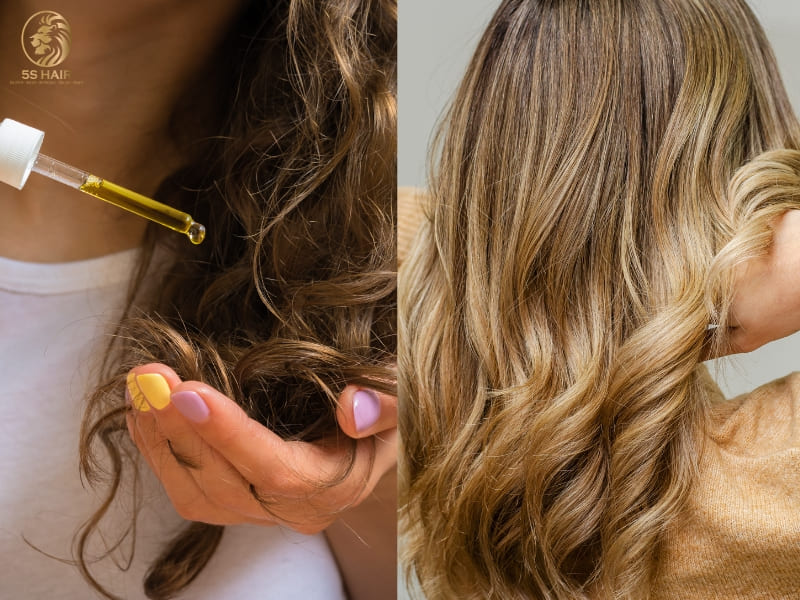
- Use a very small amount of oil.
- Warm it between your palms, then apply from the ends up through the mid-lengths.
- Do not let oil touch tape tabs, keratin bonds, micro-rings, or other attachment points. Keep at least 2 inches away from these areas. For tape-ins, a larger gap is safer.
- If your hair is very dry, apply a small pre-shampoo treatment to the mid-lengths and ends, then rinse thoroughly.
- After a new tape-in or bond installation, do not use oil, wash, get the area wet, sweat heavily, or use products near the attachments for the first 48 hours.
- Follow the manufacturer’s or your stylist’s instructions if they are different.
When cuticles are aligned, they absorb oil evenly and help prevent tangling. If cuticles are misaligned or over-processed, oil does not absorb evenly, and the hair can become matted within days, regardless of the product used. Buy high-quality hair extensions.
Final Thoughts
Try to choose a hair oil based on your extension type, texture, and how you plan to use it. If you are using tape-in, keratin-bonded, or glued extensions, always keep oil away from the attachment areas.
→ For a complete maintenance routine, check out: hair extension care and maintenance guide
Frequently Asked Questions
What is the best oil for tape-in hair extensions?
Argan or almond oil work best on tape-ins, applied only from the mid-lengths down, at least 2 inches away from the tape tabs.
What is the best oil for human hair wigs?
For human hair wigs, lightweight oils are best for regular use. Argan oil and jojoba oil are good choices. You can also use sweet almond oil, grapeseed oil, or hemp seed oil.
Can you use hair oil on synthetic hair extensions?
Most hair oils should not be used on synthetic wigs. Synthetic fibers do not have a cuticle structure like real human hair, so they cannot absorb oil. Instead, the oil sits on the surface, making the wig greasy and sticky while causing product buildup.
Does oiling make hair extensions last longer?
Yes. Regular, correctly placed oiling reduces split ends and tangling, which are the two main reasons extensions need early replacement.

Pingback: How to Wash Tape-In Hair Extensions at Home
Pingback: How Long Do Weft Hair Extensions Last with Proper Care?
Pingback: Keratin Hair Extensions Pros and Cons: Are They Worth It?