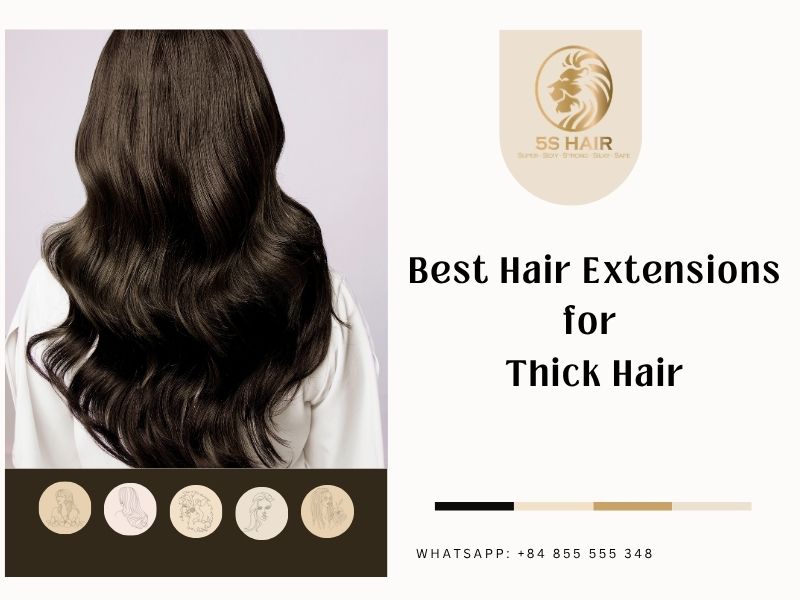
Hair extensions are created by attaching human or synthetic hair to a base, such as a weft, tape, bond, or clip. The way the extension is made affects how much hair it holds, how flat it sits, and how well it blends with your own hair.
Many types of hair extensions work well for thick hair. People with thick hair often use extensions to add length, volume, or both. Here are the best hair extensions for thick hair.
The 8 Best Hair Extensions for Thick Hair in 2026
Maybe you want longer hair, or you’re trying to blend those thick, blunt ends, or you just want a little more volume without anyone noticing you have extensions at all. Not every method works for every goal. Some extensions are perfect for adding a little length but won’t give you that full, thick look. Others can feel heavy if you’re not used to all that extra hair.
The good news is there are so many different types of extensions out there, and you can definitely find something that works for your hair and your goals. These are our top 2026 picks for the best hair extensions for thick hair.
Genius Wefts
If you have thick or coarse hair and want to add length and volume, Genius Weft hair extensions could be a great pick.
Made from human hair, these offer the durability of machine-made wefts with the lightweight, low-profile feel of hand-tied ones. The ultra-thin spine sits close to your scalp, and the clean edge means less bulk and more comfort.
Because each weft is so dense, you can get lots of length and volume with fewer rows, which is perfect if your hair is already thick. You can even stack a few wefts together without worrying about your hair feeling bulky.
Their semi-permanent installation is designed for wear over weeks to months, and proper care will help keep your hair looking its best.
Hand-Tied Weft Hair Extensions
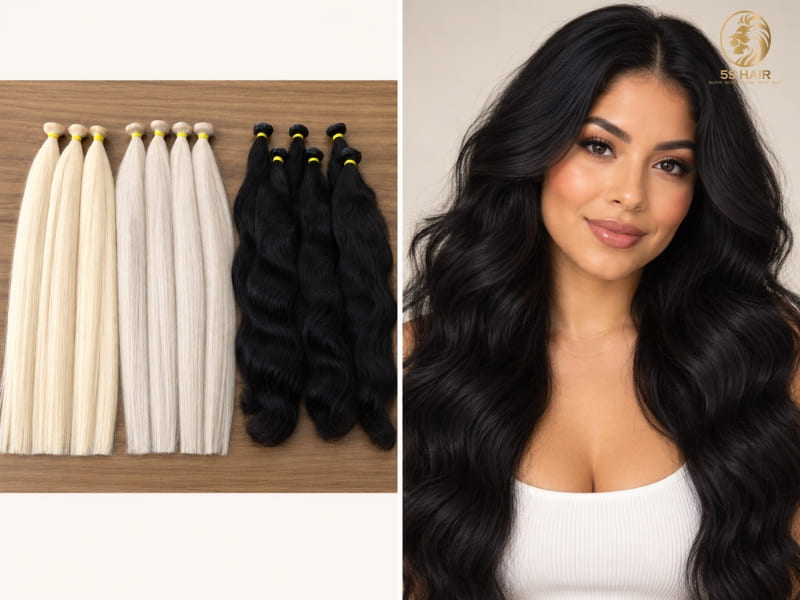
Hand-tied wefts can work well for thick hair when the goal is lightweight, natural-looking layering. Their very thin, flexible tracks lie close to the scalp.
The main consideration for thick hair is density. Hand-tied wefts are thinner and give less volume per track than denser machine or Genius wefts. You may need more packs and a longer installation to get the thickness you want. A stylist can place wefts to spread out the weight and add fullness where needed.
Machine-Tied Weft Hair Extensions
Machine-tied wefts for thick hair provide high density and significant volume with fewer tracks. Their machine-sewn seam is thicker and more rigid than hand-tied or Genius wefts, but this construction makes them sturdy enough to support heavier hair loads. To install, your stylist typically sews the weft onto braids or a beaded base, giving the heavier track the support it needs.
The only thing to watch out for is bulk. The thicker seam can sometimes show if your natural hair isn’t dense enough to hide it, but that’s rarely a problem if you already have thick hair. Just make sure your stylist creates a solid base and installs the wefts with care.
Injection Tape-In Hair Extensions
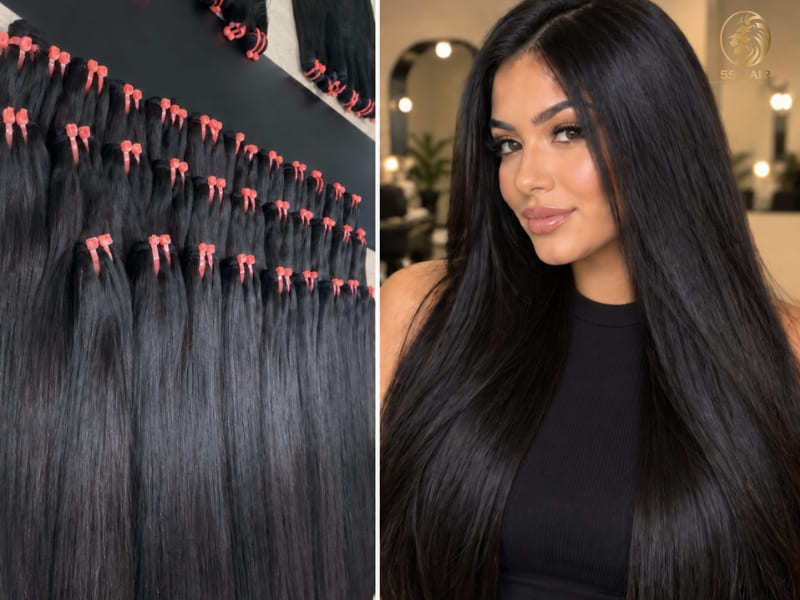
Injection tape-ins can work well for thick hair when the priority is a seamless, natural-looking result rather than maximum fullness. With injection technology, each hair strand is placed into the PU weft, making a thin base and reducing short hairs at the top. This helps the roots look more like a real scalp.
Injection tape-ins work best for thick hair if you want extensions that are hard to see, add length, and add extra thickness. The thin base blends well and is good for updos and high ponytails.
Flat Tip Hair Extensions
If you have thick or normal-density hair and want a natural look, flat tip hair extensions could be a great option. Since they’re installed strand by strand, you can get just the right amount of volume where you want it, and your hair will still move naturally. Plus, you can style your hair any way you like, such as updos.
Flat tips are best suited to healthy, strong, medium-to-thick hair that is straight, wavy, or lightly curly and easy to blend. They may not be ideal for extremely thick or coarse hair. If your hair is very thick or coarse, you might find that U-tips, thicker keratin bonds, or hand-tied or machine wefts give you more hold and volume.
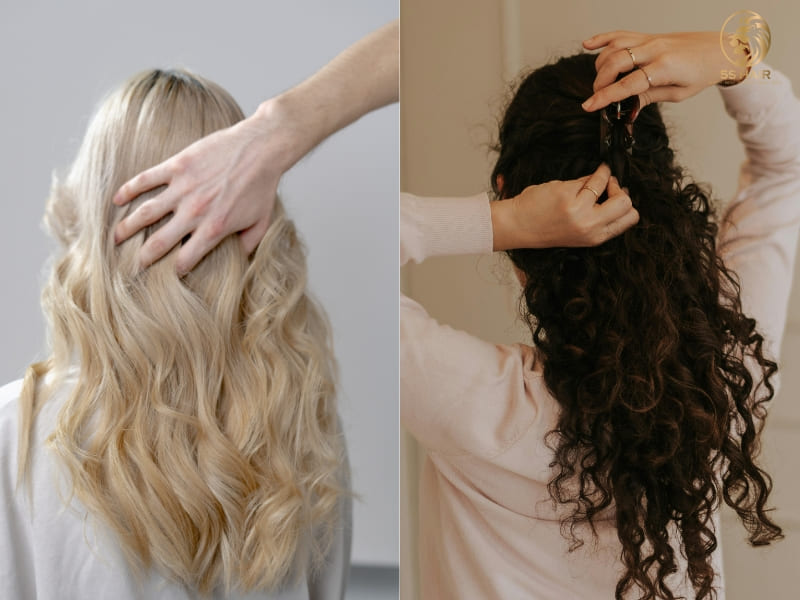
Keratin Fusion Hair Extensions
Keratin fusion hair extensions are well suited to thick, strong, or coarse hair. The individual keratin bonds provide a secure attachment and are easily concealed by dense natural hair. Stylists can strategically place strands around the head and mix different shades to create customized fullness and a multidimensional, natural-looking result.
Keratin fusion requires professional installation and removal, with heat used for hot-fusion application. If your hair is thick, it also needs to be healthy and strong for this method to work well. If your hair is super bleached, fragile, or breaking, this probably isn’t the best fit.
Just a heads up, you can’t reuse the hair after you take it out because the keratin bond gets used up.
Read more: Keratin Hair Extensions Pros and Cons
Double-Drawn Clip-In Hair Extensions
Double-Drawn Clip-In Hair Extensions are a good choice for thick hair. They keep a full, even look from top to bottom. Most of the hair strands are the same length. This gives the ends a fuller look that matches thick hair.
The extensions are sewn onto wefts with small clips, so you can install and remove them without glue, heat, beads, or permanent bonding. They add length and volume, and if they are made from quality human hair, you can curl or straighten them. With the right care, they are reusable.
They also work best with thick, full hairstyles because their dense ends can create a visible “shelf” when blended with heavily layered hair or a blunt bob.
Remy Clip-In Hair Extensions
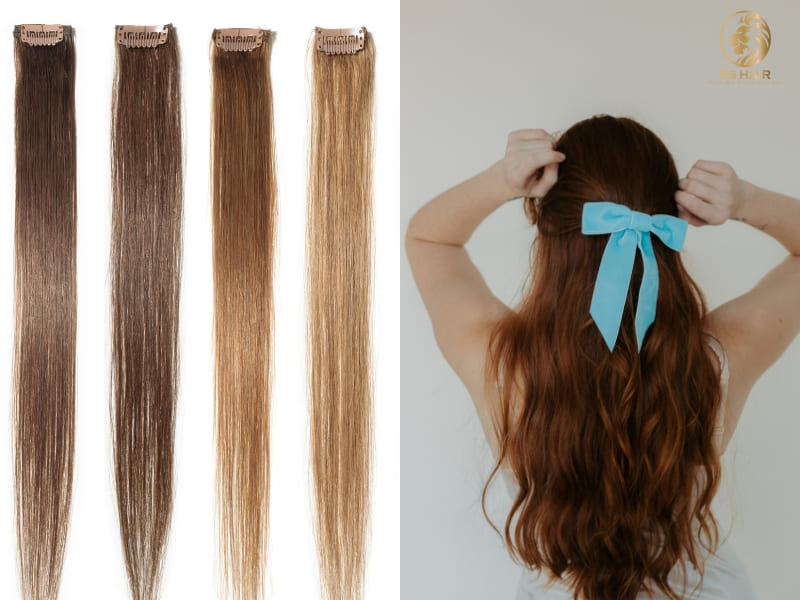
Remy hair has intact, aligned cuticles, which makes the hair smooth, shiny, and less likely to tangle. The hair is sewn into wefts with snap clips. You can put them in or take them out quickly without glue, tape, sewing, or permanent bonds. Different-width wefts can cover the back, sides, and upper layers, adding instant length and volume.
When choosing Remy clip-ins for thick hair, prioritize high grammage, sufficient weft coverage, and suitable construction. Remy clip-ins are reusable with proper care and offer a temporary, less time-consuming alternative to many permanent methods.
| Extension Type | Installation | Wear Type | Main Advantage | Main Consideration |
| Genius Weft | Sew-in, beads, or micro-beads | Semi-permanent | High density with an ultra-thin, customizable track | May need more packs/stacking for very dense hair |
| Hand-Tied Weft | Sew-in/stacked | Semi-permanent | Lightweight, natural layering | Requires more wefts and cannot be cut |
| Machine-Tied Weft | Sew-in or beaded foundation | Semi-permanent | Maximum volume with fewer tracks | Thicker, heavier seam can create bulk |
| Injection Tape-In | Tape-in | Semi-permanent | Extremely seamless, natural-looking root | Thick hair may need more tapes for full coverage |
| Flat Tip | Heat fusion or micro-beads | Semi-permanent | Flat, discreet bonds with natural movement | Less suitable for extremely thick/coarse hair |
| Keratin Fusion | Strand-by-strand, heat fusion | Semi-permanent | Secure hold and natural strand-by-strand blend | 4–6 hour installation; not reusable after removal |
| Double-Drawn Clip-In | Clip-in | Temporary | Full, thick ends that match dense hair | Heavier; may pull or create a visible “shelf” |
| Remy Clip-In | Clip-in | Temporary | Quick, reusable length and volume | Needs enough grams and weft coverage |
What Can Damage Your Hair When Wearing Extensions?
Hair extensions on their own won’t ruin your healthy hair, but there are a few things you should know before getting them.
- If you put too much hair in with too few attachment points, you can end up with a sore scalp. Even if you have thick hair, it doesn’t mean you can pile on as much as you want. Your stylist should spread out the weight of the extensions so your natural hair isn’t doing all the heavy lifting.
- If your hair is really thick or oily, some types of extensions can slip out more easily, especially if they aren’t put in just right. This can pull on your natural hair and make things uncomfortable. That’s why it’s so important to pick the right method for your hair type and make sure your stylist sections and installs everything properly.
- It’s not just about how your extensions go in – removing them the right way matters just as much. Always have them removed with the right technique for your extension type. Never let anyone yank, cut, or force them out, or you’ll risk damaging your real hair.
Read more: Best Toner for Brown Hair: Top 5 Picks
How to Choose Human Hair Options
If you’re shopping for human hair extensions, it can feel a little overwhelming with all the options out there. Here’s what you should note: Remy hair is very popular because it looks and feels natural, so it’s a great everyday choice. Virgin hair sits at a higher quality tier and is also a favorite choice since it hasn’t been processed at all. Usually, the better the hair quality, the more it’s going to cost. But honestly, you don’t always need the fanciest option.
Takeaway
If there is one thing that connects all the best hair extensions for thick hair, it’s that you have to match them to your natural hair. It’s actually pretty simple when you break it down:
- Choose an extension with enough density to blend with your natural thickness;
- Think about the weight, attachment method, and installation requirements before committing;
- Match the extension’s texture, length, and overall fullness to your natural hair and desired look.
If you check off these things, you’ll end up with extensions that give you the length or volume you want and still look and feel totally natural and comfortable.
Frequently Asked Questions
Can your hair be too thick for extensions?
Choose extensions that match the thickness of your natural hair. Make sure they are distributed properly for the best result.
Are sew-in extensions good for thick hair?
Sew-in or weft extensions are often a good choice for thick hair. They can distribute the added weight across a larger area, providing a secure hold and allowing the extensions to blend naturally into dense hair.
How many grams of hair extensions do you need for thick hair?
For thick hair, plan to use 180 to 250 grams of hair extensions for a full, natural look. If you want much longer or extra voluminous hair, you may need 200 to 300 grams or more. For example, clip-ins and wefts may require a different amount of hair than tape-ins. Longer extensions also tend to need more weight to maintain fullness through the ends.
How do I stop extensions from looking thin at the ends?
Hair extensions can look thin at the ends when the hair naturally tapers, the extensions have lost density over time, or they are not blended properly with your natural hair. Double-drawn hair is a good option if you want a fuller appearance from top to bottom.
Which extensions are healthiest for your hair?
The healthiest hair extensions are generally those that minimize tension, do not use too much heat or glue, and match your natural hair’s density. For a temporary option, halo and clip-in extensions are gentle because you can remove them easily and don’t need to wear them for long.

Pingback: Auburn vs Ginger Hair: What Is The Difference?
Pingback: 26 Inch Hair Length: How Long and How to Take Care of It
Pingback: Keratin Hair Extensions Pros and Cons: Are They Worth It?