Does your synthetic wig look too shiny?
This step-by-step guide will show you how to make a wig less shiny using safe, beginner-friendly methods that help it look more natural. Follow the methods below to find the best solution for your wig.
Why are Synthetic Wigs So Shiny?
Synthetic wigs often appear much shinier than real hair.
- The main reason for that shine is the material. Synthetic wigs are made from plastic-based fibers such as Kanekalon, polyester, acrylic, or nylon. These fibers are smooth and uniform, so they reflect light directly.
- Synthetic fibers do not have a natural cuticle layer like human hair. Without this layer, light does not scatter and instead reflects off the surface, creating a shiny, plastic appearance.
- New synthetic wigs are often coated with silicones or oils to keep them smooth and tangle-free. This coating protects the wig but also adds a shiny film. After a few washes, the shine usually decreases.
- Human hair strands vary in thickness and texture, causing light to reflect in different directions. Synthetic hair strands are uniform and smooth, so the entire wig can appear very shiny, especially under bright lights.
- Using too much hairspray, wig spray, dry shampoo, or silicone serum can also build up on synthetic hair and make it look even shinier.
- Lighting makes a big difference too. Direct sunlight, camera flashes, or bright indoor lights can make synthetic wigs look even shinier.
What about human-hair wigs?
Human hair wigs can also appear shiny, but the shine is softer and more natural. Healthy hair has some luster because the cuticles are aligned, but it does not reflect light as evenly as synthetic hair. This gives a more realistic appearance.
(If a human-hair wig becomes too glossy, the cause is often silicone-based products, conditioners, oils, or styling-product buildup. Cleaning away residue usually restores a more natural finish.)
How to Make a Wig Less Shiny: 8 Simple Ways for a Natural Appearance
You can use a few simple methods to reduce shine and help your wig look more natural.
#1. Spray on Some Dry Shampoo
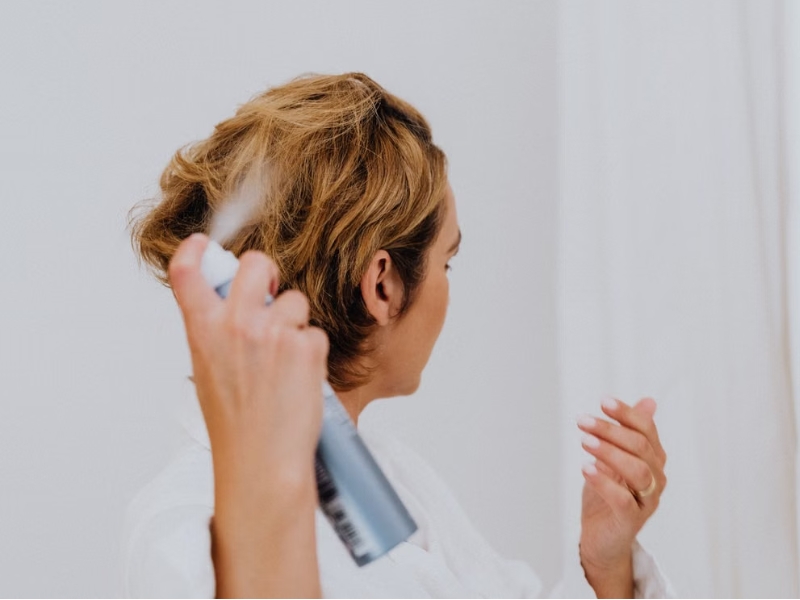
Dry shampoo quickly reduces artificial shine on synthetic wigs. It absorbs surface oils and leaves a matte finish, which helps the wig look more natural.
- Place the wig on a stand or mannequin head. Use your fingers to separate the hair into layers so you can reach the inner fibers, not just the surface.
- Shake the can thoroughly before use. Hold the can 8 to 12 inches from the wig and spray in short, light bursts. Focus on shiny areas like the mid-lengths and ends. Use only a small amount near the crown, part line, and hairline to avoid buildup. Dry shampoo absorbs oil. Apply several light layers instead of one heavy layer.
- Let the dry shampoo sit for 1 to 2 minutes. This allows the powder to absorb surface residue or factory coating that causes shine. Avoid brushing immediately after spraying, as this can spread the product unevenly.
- After the powder settles, gently brush the wig with a soft wig brush or wide-tooth comb. For curly or wavy wigs, do not brush. Use your fingers to separate and reshape the curls to prevent frizz.
- If you see any powder left, wipe the fibers with a clean microfiber cloth or gently shake the wig to remove extra residue. If the wig is still shiny, repeat the process with a light application. Note: Do not soak the fibers with dry shampoo.
#2. Apply Translucent Setting Powder or Baby Powder
Use this method as a temporary touch-up for synthetic wigs. How to make a wig look less shiny with baby powder:
- Set the wig on a stand in a well-ventilated area. Make sure it is completely dry and free of conditioner or other wet products before applying any powder.
- Dip just the tips of a clean makeup brush into the powder and tap off the extra. For pressed powder, lightly sweep the brush or powder puff across the surface.
- With light strokes, dust a thin layer of powder in the direction of the fibers. Focus on the crown, part line, hairline, or any shiny areas. Do not cover the whole wig. Only treat the areas where the shine stands out.
- Let the powder sit for 30 to 60 seconds. This helps it absorb surface oils and settle onto the fibers. Gently pat or massage the powder into the hair with clean fingertips.
- Use a wide-tooth comb or soft wig brush to gently brush through the fibers from the ends upward.
Do not use face powders that are heavily fragranced, oily, or moisturizing. These can leave residue and cause buildup.
If you have a sensitive scalp and wear the wig for long periods, use powder sparingly. Too much powder can cause irritation.
No matter what powder you use, remember that this does not replace regular cleaning.
#3. Give Your Wig a Gentle Wash
Washing will not remove the natural shine of synthetic fibers, but it helps reduce extra shine from buildup and makes the wig look cleaner and more natural.
- Detangle the wig before washing.
- Fill a clean sink or basin with cool or lukewarm water. Add a small amount of synthetic wig shampoo to the water. Follow the instructions on the shampoo label.
- Soak and clean gently.
- Rinse the wig with cool water until all shampoo is gone. Repeat if needed until the water is clear.
- If recommended, use a small amount of synthetic wig conditioner on the mid-lengths and ends.
- Do not twist or wring the wig. Lay it on a clean microfiber towel, roll it up, and press gently to remove extra water. Place the damp wig on a ventilated stand or mannequin head to air dry.
#4. Use a Cool Hairdryer
This method helps reduce shine by changing how the hair sits.
Only use a hairdryer if the wig manufacturer states it is safe.
- Place the wig on a wig stand or mannequin head to keep it steady while you work.
- Separate the wig into four to six large sections with your fingers. Lift and loosen the fibers at the crown, sides, and nape. These areas often have clumped strands that reflect more light.
- Set the hairdryer to cool air and the lowest airflow setting. Move the dryer constantly and do not focus on one spot. Use a diffuser if you have one to spread the airflow and help prevent static.
- Aim the airflow from the crown down to the ends. Lift each section with your free hand to help separate the fibers without damaging them.
- Do not try to flatten the wig. Focus on making the strands move naturally.
- While drying each section, run your fingers through the hair or shake it gently to help the fibers separate.
- Do not brush the wig hard while drying. This can cause static, frizz, or change the style.
- When the wig is dry, separate the fibers with your fingers or a wide-tooth comb. Start at the ends and work upward if needed.
- Stop right away if you see damage like static, frizz, melting, kinks, or changes in the curl pattern.
#5. Shake the Wig before Wearing It
Gently shake the wig to separate any flattened fibers and restore movement. This can also help reduce shine or an overly smooth appearance.
How to do it:
- Hold the wig by the cap. Grip the inside of the cap near the ear tabs, nape, or crown. Do not hold the wig by the hair or lace.
- Shake the wig upside down. Turn the wig over and give it 2 to 3 gentle downward shakes. This helps loosen compressed fibers and removes extra powder.
- Flip the wig upright. Hold the crown and give 1 or 2 light side-to-side shakes. This helps the layers fall into place.
- Fluff the wig with your fingers. Lift the roots and gently separate the strands. Keep the hairline and part neat.
#6. Style the Wig with Waves or Curls
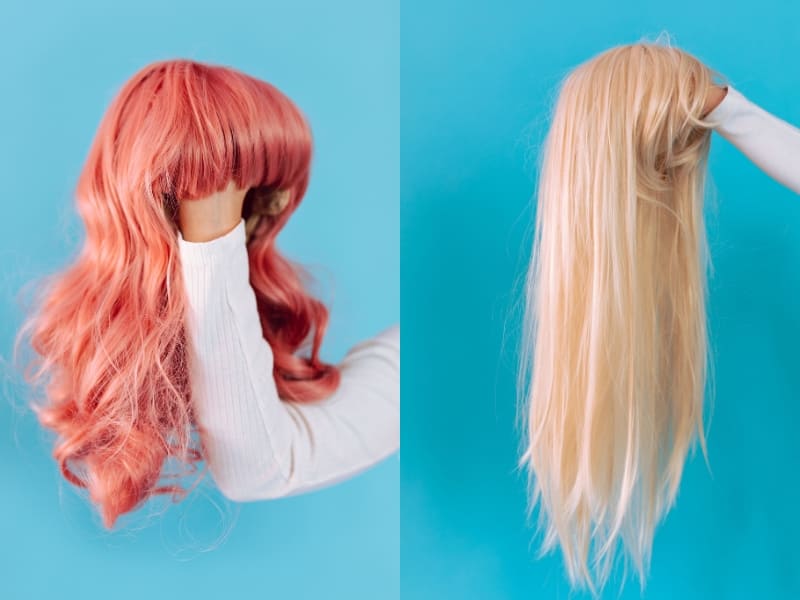
Waves, layers, and added texture help scatter light so it does not reflect in one smooth sheet. This gives the hair a softer, more natural look.
How to do it:
- Change the part. Use a side part or a soft zigzag instead of a straight center part.
- Add movement. Make loose waves or gentle bends rather than keeping the hair straight.
- Fluff the crown and sides with your fingers to add volume. This keeps the fibers from lying flat and reflecting light in one direction.
- Separate the ends. Use your fingers to gently rake through the lower lengths so the strands fall in different directions.
- Add layers if needed. Face-framing layers or feathered styles help break up large reflective areas. If the wig needs trimming, have a wig stylist cut it.
- Set the style safely. For standard synthetic wigs, use rollers, braids, or pin curls, and let the wig air-dry.
- Finish by gently shaking the wig by the cap and separating the fibers with your fingers. Do not brush the style flat.
Hairstyles that reduce shine best: loose beach waves, soft curls with separated ends, layered or feathered cuts, side parts with light crown volume, half-up styles with textured lengths.
#7. Just Wear Your Wig and Let It Naturally Lose Shine
Over time, regular use and cleaning will soften the factory finish. As the fibers move and rub against each other, they will reflect light less evenly.
Avoid exposing synthetic hair to direct sunlight, high heat, harsh shampoos, saltwater, or rough towels. These can cause permanent damage to the fibers, even if they seem to reduce shine at first.
#8. Try Fabric Softener or Vinegar (Only If Needed)
If your synthetic wig remains too shiny after using safer methods, you can try a very diluted fabric softener or white vinegar rinse. This may help reduce static, soften the fibers, and lessen the shine. Only use these options as a last resort. They are not made for synthetic wigs and could leave residue or damage the fibers if not used properly.
Read more: Good vs Bad Hair Extensions: How to Choose the Right One

Expert Tips to Make a Wig Look More Natural
Reducing shine helps, but making a wig look realistic depends most on the fit, the look of the hairline and part, and how the hair moves. Focus on the hairline, part, temples, and crown, since these are the areas people notice first.
Check the fit:
- Adjust the straps for a secure, comfortable fit.
- Position the wig slightly behind your natural hairline.
- Use a wig grip or pins to prevent slipping.
- Flatten your natural hair evenly under the cap.
Adjust the hairline:
- Blend lace with a lace tint, foundation, or concealer that matches your scalp.
- Thin an overly dense hairline if needed (ideally by a professional).
- Keep baby hairs soft and minimal.
Make the part look natural:
- Choose a slightly off-center or irregular part.
- Apply a small amount of scalp-colored makeup along the part.
- Lift the roots slightly to add dimension.
Add texture and movement:
- Style with loose waves, layers, or textured ends.
- Finger-comb instead of over-brushing.
- Add subtle volume at the crown and temples.
Pick a natural color and density:
- Opt for shades with highlights, lowlights, or rooted colors.
- Select a density that matches natural hair.
- Avoid wigs that are overly thick or too sparse.
Care for the wig:
- Detangle the nape and ends regularly.
- Wash with a synthetic wig shampoo when buildup appears.
- Avoid heavy oils and silicone-based shine sprays.
- Store the wig on a stand away from direct sunlight.
Read more: 5 Expert Ways to Make Hair Extensions Soft Again at Home
The Takeway
We hope this guide has answered your questions about how to make a wig less shiny. Simple adjustments can help you find the method that works best for your wig.
Frequently Asked Questions
Why does my wig look natural indoors but shiny outside?
Sunlight is brighter than indoor lights and can make synthetic wig fibers look shinier.
What makes a wig look fake?
A wig can look fake if it is too shiny, has an unnatural hairline or part, looks too thick, or is not styled well.
Does baking soda remove shine from a wig?
There’s no research support for using baking soda to reduce wig shine.
