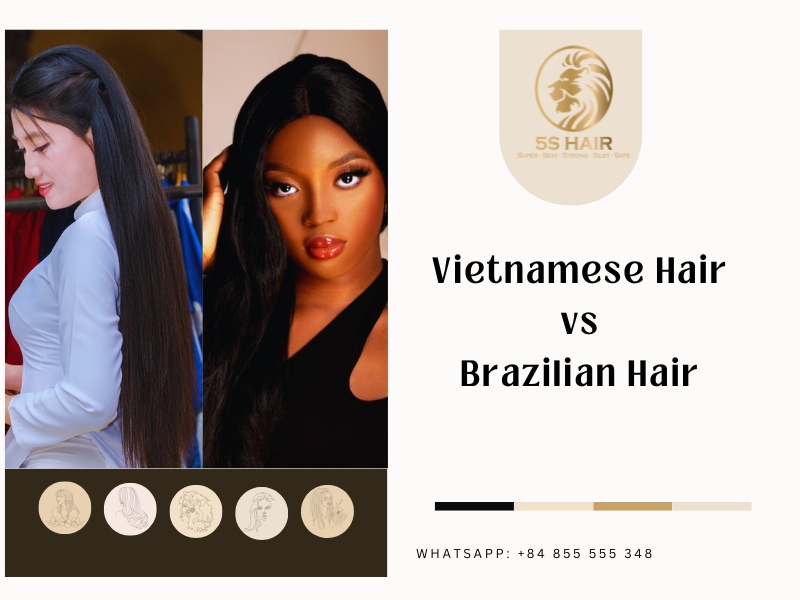
More and more people are getting into premium human hair extensions. If you’re trying to figure out whether Vietnamese hair or Brazilian hair is right for you, we’ve got you covered. Let’s go through what makes each one special so you can find your perfect match.
Vietnamese Hair vs Brazilian Hair: Quick Comparison
So, the question here isn’t “Is Vietnamese hair better than Brazilian?”– the answer depends entirely on your needs. The question is: what are Vietnamese hair and Brazilian hair, and how do they differ?
To answer that, we’ll break down how each hair type is sourced, its natural texture, durability, styling versatility, and overall characteristics. While both are premium human hair options, there are a few key differences.
| Feature | Vietnamese Hair | Brazilian Hair |
| Definition | Human hair ethically sourced from donors in Vietnam with a verifiable geographic origin. | A marketing term that describes a texture and performance profile rather than a guaranteed geographic origin. |
| Origin | Primarily sourced from Vietnam’s rural and mountainous regions. | Usually sourced from India, Vietnam, China, or other countries. |
| Texture | Naturally bone straight, soft, silky, and smooth. | Soft with more body and a slightly coarser feel; available in straight, wavy, and curly textures. |
| Strand Thickness | Thick, strong strands with high durability. | Medium-to-thick strands that provide fullness and volume. |
| Density | Naturally full from root to tip. | Medium-to-high density with a voluminous appearance. |
| Natural Color | Deep black or dark brown. | Typically dark brown or black (depending on the actual source). |
| Natural Shine | Healthy, subtle, natural luster. | Medium, realistic luster with a natural finish. |
| Tangling & Shedding | Minimal tangling and shedding due to aligned, intact cuticles. | Low tangling when virgin or Remy, but performance varies by supplier and processing. |
| Best For | Sleek straight styles, premium extensions, and long-term wear. | Voluminous hairstyles, curls, waves, and versatile everyday styling. |
| Heat Styling | Holds curls well while maintaining its naturally straight texture. | Excellent curl retention and works well with both heat styling and heat-free styling methods. |
| Coloring | Can be lifted to #613 platinum blonde with minimal damage when professionally processed; excellent for custom coloring. | Colors and bleaches well |
| Available Hairstyles | Straight, waves, curls, blowouts, and layered cuts. | Straight, beach waves, body waves, curls, and voluminous blowouts. |
| Durability | Typically 2–5 years with proper care; exceptionally durable due to strong natural structure. | Generally 1–5 years with proper care, depending on hair grade and processing. |
| Sourcing Transparency | Highly transparent, with direct donor-to-factory sourcing common among reputable manufacturers. | Less transparent; often involves multiple countries for sourcing, processing, and distribution. |
| Ethical Practices | Frequently emphasizes voluntary donations, fair compensation, and traceable sourcing. | Varies by supplier; sourcing practices depend on individual manufacturers and distributors. |
| Price | Generally offers outstanding value for money with competitive factory pricing. | Wider price range due to branding, retailer markups, hair grade, and processing. |
What Is Vietnamese Hair and Brazilian Hair?
At first glance, you may see that they are very similar. But take a closer look, and you’ll notice they differ in texture, origin, and overall performance.
What is Vietnamese Hair?
Vietnamese hair is human hair ethically sourced from donors in Vietnam, primarily from rural communities. With a verifiable geographic origin, Vietnamese hair is often obtained directly from factories in Vietnam that work closely with local communities.
In the hair industry, it is known for its longevity and premium quality, making it one of the most popular choices for hair extensions, wigs, and other hair products.
What is Brazilian Hair?
In the global hair extension industry, “Brazilian hair” is primarily a marketing term. Rather than referring to origin, the term “Brazilian” typically describes a set of characteristics, such as a thick, versatile texture. Labels such as “Peruvian,” “Malaysian,” and “Brazilian” are commonly used by manufacturers to distinguish different textures or steam-processed curl patterns.
Texture and Appearance
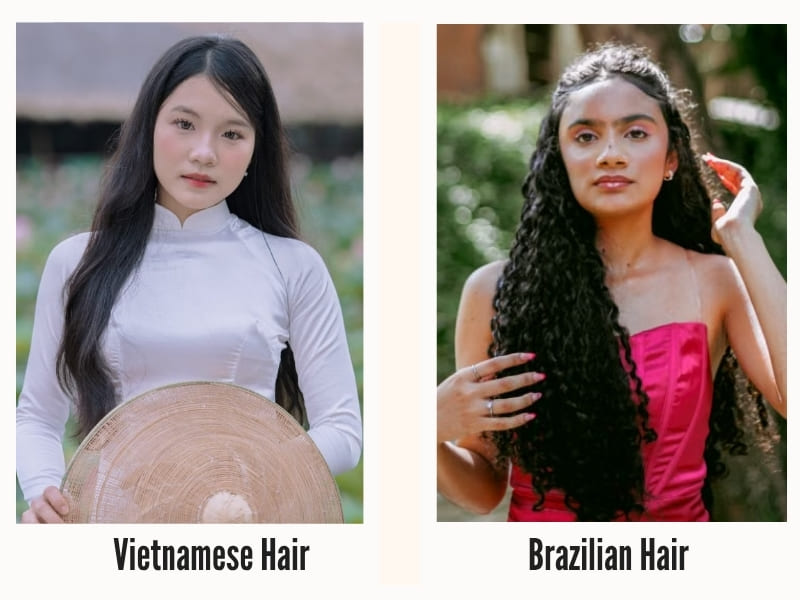
Texture and appearance are often the biggest factors when choosing between Vietnamese hair and Brazilian hair. Both offer a beautiful, natural look, and each is better suited to different styling preferences and hair goals.
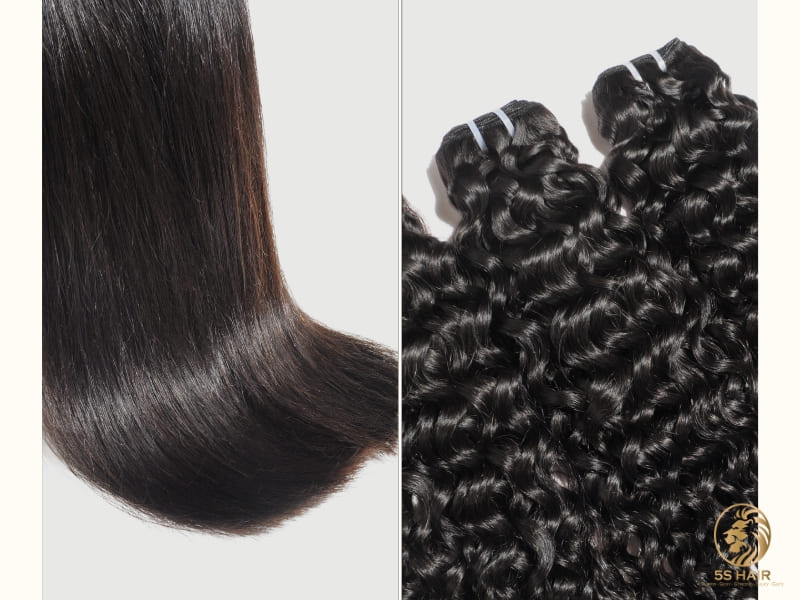
Vietnamese Hair: Naturally Straight and Thick
- Despite its naturally thick strands, Vietnamese hair is soft, silky, and smooth to the touch. It has a lightweight, flowing appearance without the coarseness or rough texture.
- Vietnamese hair features thick, strong strands. High-quality Vietnamese hair has cuticles that remain intact and are aligned in the same direction. This preserves the hair’s natural structure, making it highly resistant to tangling, matting, and excessive shedding.
- The hair is naturally available in deep black or dark brown shades due to its high melanin content. Besides, it possesses a subtle, healthy luster rather than an overly glossy appearance.
Brazilian Hair: Volume and Bounce
- One of the defining features of Brazilian hair is its medium-to-high density. The hair appears naturally thick and full, creating excellent volume even with fewer bundles.
- Although Brazilian hair has thicker strands than many other hair types, it remains soft and manageable. It offers more body and movement than very silky hair.
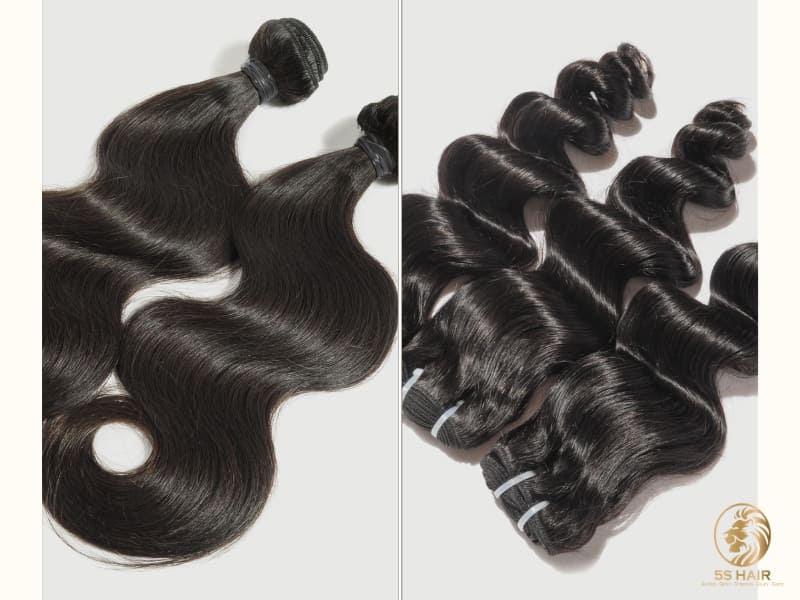
- Brazilian hair is commonly available in straight, wavy, and curly textures. In its natural or virgin state, it often has a slight wave or body-wave pattern rather than a perfectly bone-straight appearance.
- The individual strands are generally medium to thick in diameter, contributing to the hair’s signature density and durability. This slightly coarser texture also helps Brazilian hair blend well with a variety of natural hair types.
- Brazilian hair typically has a healthy, medium luster that looks realistic rather than excessively shiny.
Durability and Lifespan
High-quality Brazilian hair, especially virgin or Remy hair, can even last several years with proper care. Its longevity depends on several factors, including the quality of the hair, the application method, and the wearer’s maintenance routine.
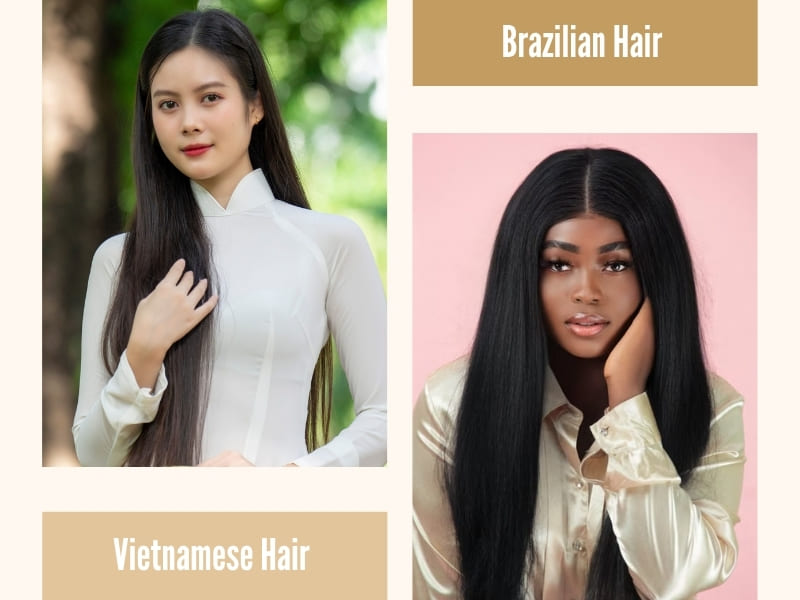
Vietnamese hair is widely recognized for its durability, particularly when it is virgin or raw hair with minimal processing. The outstanding longevity of Vietnamese hair is largely attributed to its natural biological composition and sourcing. With proper care and maintenance, high-quality Vietnamese hair extensions and wigs typically last 2 to 5 years.
Hairstyling and Coloring
If you’re focused on styling versatility, both Vietnamese hair and Brazilian hair can be curled, straightened, and dyed.
Vietnamese Hair
Vietnamese hair is suitable for a wide range of hairstyles, including:
- Sleek straight looks
- Soft waves
- Defined curls
- Blowouts
- Layered cuts
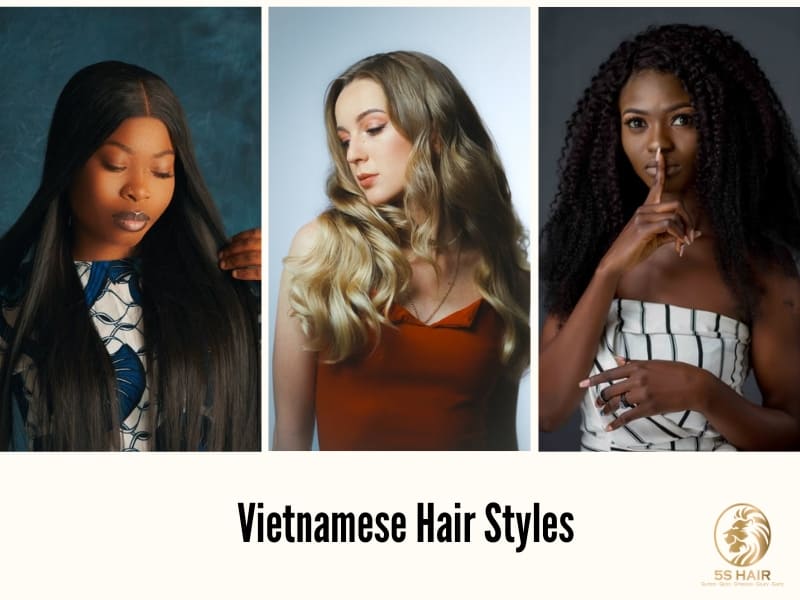
Its naturally dense strands provide outstanding body and help the hair hold curls and other heat-styled looks for longer while maintaining smoothness and movement.
High-quality Vietnamese hair is widely regarded as one of the best hair types for professional coloring. Thanks to its robust structure and healthy cuticles, quality Vietnamese hair can often be lifted to #613 platinum blonde with minimal damage to its strength, elasticity, and overall integrity when the bleaching process is performed gradually and professionally.
In addition to blonde shades, Vietnamese hair is highly receptive to a broad spectrum of colors, including browns, grays, coppers, reds, and vibrant fashion shades. Less intensive coloring techniques, such as highlights, balayage, and ombré, generally place less stress on the hair and help preserve its longevity.
Brazilian Hair
Brazilian hair can be styled into:
- Sleek Straight
- Soft waves
- Beach waves
- Voluminous blowouts
- Defined curls
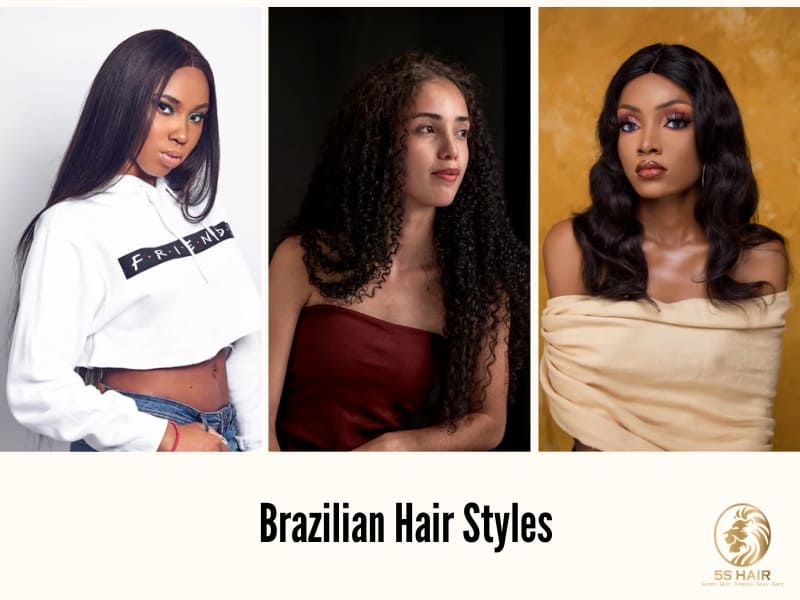
Brazilian hair is especially known for its excellent curl retention. Its natural volume also makes it ideal for heat-free styling. Flexi-rods, rollers, braiding, or other dry-set techniques can create beautiful curls and waves.
Brazilian hair generally lifts well during bleaching and often reaches lighter shades more quickly than finer hair types. In addition to bleaching, Brazilian hair readily accepts a wide range of color techniques, including highlights, balayage, ombré, lowlights, and full-color applications.
However, as with all human hair, repeated bleaching or chemical processing can gradually reduce softness, increase dryness, and shorten the hair’s lifespan.
Sourcing and Ethics
Compared with many global hair markets, the Vietnamese supply chain is generally shorter and more transparent. This reputation is largely due to Vietnam’s well-established sourcing model.
- Most high-quality Vietnamese raw hair is sourced directly from women in Vietnam’s northern mountainous and rural provinces. Collectors travel to local communities and purchase hair directly from women who voluntarily choose to sell it. In fact, selling hair provides a valuable source of supplemental income for many Vietnamese families. The hair is usually cut in full ponytails, preserving the natural alignment of the cuticles from root to tip.
- Many trusted Vietnamese hair factories actively promote ethical sourcing by emphasizing voluntary donations, fair compensation, and responsible business practices.
- International buyers are often encouraged to work directly with established Vietnamese manufacturers. Direct sourcing can improve product traceability and ensure more consistent quality.
Unlike Vietnamese hair, Brazilian hair is typically part of a more complex global supply chain.
- Authentic human hair sourced from Brazilian donors is, in fact, extremely unavailable in the quantities required to meet global demand. Most products marketed as Brazilian hair are sourced from countries such as India, Vietnam, or China.
- Hair sold under the Brazilian label is commonly collected in one country and then processed in large manufacturing facilities, particularly in China. During production, the hair may undergo steam processing or other treatments to create the textures consumers associate with Brazilian hair, such as body wave, loose wave, deep wave, or curly patterns.
- Because Brazilian hair is often sourced, processed, and marketed across multiple countries, its supply chain is generally less transparent than that of Vietnamese hair. The actual origin of the donor hair may differ from the product label; verify sourcing information with reputable suppliers.
Read more: Difference Between Vietnamese Hair vs Chinese Hair
Vietnamese Hair vs Brazilian Hair Price
Vietnamese hair is generally considered more cost-effective for its quality. Meanwhile, Brazilian hair spans a much broader price range because it is sold through both wholesale factories and retail brands.
Vietnamese Hair Price
Vietnam’s direct access to raw hair materials and well-established manufacturing industry help keep prices relatively affordable, particularly for wholesale buyers.
Prices vary depending on hair length (6–40 inches), texture, color, product type, and quality grade (Single Drawn, Double Drawn, or Super Double Drawn). Typical wholesale prices of Vietnamese hair:
| Product Category | Typical Wholesale Price Range | Notes |
| Hair Weaves & Bundles | USD 15–30 | Basic natural straight weft hair |
| Premium Weaves | USD 26.90–205 per bundle | Bone straight, bouncy curl, and other premium textures; price depends on length and quality |
| Raw Hair Bundles | From USD 27 per 100g | Priced higher by grade and length |
| Human Hair Wigs | USD 54–196 | Short bob and basic wig styles |
| Lace Closure & Frontal Wigs | USD 138–550+ | Depends on lace size, density, hair quality, and construction |
| Full Lace Wigs | From USD 415 | Higher labor and material cost |
| Tape-in Extensions | USD 24.80–216 per set | Price varies by hair length, grams, and number of pieces |
| Clip-in Extensions | USD 25–219 per set | Depends on the set weight, length, and volume |
| Keratin Tips (I-Tip, U-Tip, V-Tip, Flat Tip) | From USD 62 per 100g (or USD 109–158 per set) | Pricing varies by tip type and hair grade |
| Lace Closures | USD 17.90–142 | Price depends on size, lace type, and hair texture |
| Lace Frontals | USD 21–186 | Higher price for larger lace area and premium hair |
| Hair Toppers / Wiglets | USD 165–370 | Depends on the base size, density, and ventilation work |
Brazilian Hair Price
By comparison, Brazilian hair is available at both very low and very high price points, but pricing is often determined by brand reputation, processing, sales channel, and hair grade.
Typical price ranges:
| Product Category | Typical Wholesale Price Range | Notes |
| Hair Bundles | USD 2–55+ per bundle | Price varies by grade, length, and processing level |
| Wefts | USD 11–77 | Suitable for basic to mid-range wholesale supply |
| Clip-in Extensions | USD 9–311 | Depends on weight, length, volume, and finish |
| Tape-in Extensions | USD 24–213 | Pricing varies by grams, hair quality, and set size |
| Pre-bonded Tips | USD 12–219 | Includes I-tip, U-tip, and related tip extensions |
| Lace Closures | USD 20–75 | Depends on lace size, lace type, and hair quality |
| Wigs | USD 98–348+ | Final price depends on construction, density, and styling |
Overall, Vietnamese hair offers more standardized wholesale pricing and good value for money. If you are purchasing directly from Vietnamese hair factories, you often receive premium hair at competitive prices.
(Prices listed above are for reference only and may vary depending on hair origin, grade, length, density, processing method, lace material, and order quantity. Please contact the supplier for a final quotation.)
Pros & Cons of Vietnamese Hair and Brazilian Hair
If you’re trying to decide between Vietnamese and Brazilian hair, the pros and cons of each can help you determine which is a better fit for your styling preferences and budget.
Pros & Cons of Vietnamese Hair
Pros:
- 100% human hair with a verifiable geographic origin (from reputable suppliers)
- Naturally thick, strong, and highly durable
- Can last 1–5 years or longer with proper care
- Naturally smooth, silky, and bone straight
- Excellent resistance to tangling and shedding
- Ideal for bleaching and coloring, including lifting to platinum blonde (#613) with minimal damage when professionally processed.
- Consistent quality thanks to transparent sourcing and direct factory production
- Competitive wholesale pricing
Cons:
- Naturally available mainly in dark shades, requiring bleaching for light colors
- Premium raw and virgin Vietnamese hair costs more than lower-grade alternatives
- Naturally bone-straight texture may require additional styling for users seeking voluminous curls.
- Authentic high-quality hair should be purchased from reputable factories to avoid counterfeit products
Pros & Cons of Brazilian Hair
Pros:
- Soft, full, and naturally voluminous appearance
- Excellent body and movement with medium-to-high density
- Holds curls exceptionally well, even in humid conditions
- Available in a wide range of textures, including straight, body wave, loose wave, deep wave, and curly
- Highly versatile for heat styling and coloring
- Widely available through retailers and wholesalers around the world
Cons:
- Quality varies significantly between suppliers
- Retail prices can be substantially higher due to branding and markups
- Heavily processed products may have a shorter lifespan and reduced durability
- Labels alone do not guarantee virgin, raw, or Remy quality
Which One Should You Choose?
Choose Vietnamese Hair if you want:
- Exceptional durability and long lifespan
- Thick, strong strands with a naturally silky, bone-straight texture
- Hair that can withstand frequent coloring and bleaching
- Transparent sourcing and consistent quality
- Excellent value for wholesale purchases or long-term investment
Choose Brazilian Hair if you want:
- A fuller, more voluminous look with natural body and movement
- Hair that holds curls and waves exceptionally well
- Greater variety of textures for different styling preferences
- Easy availability from numerous retailers and brands
In Summary
Both are excellent options when sourced from a reputable supplier, so your final decision should come down to your styling preferences, hair goals, and budget.
Frequently Asked Questions
What is the biggest difference between Vietnamese hair and Brazilian hair?
The main difference between Vietnamese hair and Brazilian hair lies in their texture and sourcing. Vietnamese hair is naturally silky, straight, lightweight, and often sourced through a transparent donor-to-collector model within Vietnam. Brazilian hair is typically thicker, fuller, and has more natural body.
Which hair is better for bleaching to #613 blonde?
High-quality Vietnamese hair is generally the better option for achieving a #613 blonde. Regardless of origin, choosing real raw or virgin human hair is the most important factor for successful bleaching.
Which hair is better for straight hairstyles?
Vietnamese hair is generally the better choice thanks to its naturally silky, smooth, and straight texture. If you prefer a bone-straight appearance, Vietnamese hair is the ideal option, while Brazilian hair suits those who like a straighter style with added volume.
Which country has the best quality human hair?
When it comes to premium raw human hair, Vietnam is widely regarded as the top choice for its silky texture, strength, and long-lasting quality. India is another leading source, known for its massive export volume and naturally healthy hair. However, the quality of human hair ultimately depends more on the supplier than the country of origin. Search for human, raw, virgin, or Remy hair for the best results.
