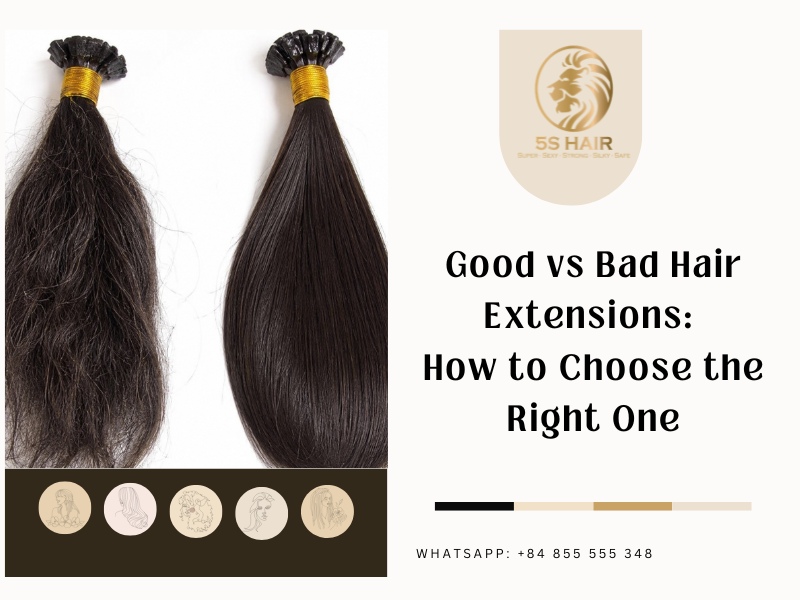
Every brand promised “100% human hair,” “premium quality,” or “superior results,” yet many looked nearly the same at first glance. If it was difficult to tell the difference between high-quality extensions and cheaper alternatives, it was no surprise that so many people ended up disappointed. So, how do you know which hair extensions are actually worth investing in? How do you distinguish between good vs bad hair extensions?
Good vs Bad Hair Extensions: How to Tell If Hair Extensions Are Good Quality or Not
High-quality hair extensions are designed to last a long time when properly cared for. For example, Remy hair can typically be reused for several months with proper maintenance. For tape-in extensions, each installation usually lasts 6–8 weeks, while the same hair can often be removed, reapplied, and reused for 9–12 months with appropriate care and regular maintenance.
So, how do you know if each hair extension is high quality?
What Makes Hair Extensions “Good”?
High-quality hair extensions are defined by:
- First, the hair itself has to be of good quality.
- How the hair is processed matters a lot, too.
- You can really tell when extensions are well made.
- And of course, they have to perform and blend with your own hair naturally
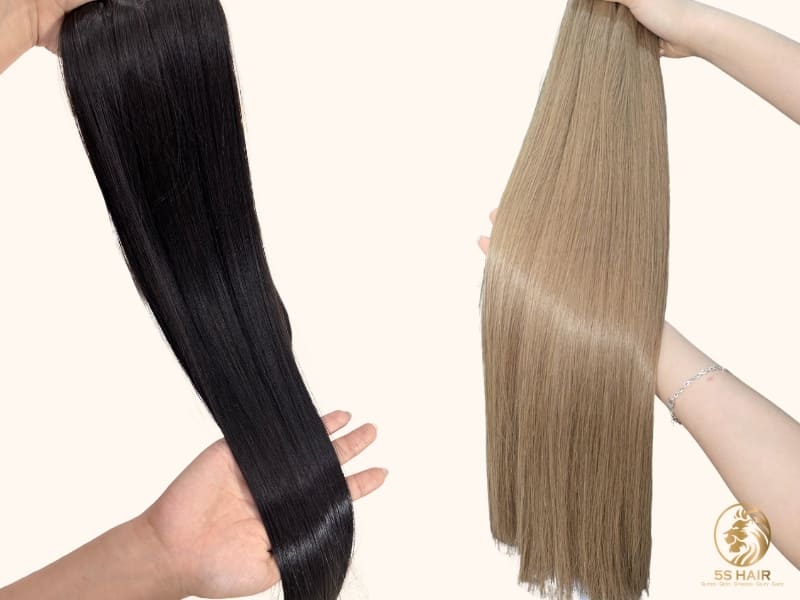
Made from human hair: Premium extensions are crafted from 100% human hair, not synthetic fibers or blends. They are also ethically sourced and processed with minimal harsh chemical treatments.
Intact, aligned cuticles: Real, high-quality hair is defined primarily by its cuticle integrity and natural appearance. In good Remy hair, the cuticles remain intact, and all face the same direction.
Minimal chemical processing: Quality hair should not be acid-dipped. Some lower-grade hair is treated with acid to remove the cuticles. Although this hair may initially feel smooth, its structure has been permanently damaged.
Natural look and feel: If your extensions are good, they should closely resemble natural hair in both appearance and texture. They should feel soft, smooth, and substantial rather than overly slippery or plastic-like. In addition, they feature multi-tonal color blending, using two or three complementary shades to replicate the natural dimension of real hair rather than a flat, single color.
High-quality construction: Wefts should be thin, flat, securely double-stitched, and free from loose threads or bulky construction that can cause discomfort or shedding. Tape tabs or keratin bonds should be clean, uniform, and durable enough to withstand washing without breaking down.
Natural blending: Well-made extensions should integrate naturally with existing hair. They should create a seamless transition with no visible line where natural hair ends and the extensions begin.
Reliable performance: High-quality human hair should perform like natural hair in everyday use.
- Wet test: When damp, the hair should remain smooth and manageable rather than becoming frizzy, tangled, or matted.
- Heat styling: It should curl, straighten, and respond to heat-styling tools just like natural hair, without melting or producing chemical odors.
- Burn test: If you ever do the burn test, real human hair burns slowly, smells kind of like burnt protein, and turns to soft ash.
What Makes Hair Extensions “Bad”?
Poor-quality hair extensions are generally the result of inferior materials or poor processing. High-quality hair can still perform poorly if it is not applied or maintained correctly. In this section, let’s discuss poor-quality hair material.
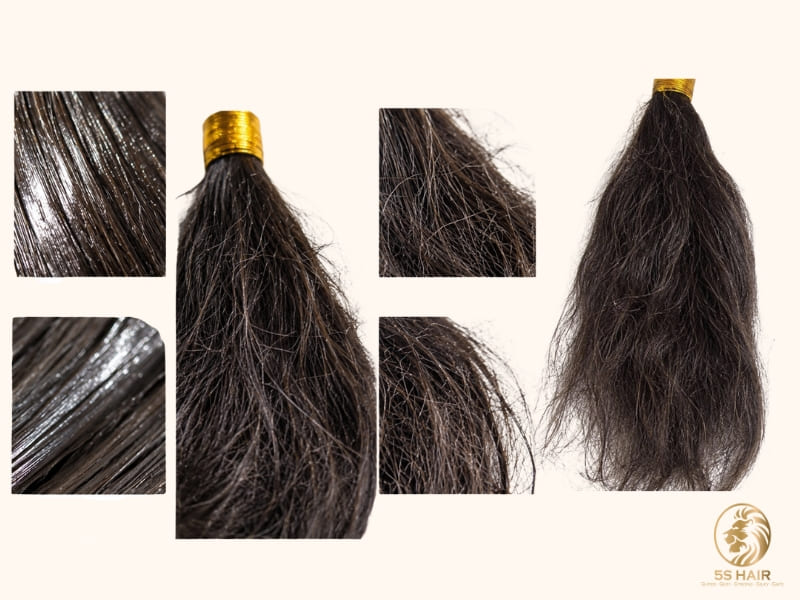
- Low-quality extensions are often made from non-Remy hair, where the cuticles are not aligned in the same direction. This causes the strands to rub against each other, leading to tangling, matting, and a loss of smoothness after washing.
- A few manufacturers use acid baths to remove the cuticles from hair. This treatment creates a temporarily smooth feel, but it permanently damages the hair’s structure. The hair extensions quickly lose their shine and have a much shorter lifespan.
- Many extension products in the market even mix human hair with synthetic fibers. These materials respond differently to heat and styling, and then the extensions may fail to hold styles consistently or develop an uneven appearance. (A 2024 Consumer Reports investigation found that all 10 popular synthetic braiding hair products tested contained chemicals linked to cancer.)
- Very low-grade extensions are often coated with a thick layer of silicone to create an artificial shine and a silky texture. This coating wears away after several washes.
Read more: Can You Reuse Hair Extensions?
How to Know if You Have a Bad Hair Extension Installation
It’s not true that any poor hair extension installation comes down to low-quality hair. Here’s how you can spot when the problem is actually with the installation itself.
- If extensions are attached to too little of your own hair, they put extra stress on the roots. This can lead to breakage, thinning, or even traction alopecia over time.
- When extensions are placed too close to the scalp, they can cause soreness, making everyday brushing or styling a hassle. Bulky bonds, thick wefts, or visible glue are also signs the job wasn’t done right.
- It’s usually easy to identify a bad installation when the extensions don’t blend in with your natural hair. You might see a clear line where your own hair ends and the extensions begin, or notice the textures just don’t match. Sometimes, stylists try to cover this up with extra curling.
- Discomfort is one of the clearest indicators of a poor installation. If you’re dealing with ongoing pain, a sore scalp, extensions that feel way too tight, or pieces that start slipping out soon after you leave the salon, something went wrong. Trouble brushing or styling is another sign.
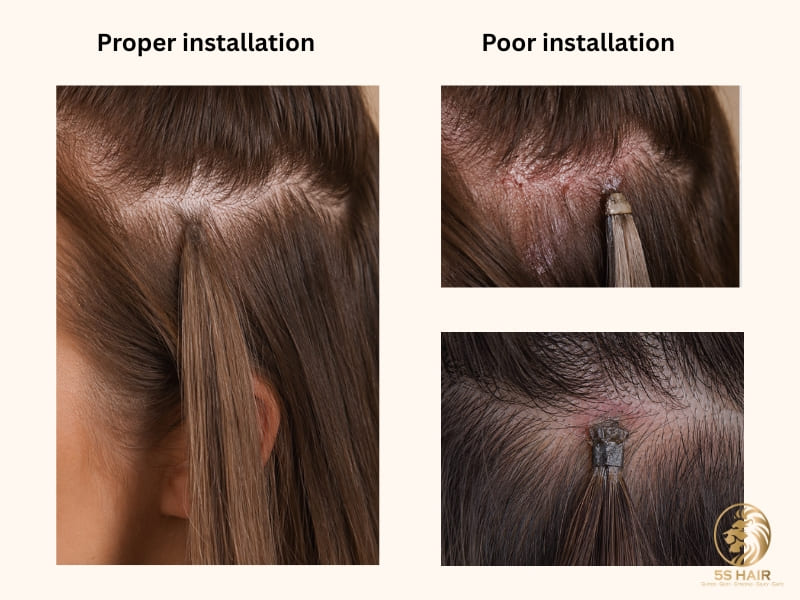
Seek professional help immediately if you experience:
- Persistent scalp pain, pulling, headaches, or throbbing that continues for more than 1-2 days after installation.
- Redness, itchy bumps, sores, or other signs of irritation around the attachment points.
- Clumps of your natural hair coming out with the extensions during brushing or washing.
- Severe tangling or matting around the roots or attachment points.
If you have sew-ins, I-tip, or fusion extensions, don’t try to take them out yourself. A trained extension specialist has the right tools to remove them safely, check the health of your hair, and let you know if you need a break or should try a different method next time.
Consult a healthcare professional if you develop signs of infection, such as pus, crusting, or hot, inflamed areas of the scalp, and persistent allergic reactions, including severe itching, rash, or hives that continue even after the extensions have been removed.
Choosing the Right Hair Extensions for Your Hair Type
Test your hair:
Before choosing hair extensions, consider three key factors: hair strand thickness, hair density, and hair texture.
- The ponytail test is a quick way to estimate hair density. Pull your hair into a ponytail and measure the circumference at the base. A ponytail under 2 inches suggests fine hair; 2–3 inches is medium; and anything above 3 inches suggests you likely have thick, dense hair.
- Take a single strand and try to snap it or roll it between your fingers. Sturdy, hard-to-break strands point to coarser or thicker hair. The strand test is largely based on how your hair feels.
- Assess thickness and texture. Straight, wavy, curly, and coily hair all blend differently with extensions, so choosing an extension type that matches your natural texture will create the most seamless result.
Matching extension types to hair density:
- Fine Hair: Opt for lightweight, low-profile extensions such as tape-ins or lightweight clip-ins. Don’t go with thick, heavy wefts.
- Medium Hair: The most versatile hair type, compatible with tape-ins, sew-ins, clip-ins, and micro-links (depending on your lifestyle, desired look, and maintenance routine).
- Thick Hair: Typically best suited for sew-in wefts or other long-lasting/permanent extension methods.
These are only at-home tests. A professional stylist can accurately evaluate your hair and recommend the most suitable extension method.
Hair Extension Maintenance: Good vs Bad Habits
Just as the quality of your natural hair depends on how you care for it, the lifespan of hair extensions is largely determined by your maintenance routine. Hair extensions aren’t high-maintenance by nature – they simply require the right habits.
Good habits that help extensions last:
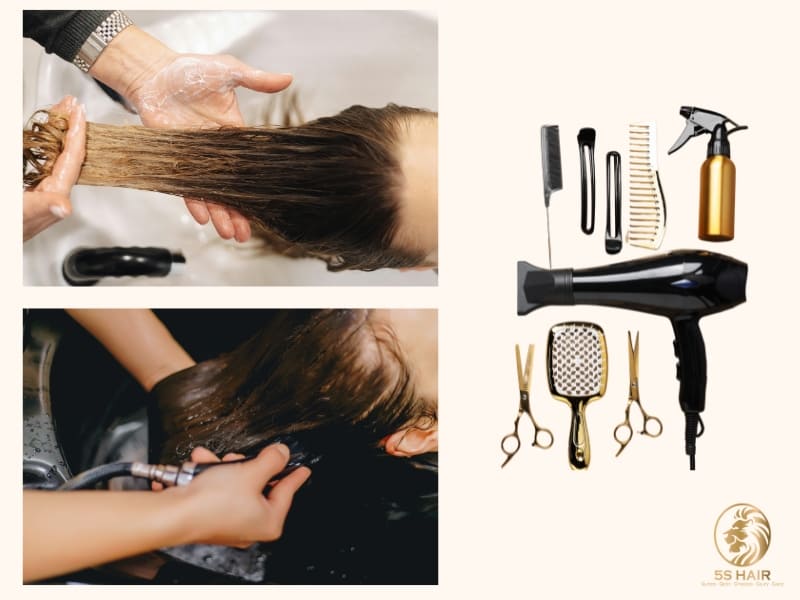
- Proper washing. Grab a sulfate-free shampoo and conditioner. Always wash downwards to dodge tangles and keep those bonds neat.
- Regular maintenance. Brush gently, starting at the tips and working up. Use a loop brush for best results. Book a salon check-in every 6 to 8 weeks to reposition or tighten attachments.
- Caring for different attachment methods. Different extensions, different care. Tape-ins need oil-free products near the bonds. Sew-ins? Clean the braided track underneath. Fusion bonds? Be gentle; avoid loosening the keratin.
Bad habits that shorten extension lifespan:
- Scrubbing vigorously, using sulfate-heavy shampoos, or sleeping with wet hair
- Skipping your brush routine or missing salon visits
- Sleeping without protection or using excessive heat without a protectant
Popular Myths About Hair Extensions
Many people strongly believe extensions can damage natural hair or prevent it from growing. In reality, these don’t tell the full story.
Are extensions only for adding length?
While extensions are often associated with adding length, they are just as commonly used to boost volume and thickness. For people dealing with thinning hair, including those experiencing hair loss during menopause, extensions can be a practical way to restore fullness and achieve a natural look.
Hair extensions look fake?
When applied well, hair extensions are designed to blend in with your natural hair. The key is choosing the right color, selecting an appropriate extension method, and ensuring the installation is done by a professional.
Extensions only for women?
Hair extensions are becoming increasingly popular among men. Men use extensions to address thinning hair, add volume to naturally fine hair, or achieve specific hairstyles.
Clip-in and tape-in extensions are particularly useful for men who want to cover early-stage thinning without pursuing medical treatments.
Can’t you exercise or swim with hair extensions?
Extensions are durable enough for normal physical activities, including exercise and swimming, when cared for properly. They can withstand sweat during workouts without issue.
Hair extensions too expensive?
Professional installation of high-quality human hair extensions can cost from $500 to over $3,000, depending on factors such as the type of extension, length, and the amount of hair used. That said, many affordable options are also available.
Extensions harm natural hair?
In reality, most problems arise from poor application or lack of proper maintenance. When installed by a trained stylist and properly cared for, “good” hair extensions should not harm your natural hair.
In Summary
Ultimately, focus on quality over price, choose the right extension method for your hair type, and work with a trusted stylist whenever possible. When selected and cared for properly, good hair extensions can enhance your look while keeping your hair healthy.
Frequently Asked Questions
Do hair extensions stop your hair from growing?
No. Extensions themselves don’t mess with how your hair grows, since hair grows from follicles in the scalp. But if you go too tight or keep them in for too long, you might notice some breakage or thinning, which can make it feel like your hair isn’t growing as fast as you want. It’s really about how you wear them and taking care of your scalp.
Which extensions damage your hair the most?
Honestly, most of the hair damage comes from poor application and maintenance. If you’re careful and do your research, you’ll be fine.
Can hair extensions cause folliculitis?
Extensions can definitely mess with your scalp if they’re too tight, too heavy, or if you’re not keeping things clean. If you let product build up or leave it in for too long, you might end up with an irritated scalp, especially if yours is already sensitive. So it’s really about paying attention to how your scalp feels.

Pingback: How Long Do Weft Hair Extensions Last with Proper Care?