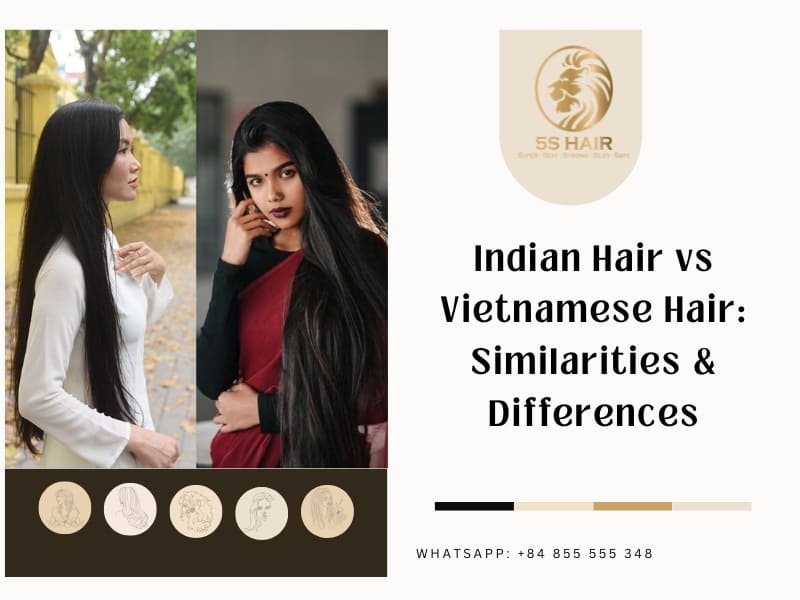
Vietnamese and Indian hair are two of the most popular options in the hair market today. Many customers prefer Vietnamese hair extensions, but many hair vendors also prefer selling Indian hair. Each hair type has its own advantages and disadvantages. This article will help you gain the most multidimensional perspective on Indian hair vs. Vietnamese hair.
Differences Between Vietnamese Hair vs Indian Hair
To have the most objective perspectives on Vietnamese and Indian hair, we will analyze the following aspects of Vietnamese hair vs Indian hair: origin, characteristics, and price.
| Feature | Vietnamese Hair | Indian Hair |
| Origin | Collected directly from women in rural and mountainous communities in Vietnam. | Primarily sourced from temple donations. |
| Hair Source | Often carefully selected donors with transparent sourcing (depending on supplier). | Usually mixed-donor temple hair sorted after donation. |
| Natural Texture | Naturally straight or slightly wavy. | Naturally wavy to curly. |
| Strand Thickness | Thick, strong strands with a smooth, silky feel. | Finer, softer, lightweight strands. |
| Volume & Movement | Fuller body with a sleek appearance. | Natural volume with more movement and bounce. |
| Durability | Highly durable due to intact cuticles and minimal chemical processing. | Good durability but often lower because much of the commercial hair undergoes more processing. |
| Average Lifespan | 24–36 months (2-3 years); premium raw hair can last 3–5 years with proper care. | Approximately 12–24 months with proper maintenance. |
| Natural Color | Consistent natural black or dark brown. | Dark brown to jet black with slight color variation between donors. |
| Coloring & Bleaching | Lifts and colors more evenly thanks to consistent pigmentation. | Can produce less uniform coloring due to mixed natural pigments. |
| Humidity Resistance | Excellent resistance to humidity with minimal frizz. | More likely to become frizzy in humid conditions. |
| Supply | More limited because of strict sourcing and premium quality. | Extremely abundant due to India’s large population and temple donation system. |
| Typical Factory Price (100g Bundle) | From ~$15 (depending on specifications). | From ~$10 (depending on specifications). |
| Best For | Buyers seeking premium quality, longevity, strength, and consistent color performance. | Buyers looking for affordable hair with natural waves, curls, and softness. |
The Origins of Hair
Hair origin plays a major role in determining its natural characteristics.
The Origins of Vietnamese Hair
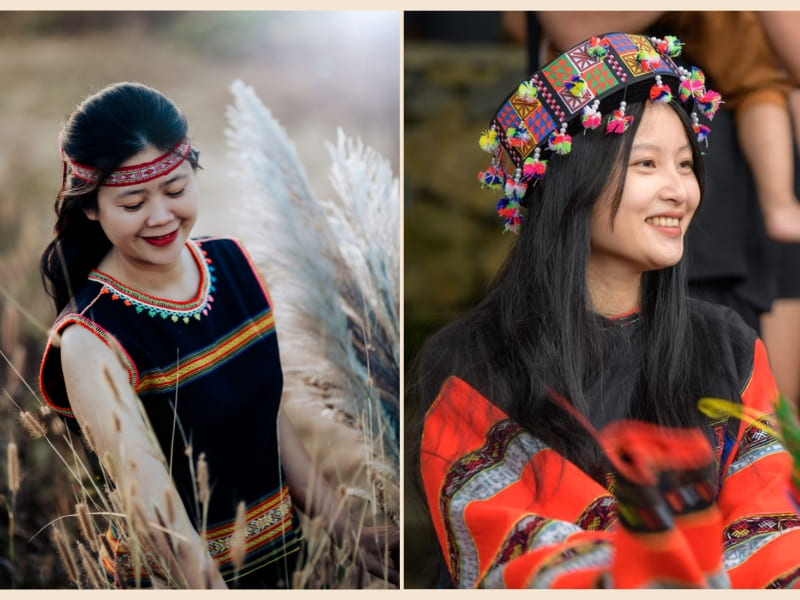
- Vietnam is one of the world’s leading sources of high-quality human hair, known for its abundant and diverse supply. Most Vietnamese raw hair is collected from women in rural and mountainous communities, where growing long, healthy hair has long been part of traditional beauty practices. Many donors follow natural hair care routines, helping preserve the hair’s original strength and quality.
- Reputable factories purchase the hair directly from donors, maintaining its natural integrity throughout the sourcing process. In addition, Vietnam’s humid climate helps keep hair well-hydrated, reducing dryness and contributing to its healthy appearance.
The Origins of Indian Hair
- India is also one of the most populous countries in the world. Therefore, they are able to provide an extremely abundant amount of Indian raw hair.
- Indian commercial hair is primarily sourced through temple donations, where devotees voluntarily shave their heads as an act of religious devotion. One of the most well-known sources is the Tirumala Venkateswara Temple, which receives millions of hair donations each year. The collected hair is carefully sorted, processed, and supplied to the global hair extension industry.
The Characteristics of Hair
Although both Indian and Vietnamese hair are popular choices for human hair extensions, they differ in several important aspects.
Texture and Thickness
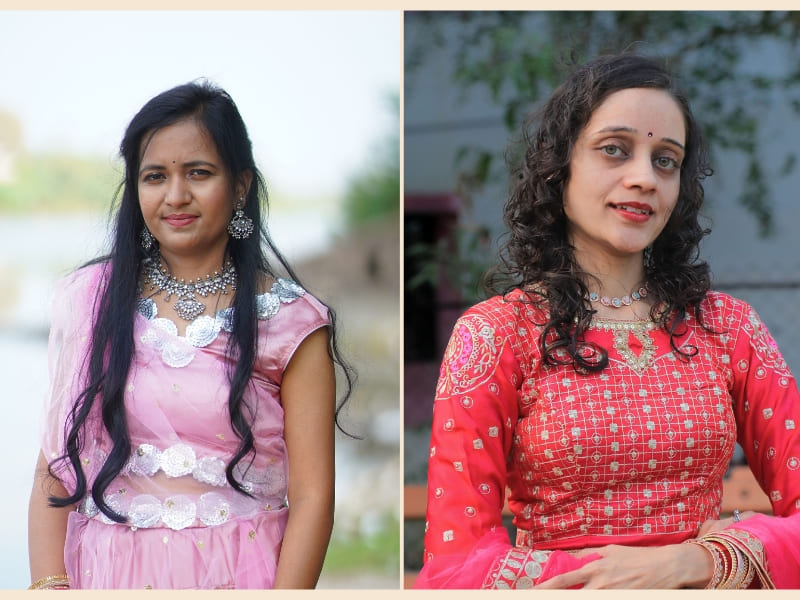
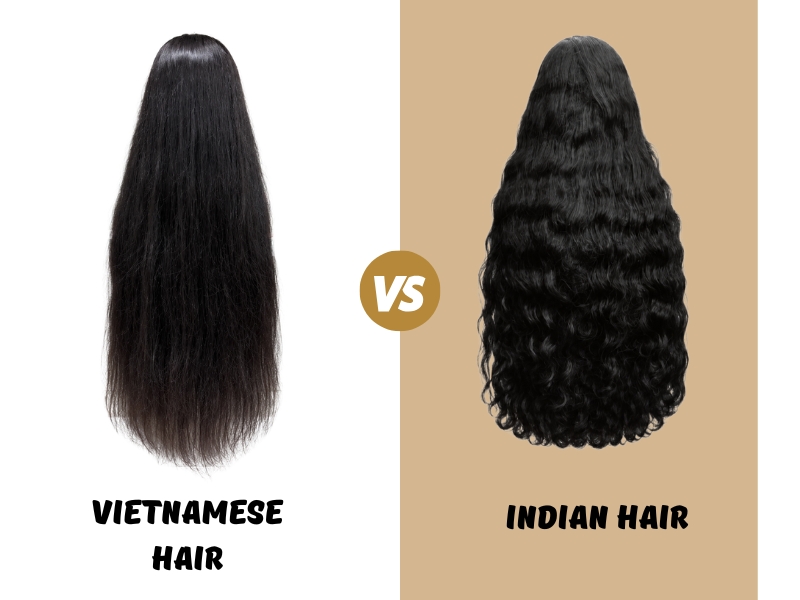
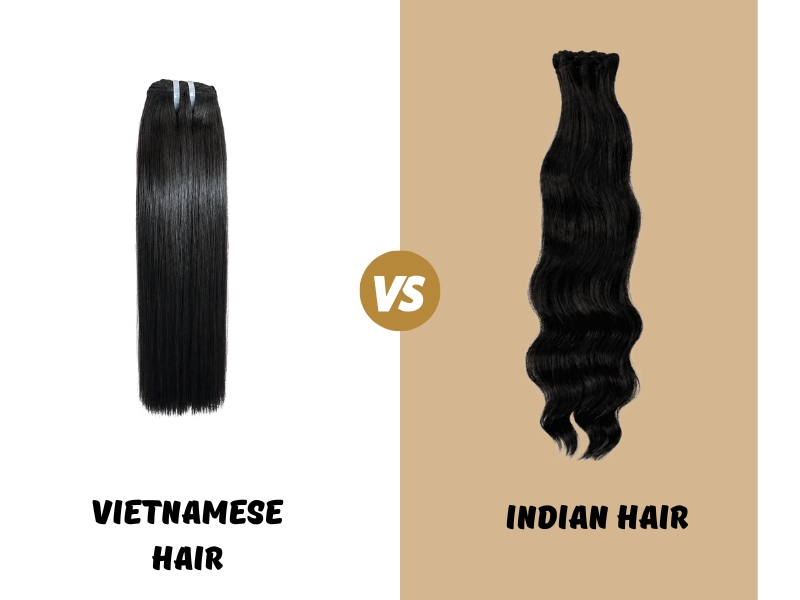
- Indian hair naturally ranges from loose waves to tighter curls. The strands are generally finer, softer, and lightweight, giving the hair natural volume and movement without feeling bulky.
- Vietnamese hair, on the other hand, is naturally straight or slightly wavy. The strands are thicker and stronger, creating a fuller body while maintaining a smooth, silky texture.
Durability and Lifespan
- Because Indian hair often consists of Remy or non-Remy hair that has experienced more processing before reaching the market, it generally has a shorter lifespan. With proper maintenance, high-quality Indian hair typically lasts around 12 to 24 months.
- In comparison, Vietnamese hair is well known for its superior durability. The hair has a thicker cuticle layer and is usually exposed to very few chemical treatments before processing. As a result, premium raw Vietnamese hair commonly lasts 24 to 36 months, and with careful maintenance, it can remain in excellent condition for 3 to 5 years.
Color and Overall Appearance
Both hair types naturally fall within dark color ranges. However:
- Indian hair is usually available in shades from dark brown to jet black. Yet, because the hair is collected from multiple donors with different natural pigmentation, slight color variations and warm undertones can appear within the same bundle. This variation may make it more difficult to achieve completely even coloring or bleaching results.
- Vietnamese hair typically features a much more consistent dark brown or natural black color throughout each bundle. This uniform appearance allows colorists to achieve more predictable lifting, dyeing, and toning results.
Reaction to Humidity
- Due to its finer texture and natural wave pattern, Indian hair tends to become frizzier in humid or damp environments. Maintaining a smooth finish often requires additional conditioning products or anti-frizz styling treatments.
- Vietnamese hair is naturally more resistant to humidity. Its smooth cuticle structure helps the hair remain sleek with minimal frizz, even in moist climates.
Vietnamese Hair vs Indian Hair Pricing
Although both are made from human hair, Vietnamese hair is generally positioned as a premium product with a higher price point. Indian hair is widely recognized as a more affordable option due to its abundant supply and large-scale production.
- Vietnamese hair is affordable but still costs more than Indian hair because of its excellent quality and limited sourcing. A 100g bundle typically costs from around $15 when purchased directly from a factory, depending on the hair specifications.
- Indian hair is generally a more budget-friendly option. Factory-direct prices for a 100g bundle are usually from around $10.
Read more: Cambodian Hair vs Vietnamese Hair: The 2026 Complete Comparison
What Are the Similarities between Vietnamese Hair and Indian Hair?
There are some similarities between Vietnamese and Indian hair that make them both preferred options in the hair industry.
- Natural Human Hair: Both Vietnamese and Indian hair are sourced from human donors.
- Hair Color: These hairs are easy to identify due to their similar color tone. For Vietnamese hair vs Indian hair, the dark color stands out.
- Versatility: Both types of hair are versatile and can be styled, colored, and treated to match different preferences and needs.
- Availability: Both Vietnamese and Indian hair are readily available in the market, making them accessible for wholesale buyers.
- Popularity: Both hair types are popular in the hair extension market, with a large customer base that appreciates their unique qualities.
Vietnamese Hair vs Indian Hair: Which One Is Better?
The right choice depends on your budget, styling needs, and quality expectations.
If you prioritize durability, consistency, and premium quality, Vietnamese hair is generally the way to go. Its thick strands, consistent texture, and minimal processing make it highly durable, with excellent resistance to tangling and shedding. It is also easier to color and style while maintaining its natural shine.
Indian hair is a solid option for those seeking a cheaper price point. It offers a natural wavy texture and good versatility. However, because Indian hair may be collected from multiple donors and is commonly sold in both Remy and non-Remy grades, quality can vary considerably between suppliers.
| Vietnamese Hair | Indian Hair |
| ✓ Premium quality with exceptional longevity | ✓ More affordable price point |
| ✓ Thick, silky, naturally straight | ✓ Soft, lightweight, naturally wavy or curly |
| ✓ Uniform color and predictable bleaching | ✓ Natural texture with excellent movement |
| ✓ Superior humidity resistance | ✓ Widely available due to abundant supply |
| ✓ Best for long-term investment | ✓ Best for budget-conscious buyers who prefer textured hair |
For the best results, make sure you purchase hair from a reputable vendor that provides transparent sourcing and consistent quality control.
Where to Buy Vietnamese Hair?
If you’re looking for reliable Vietnamese hair suppliers, below are three reputable Vietnamese hair manufacturers trusted by international wholesalers.
5S Hair
With many years of manufacturing experience, 5S Hair is one of Vietnam’s popular wholesale hair manufacturers serving buyers across Africa, Europe, and the Americas. Its extensive selection of wefts, wigs, extensions, and custom colors makes it an ideal choice for wholesalers seeking consistent quality and competitive pricing.
Contact information:
- Website: https://5shair.com/
- Address: Floor 2, No. 169 Nguyen Ngoc Vu Street building, Cau Giay District, Ha Noi city
- Contact (WhatsApp): +84 855 555 348
- Email: info@5shair.com
Macsara Hair
Macsara Hair has grown into one of Southeast Asia’s largest Vietnamese hair manufacturers. It stands out for its innovative products, while offering OEM/ODM services and factory-direct wholesale pricing.
K-Hair
K-Hair is a trusted direct Vietnamese hair factory specializing in raw hair. The company combines factory-direct pricing with fast international shipping and flexible wholesale programs for businesses worldwide.
Mic Hair
Mic Hair specializes in natural raw Vietnamese and Cambodian human hair. Operating with a factory-direct wholesale model, the company offers competitive pricing and worldwide shipping.
Read more: How to Import Hair from Vietnam
Conclusion
Indian hair vs Vietnamese hair are not interchangeable. The differences determine which delivers the specific results you’re actually looking for.
