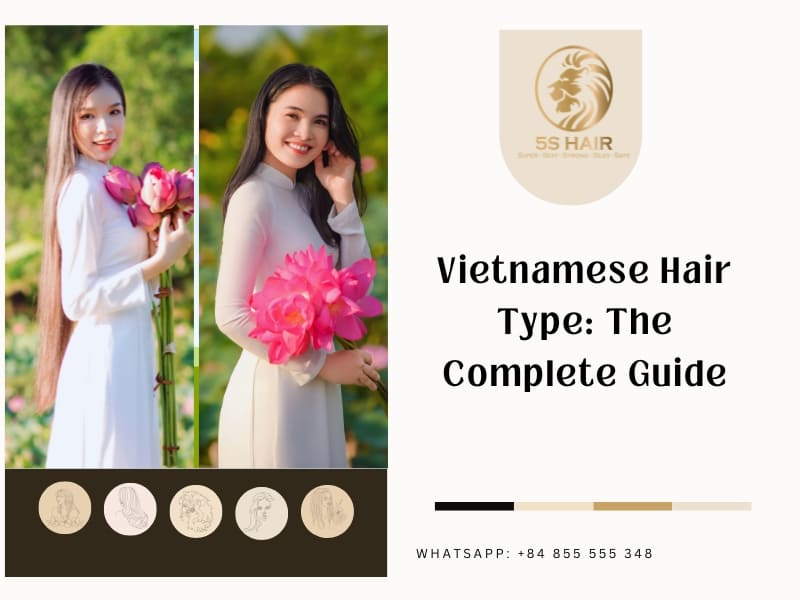
If you’ve ever shopped for hair extensions or wigs, you’ve probably heard people rave about Vietnamese hair. It’s known for being super high quality and really versatile, but there are actually a bunch of different Vietnamese hair types and grades to choose from. Picking the right one really depends on what you want to use it for.
What Hair Type is Vietnamese Hair?
Vietnamese hair is a naturally straight to slightly wavy type of human hair known for its thick, strong, smooth, and silky texture. It is highly valued for its natural density, durability, and versatility, making it easy to style.
In the hair extension industry, Vietnamese hair is widely recognized as a premium-quality option. Depending on the collection and processing methods, it can be offered as raw, virgin, or Remy hair.
The quality of Vietnamese hair stems from ethical sourcing and the healthy condition of donors’ hair. It is responsibly collected from healthy donors, primarily women living in high-mountain, rural villages across Vietnam. In addition, the traditional lifestyles and hair care practices of these donors contribute to the hair’s smooth texture and long-lasting quality.
Vietnamese Hair Types by Processing Level
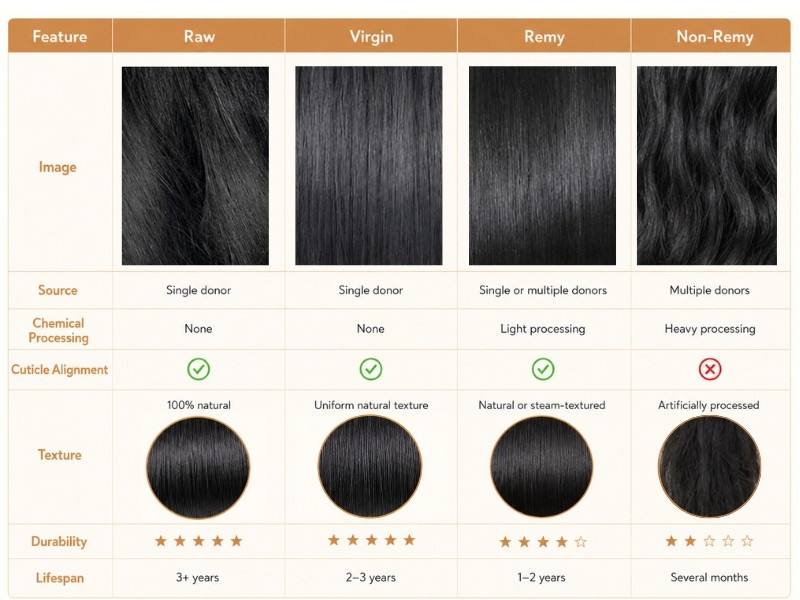
There are four main Vietnamese hair types: raw hair, virgin hair, Remy hair, and non-Remy hair.
Raw Vietnamese Hair
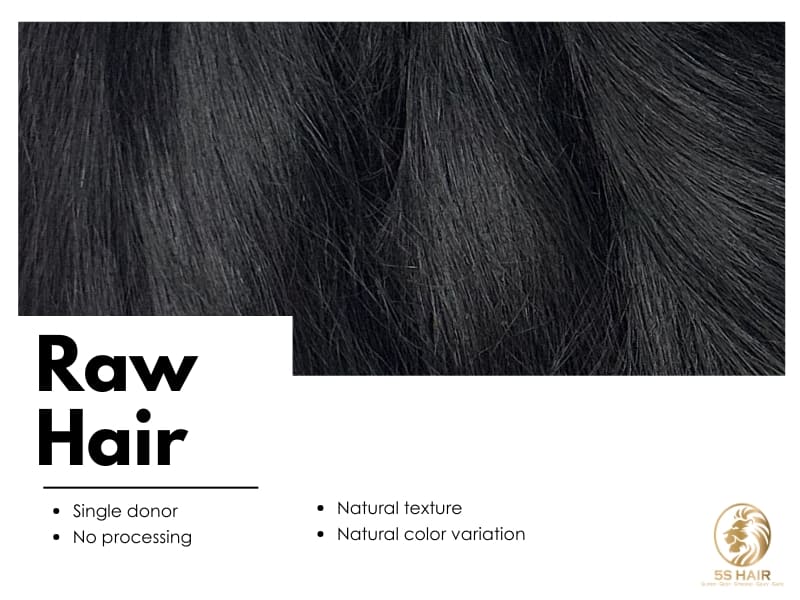
Raw Vietnamese hair is the purest and least processed type of Vietnamese hair available. It is collected directly from a single donor and remains completely free of chemical treatments, steaming, heat processing, or artificial coatings.
Because it has not been altered, raw Vietnamese hair keeps its original texture, which is typically straight or slightly wavy. It may also show subtle color variations, usually ranging from natural black to dark brown, as well as slight differences in texture between bundles. With proper care and maintenance, high-quality raw hair can even last for more than 3 years.
Virgin Vietnamese Hair
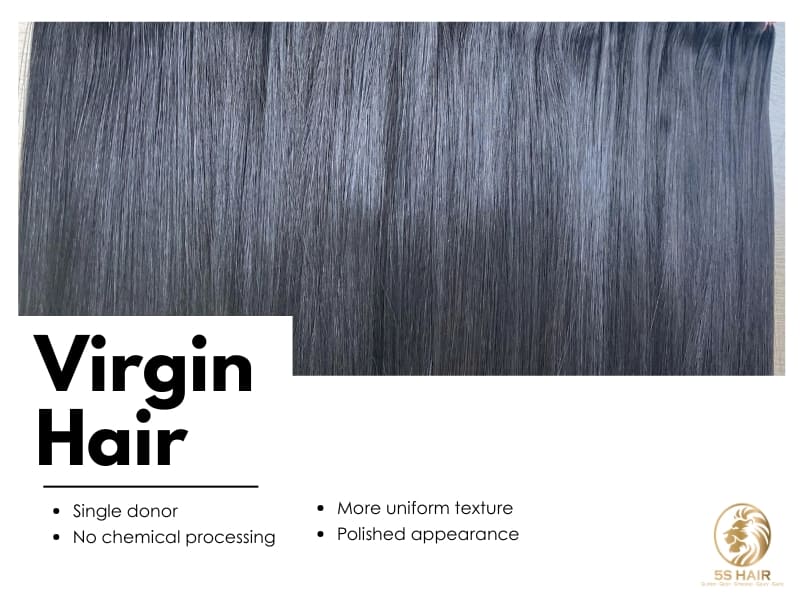
This is a premium-quality human hair that has not been chemically processed. It is free from bleaching, dyeing, perming, and other harsh chemical treatments.
Virgin hair is often collected from a single donor, but unlike raw hair, it may undergo minimal processing such as gentle cleaning, trimming, or subtle steam styling to create a more uniform texture or curl pattern. Because of this, virgin hair is typically cleaner and has a more polished, consistent appearance than raw hair.
In product descriptions, raw and virgin are often listed as separate terms. Raw emphasizes that the hair is unprocessed, while virgin emphasizes that it has not been chemically treated. In the commercial market, the term “virgin hair” is sometimes used more broadly than “raw hair”.
Remy Vietnamese Hair
Remy Vietnamese hair may be sourced from multiple donors and can undergo light processing, depending on the supplier. This processing may include dyeing or steam treatment to create specific textures, such as wavy or curly patterns. Its defining feature is that the cuticles remain aligned in the same direction, helping to reduce tangling and preserve a smooth, natural appearance.
Vietnamese Remy hair is a popular choice for those seeking a balance between quality and value. It offers good durability, ease of maintenance, and a more affordable price than raw hair.
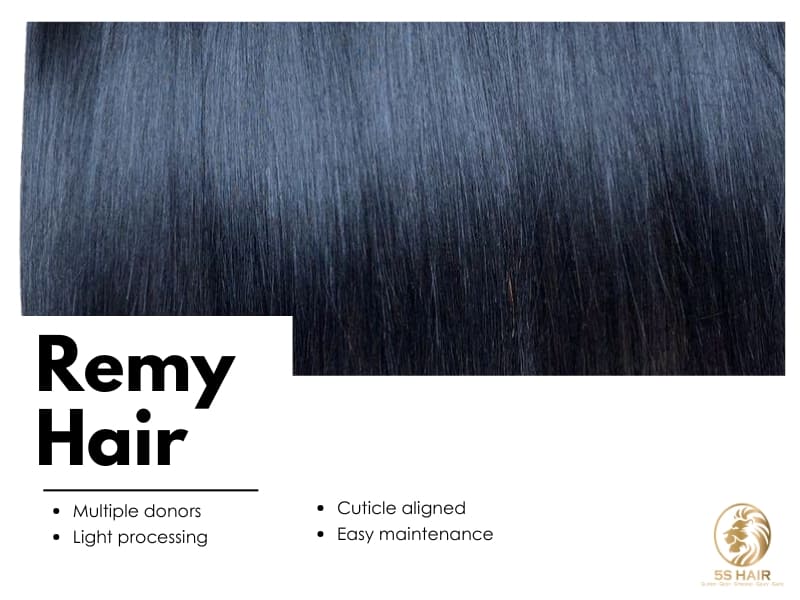
Remy hair is not technically low-quality hair – it is a good quality hair type that meets a specific standard, particularly in terms of how the cuticles are aligned and maintained.
Non-Remy Vietnamese Hair
Non-Remy Vietnamese hair is the most affordable and entry-level type of Vietnamese hair. It is typically collected from multiple sources without keeping the roots and tips aligned. As a result, the cuticles face different directions, making the hair more prone to friction, tangling, and matting.
To improve its appearance and manageability, non-Remy hair usually undergoes extensive processing. The cuticles are often removed through an acid treatment, and the hair is then coated with silicone to create a smooth, shiny finish that resembles healthy hair.
Compared with other Vietnamese hair, non-Remy hair has the shortest lifespan and the lowest overall quality. It requires more maintenance, is less durable, and is a popular choice for budget-conscious buyers or short-term use.
Drawn Grades in Vietnamese Hair Types
Vietnamese hair bundles aren’t all created equal when it comes to fullness. It really comes down to how many long strands are left after sorting. If you go for a higher drawn grade, you’ll notice the hair looks thicker and fuller all the way through, since most of the shorter pieces have been taken out.
Single Drawn Hair
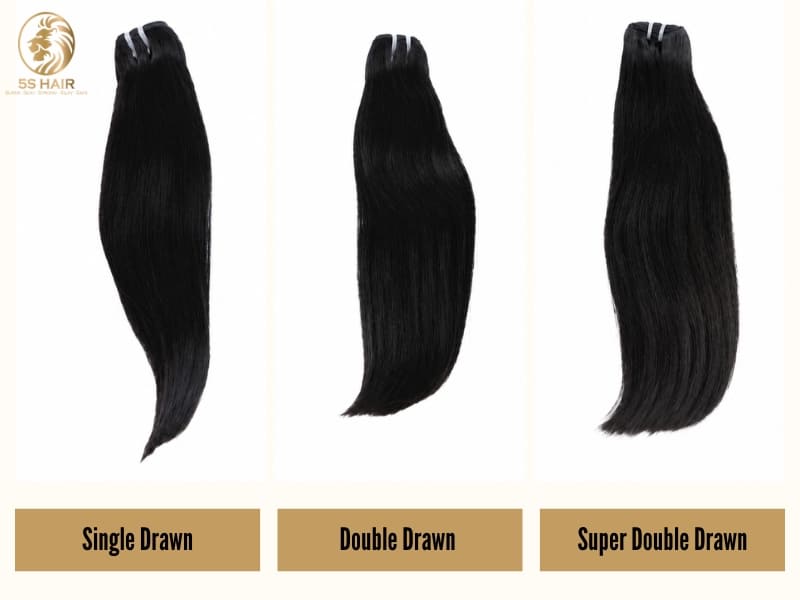
Single drawn hair is the most affordable option and delivers the most natural appearance because it closely resembles how hair grows naturally.
With this grade, approximately 50%* of the strands are the full bundle length, while the remaining hairs are shorter. Because the shorter strands remain in the bundle, the hair gradually tapers toward the ends instead of maintaining the same thickness throughout.
Double Drawn Hair
Double drawn hair is a noticeably fuller bundle compared to single drawn hair. Typically, about 60–70%* of the strands are the same full length, giving the hair a much more balanced density from the roots to the ends.
Double drawn hair is considered the most popular and versatile option since it combines natural movement with impressive fullness.
Super Double Drawn Hair
Super double drawn hair represents the highest and most luxurious drawn grade. Creating this quality requires removing almost all shorter hairs, making it the most labor-intensive and expensive option.
In a super double drawn bundle, approximately 80–90%* of the strands reach the full length, producing the greatest level of consistency and density. The bundle maintains maximum thickness from the top to the very ends, with little to no tapering.
* The exact percentages can vary slightly between manufacturers based on their grading criteria.
Texture Options for Vietnamese Hair
Vietnamese hair can be professionally styled into a wide range of textures without sacrificing softness or longevity.
Natural Textures
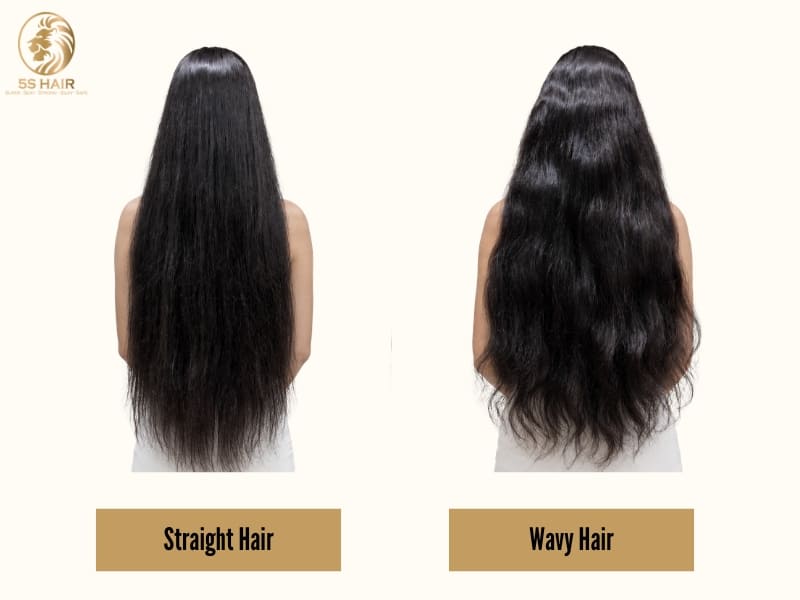
- Straight Hair: Straight is the signature texture of Vietnamese human hair. It features a naturally sleek appearance, smooth surface, and subtle shine. One of the main benefits is that it stands up well to frizz and humidity, and even if you curl it with heat, it will go straight again after washing. Common variations include Natural Straight and Bone Straight, with Bone Straight offering an ultra-sleek, polished finish.
- Natural Wavy Hair: Some Vietnamese hair has a naturally soft wave. This texture provides gentle movement and light volume.
Steam-Processed Textures
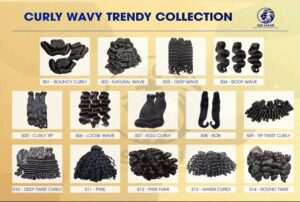
Vietnamese hair is widely used to create long-lasting textured styles through steam processing. These textures maintain their pattern through multiple washes while preserving the hair’s natural softness.
- Body Wave: One of the most popular choices, Body Wave features loose, flowing “S”-shaped waves that create natural movement and volume.
- Loose Wave: A softer, more relaxed wave pattern than Body Wave.
- Deep Wave: Deep Wave consists of tighter, more defined waves that deliver greater volume.
- Kinky Curly: Designed to resemble tightly coiled natural curls, Kinky Curly offers maximum fullness and texture.
- Pixie Curl: Tight, micro-sized ringlets with a springy, defined texture that create a bold, voluminous, and youthful look.
In addition, some manufacturers also offer specialty textures such as Egg Curl, Ripple Wave, and other proprietary patterns. Appearance may vary between suppliers – review product photos or request samples before purchasing.
What Makes Vietnamese Hair Stand Out
Countries carve out specific roles in the global human hair market, each with clear competitive advantages.
Table: Vietnamese hair vs other origins (Chinese, Indian, Brazilian)
| Feature | Vietnamese Hair | Chinese Hair | Indian Hair | Brazilian Hair |
| Natural Texture | Mostly straight to slightly wavy | Straight to coarse straight | Naturally wavy to curly | Usually wavy to curly |
| Strand Thickness | Medium to thick | Thick and coarse | Fine to medium | Medium to thick |
| Softness & Feel | Silky, smooth, lightweight | Coarser, heavier | Soft with natural movement | Soft, full, bouncy |
| Best For | Premium wigs and extensions, coloring, and long-term use | Budget-friendly options | Natural-looking waves and curls | Full-volume hairstyles |
| Competitive Strength | Globally recognized as one of the highest-quality sources of virgin human hair, valued for its consistency and durability. | Leader in hair manufacturing, processing, and large-scale distribution, supported by advanced production capabilities despite increasing reliance on imported raw materials | World’s largest human hair exporter, supported by abundant supplies of ethically sourced Remy hair and strong international demand | Strong premium brand recognition and desirable aesthetics, although genuine Brazilian-origin hair has become relatively rare. |
Vietnamese hair is considered a premium raw material in the global hair market, valued for its consistent quality. Vietnam has become one of the leading suppliers of raw human hair to North America, Europe, and increasingly the Middle East.
The steady quality of Vietnamese hair gives the country an edge, although the relatively limited supply compared to larger markets contributes to a bit higher prices.
Buying Guide: How to Choose the Right Vietnamese Hair
For first-time buyers and professional salons alike, consider these aspects to maximize product performance and avoid common purchasing mistakes.
- Matching hair type to your needs: Your priority should guide your choice. If quality and longevity matter most, raw Vietnamese hair is where it’s at. It can last 2–3 years with proper care, so the higher price tag actually pays off. If you want a balance of affordability and decent lifespan, double-drawn or single-drawn virgin is a solid choice.
- Signs of genuine Vietnamese hair: You can identify real Vietnamese hair by a few things. The cuticles all run in the same direction, so the hair doesn’t tangle or mat even after multiple washes. The shine is natural – not that fake, plastic gloss – and the texture is a little coarse but still soft, not weirdly silky. When wet, genuine hair maintains its pattern rather than reverting to a different texture, and it holds color well when dyed.
- Common signs of low-quality or mixed hair: If the hair looks uniform in color and texture across every strand, that’s a red flag – real hair always has a little variation. And if you catch a strong chemical smell, see dye running out in the sink, or notice the hair turning dry and brittle after just one wash, it’s probably not the real deal.
Read more: How Much Are Hair Extensions?
Conclusion
When you start looking for premium hair extensions, you’ll realize how important it is to really learn Vietnamese hair types and the different quality grades. Pay attention to the texture, how the hair is processed, and its grade. That way, you can pick hair that actually fits your business and your budget.
Frequently Asked Questions about Vietnamese Hair
For Vietnamese hair types, these are the frequently asked questions you need to know before you buy.
Where does Vietnamese hair come from?
Vietnamese hair is mainly sourced from women in rural and mountainous Northern Vietnam. Because many donors use traditional hair care routines and avoid harsh chemicals, their hair tends to stay strong and shiny. Reputable hair manufacturers, including 5S Hair, collect hair directly from donors and preserve the cuticle alignment through single-donor or raw sourcing.
Do Vietnamese have curly hair?
Most Vietnamese people naturally have straight or slightly wavy hair. Their hair is usually thick and strong, with a smooth surface. Since straight hair is so common, most Vietnamese hair used for extensions is naturally straight, which is something to keep in mind if you’re looking for a certain texture.
Why is Vietnamese hair considered high quality?
Vietnamese hair is prized for its natural thickness, strength, and smooth texture, largely because it is sourced from young donors with minimal or no exposure to chemical treatments. Wth consistent donor sourcing and competitive pricing, Vietnamese hair is one of the most popular choices for premium wigs and hair extensions worldwide.

Pingback: The 7+ Best Raw Vietnamese Hair Vendors in 2026