
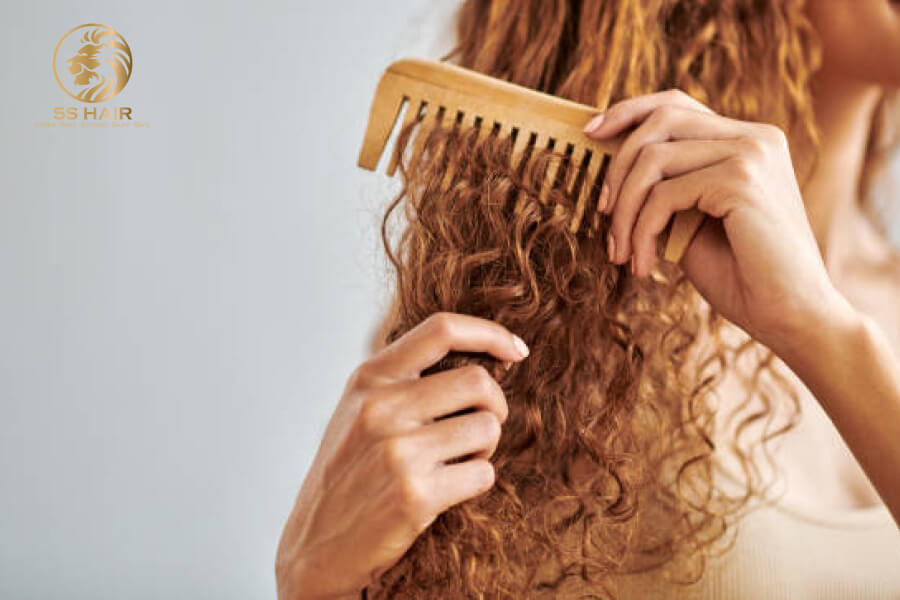
Proper maintenance is the secret to long-lasting hair extensions which all starts with the brushing technique. Unlike the natural hair, extensions need a specialized touch to prevent tension on the bonds or tapes.
In this article, we have put together the definitive guide on how to brush hair extensions. Follow along until the end so you don’t miss any valuable information for your perfect hair extensions!
Can you brush your hair extensions?
Can you actually brush your hair extensions? The short answer is definitely Yes – in fact, it’s a must. Skipping hair brushes is the fastest way to lead to matting and a very expensive trip back to the salon.
However, you can’t brush your extensions the same way as you do for your natural hair. You need a very specific technique to keep those bonds secure and your strand silky.
Brushing your hair extensions is not about looking neat, it’s about the health of both the extensions and your real hair. Since extensions don’t absorb the natural oils from scalp like the natural one, they are more prone to dryness and tangling. Frequent, soft brushing now keeps hair from matting near the scalp, which is the primary reason many people have to remove their extensions earlier than expected.
How to brush hair extensions?
Brushing extensions is a strategic process. Let’s break down the professional way to brush your extensions to keep them shed-free and not only silky smooth but shiny look! It involves 4 essential steps:
Step 1: Sectioning your hair
Brushing a thick mane of extensions all at once often results in missed tangles at the nape of the neck, which is the most common area for matting.
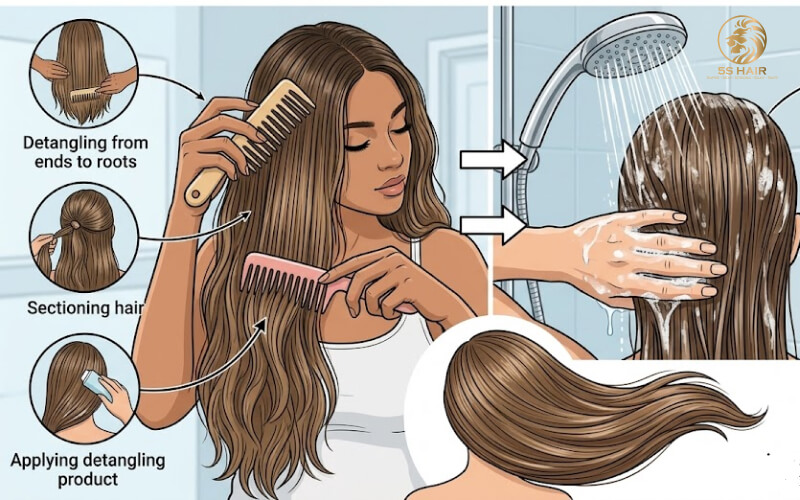
Use clips to divide the hair into 3 horizontal layers. Start with the bottom one (the part closest the neck) and work through it completely before dropping the middle and top sections.
The benefit of this step is that small sections allow for a thorough detangle without the need for aggressive pulling or heavy pressure.
Step 2: The anchor method
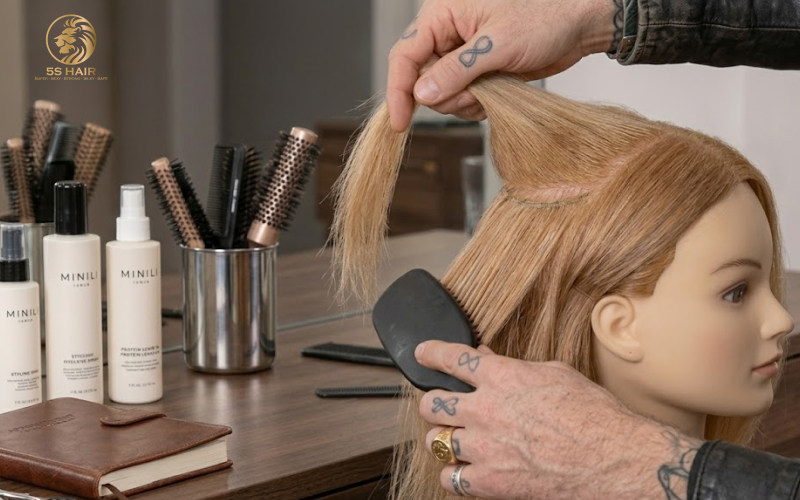
Gather a small section of hair in one hand and grip it firmly just below the attachment point (the bond, bead or tape)
This grip ensures that the physical force of the brush stroke is absorbed by the hand rather than the natural hair roots. It prevents the extensions from slipping or causing “traction” damage to the scalp.
Step 3: The bottom-up strategy
Starting up at the roots is the most common mistake in hair care, as it pushes small knots down into a larger, tighter tangle at the ends.
Begin by brushing the bottom 2-3 inches of the hair. One those ends are smooth, move the brush up to the mod-lengths and work back down through the tips.
This climbing technique clears the path for the brush, ensuring that once it reaches the top, it can glide smoothly to the ends without encountering resistance.
Step 4: Navigating the attachment zone
The area where the extension meets the scalp requires the most delicate touch of the entire process.
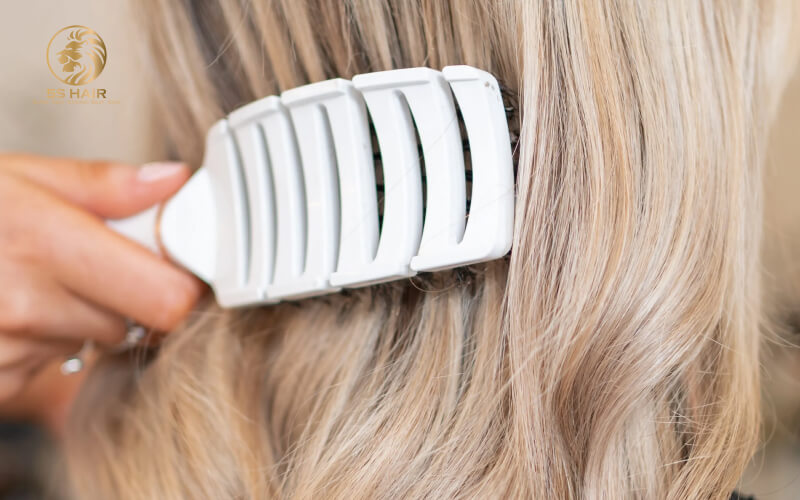
Once the lengths are smooth, release your grip and use a specialized loop brush or soft-bristle brush. Gently glide the bristles over the tapes or bonds.
Don’t use a standard comb or a brush with ball-tipped bristles in this area. Because they can snag the corner of a tape or the loop of a bead, causing the extension to shift or pull out.
Brushing techniques to follow
Beyond the basic mechanics, these expert tips can significantly extend the lifespan of extensions and keep the hair looking like it was just installed at the salon.
1. Detangle before hair washing
One of the effective tricks for extension longevity is brushing before getting into the shower. Water can act as a “lock” for existing tangles, making them much harder to remove once the hair is wet and heavy. Brushing while dry ensures that the shampoo and conditioner can penetrate every strand evenly without causing further matting during the washing process.
2. Be careful with wet hair
Hair is at its weakest and most elastic state when it gets wet. Brushing damp extensions can lead to significant shedding and can even cause the bonds to slide.
The tip for you is always wait until the hair is at least 80-90% dry before using a brush. If detangling is necessary while the hair is damp, use only a wide-tooth comb and a high-quality leave-in conditioner to provide “slip”.
3. The bedtime prep
One of the most significant damage to extensions often happens during sleep due to the fiction between the hair and pillowcase. The simple act of tossing and turning against a pillowcase can create tight, matted nests at the base of the extensions.
Securing the hair in a loose, low braid or a silk scrunchie before bed keeps the strands contained. Pairing this with a silk or satin pillowcase allows the hair to glide across the surface rather than catching on fibers of traditional cotton.

4. Using dry oil as a buffer
Dry oil provides the necessary mechanical slip for stubborn knots. Extensions do not receive natural oils from the scalp, which often leads to the ends becoming “grabby” or brittle.
Applying a lightweight, silicone-free oil to the lengths before brushing acts as a lubricant for the hair cuticles. This allows the bristles of the brush to slide through tangles rather than snagging on them.
This action protects the hair from the friction-based heat and breakage that occurs during heavy detangling.
5. Consistent and Gentle Grooming
Maintaining a schedule of brushing 2 – 3 times per day is the most effective defense against the formation of knots. Extensions are particularly prone to “nesting” after being tied up in a ponytail after a night of sleep, making it to brush before bed and immediately after removing hair accessories.
By consistently clearing the hair of daily debris and friction-based tangles, you maintain the natural movement and flow of the strands.
FAQs
1. How often should I brush my hair extensions?
For the best results, you should brush your extensions 2 to 3 times a day. You can follow up this sample schedule:
- Morning: To smooth out any tangles from sleeping
- Mid-day: A quick brush prevents “nesting” from the movement and friction against clothes.
- Night: Always brush thoroughly before braiding your hair for bed to ensure you don’t wake up with mats.
2. What to avoid when brushing hair extensions?
To keep your extensions in top shape, avoid these common mistakes:
- Brushing while soaking wet
- Starting at the scalp
- Using a standard plastic brush
- Rough tuning (If you hit a knot, don’t force it. Stop and work it out with your fingers first)
3. Is it possible to brush my hair with extensions?
Absolutely! Brushing frequently plays a vital role in maintaining good extensions. However, you must use a specialized loop brush or boar bristle brush and adopt the “bottom-up” also.
4. Top-rated brushes for hair extensions
Using the right tools is the difference between extensions that last six weeks and those that last six months. Here are the products consistently rated as “gold standard” by stylists and extension wearers:
- The Wet Brush Pro Extension Brush: This is specifically designed for extensions. It features “IntelliFlex” bristles that are gentle on the hair and specialized loops that won’t snag on tapes or bonds. It is widely considered the best budget-friendly option.
- Mason Pearson Popular Mix: The “Rolls Royce” of hairbrushes. It combines premium boar bristles with nylon spikes. The boar bristles distribute natural oils for incredible shine, while the nylon spikes help detangle without aggression.
- Denman D38 Power Paddle: This brush is excellent for those with very thick or long extensions. It offers a large surface area and flexible pins that respond to the shape of the head, making the “Bottom-Up” technique much faster.
Final thoughts
Brushing like a pro is easy with these simple steps. This routine keeps your hair smooth and your scalp comfortable. Try the products that I recommended and see the differences! Proper care is the best way to ensure your hair stays healthy and beautiful.
Follow us to update the newest technique for remaining good looking on your extensions!
