
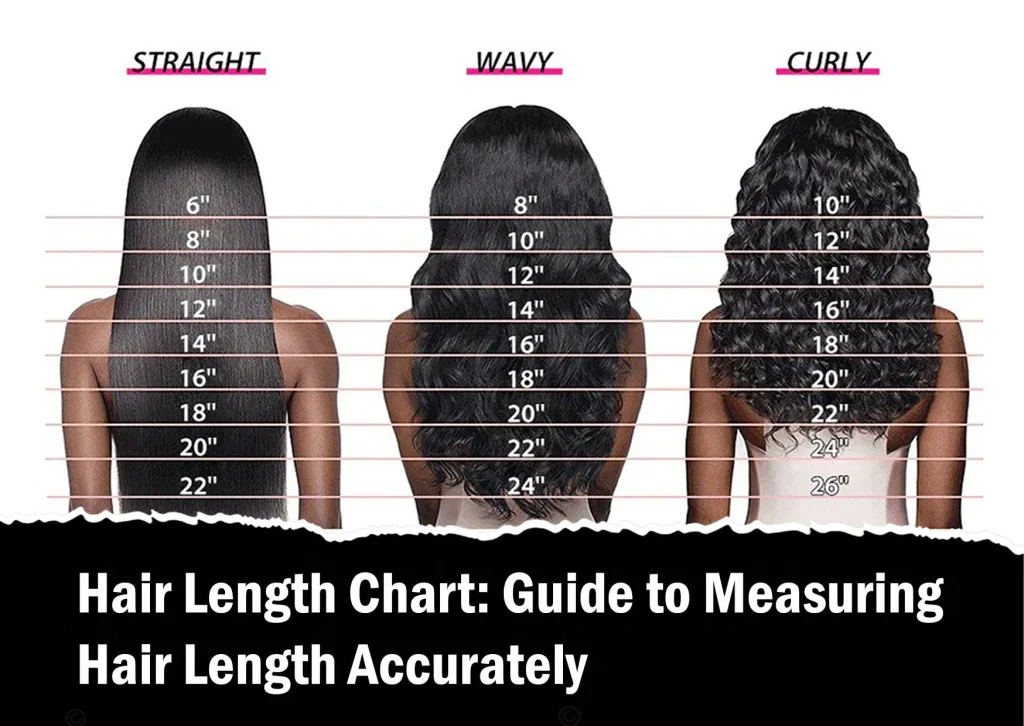
Not sure whether 18-inch hair will fall at your bra strap or mid-back? In this guide, you’ll find an easy-to-follow hair length chart for women, along with tips on measuring your hair correctly. Read it on!

Hair Length Chart for Women Reference
A hair length chart shows how many inches of hair match up with where your hair falls on your body. These measurements are approximate because everyone has different height, neck, and torso proportions. Use the chart as a guide when choosing a haircut, hair extensions, or a wig.
Hair length categories at a glance:
- Short hair (2–10 inches): Falls between the ears and shoulders.
- Medium hair (12–14 inches): Reaches the collarbone and upper back.
- Long hair (16–20 inches): Extends from the armpit to the lower back.
- Extra-long hair (22+ inches): Falls at the waist, hips, or beyond.
Table: Hair length chart inches for women (reference)
| Hair Length (Straight Hair) | Approximate Body Landmark | Length Category |
| 2–4 inches | Ear | Short |
| 6–8 inches | Chin | Short |
| 10 inches | Shoulder | Short |
| 12 inches | Collarbone | Medium |
| 14 inches | Upper back | Medium |
| 16 inches | Armpit | Long |
| 18 inches | Bra strap / Mid-back | Long |
| 20 inches | Lower back | Long |
| 22 inches | Waist | Extra-Long |
| 24 inches | Just below waist | Extra-Long |
| 26 inches | Hip | Extra-Long |
| 28–30 inches | Tailbone or longer | Extra-Long |
How to Measure Hair Length Correctly
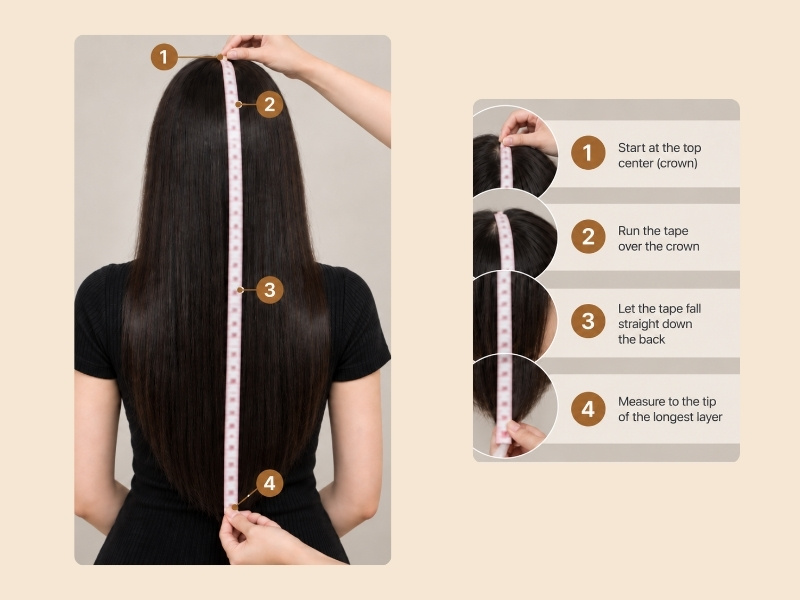
To compare your hair to a length chart or select a wig or extensions, use a flexible measuring tape, like a tailor’s tape, to measure your natural hair.
To measure your overall hair length:
- Place the end of the tape at the center of your front hairline.
- Run it over the crown of your head.
- Let it fall straight down the back.
- Measure to the tip of your longest layer.
If you have curly or coily hair, gently stretch a small section before measuring. If you’re planning a haircut, also consider how your hair falls naturally when dry, since curls will spring back after cutting.
Read more: Best Toner for Brown Hair: Top 5 Picks
How to Choose the Right Hair Length for Your Goals
Hair length affects how much care is needed.
| Hair Length | Maintenance Level | What You Can Expect |
| Short hair | Low daily maintenance | Short hair is easy to wash, dry, and style each day. It usually needs trims more often to keep its shape. |
| Medium hair | Moderate maintenance | Medium hair is long enough for ponytails and simple updos. It is still manageable for daily styling. |
| Long hair | High maintenance | Long hair gives you the most options for braids, buns, and curls. It usually takes more time to wash, detangle, condition, and protect the ends from damage. |
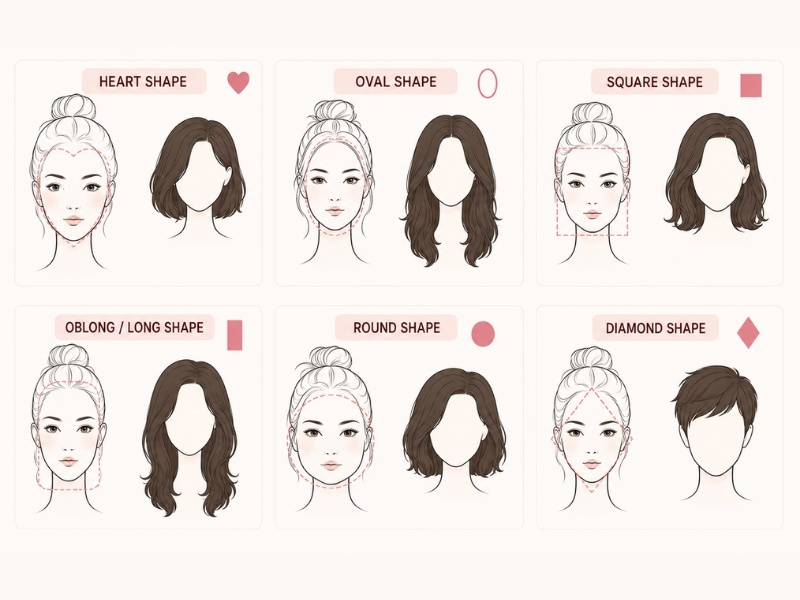
Hair length can help highlight your facial features, although personal preference should come first. Here are common hair length suggestions by face shape:
| Face Shape | Best Hair Lengths |
| Heart-shaped face | Chin-length bob, long bob, or medium-length hair |
| Oval face | Any length, from pixie cuts to waist-length hair |
| Square face | Shoulder-length, collarbone-length, or long hair |
| Long face | Chin-length bob, shoulder-length, or long hair with layers |
| Round face | Long hair, long layers, or textured pixie cuts |
| Diamond face | Shoulder-length or collarbone-length hair |
Your natural hair texture changes how different lengths look and behave.
| Hair Texture & Density | Recommended Hair Length |
| Fine or thin hair | Short to medium-length cuts with blunt ends |
| Thick or coarse hair | Medium to long lengths |
| Curly or coily hair | Pick the length you want, but remember that curly or coily hair may look shorter due to shrinkage |
How Long Does It Take Hair to Reach Your Desired Length?
Hair grows at different rates for everyone. Each hair is in a different stage of the growth cycle. Age, genetics, and your environment all play a role. While it is commonly said that hair grows about 1 cm (0.4 inches) per month, the reality is more complex because not all hairs grow at the same time.
The time it takes to reach a specific length depends on your starting point, hair texture, and genetics.
Keep in mind that breakage, frequent heat styling, chemical treatments, and poor hair care can slow your progress by preventing you from retaining the length your hair has already grown. Below are several tips to help your hair grow faster and stay healthy:
- Eat a balanced diet with plenty of protein, iron, and vitamins A, B, C, D, and E. These nutrients help keep hair follicles healthy.
- Limit chemical treatments like bleaching, perming, and coloring. These can weaken hair and cause more breakage.
- Reduce use of hot styling tools. Use the lowest heat setting, apply heat protectant, and avoid using them every day.
- Use products made for your hair type. Do not brush hair when it is soaking wet, as it is more fragile.
- Trim your hair every few months to remove split ends. This helps prevent breakage from split ends moving up the hair shaft.
- Take care of your scalp. Treat dandruff, irritation, or inflammation right away to support healthy hair growth.
- Manage stress. Chronic stress can disrupt the hair growth cycle and contribute to increased shedding.
- Condition regularly. Conditioner helps reduce breakage, improves moisture retention, and protects hair from environmental damage.
- Be gentle with wet hair. Use a wide-tooth comb to detangle and avoid rough brushing, since wet hair breaks more easily.
If you’re choosing a wig or hair extensions by inches, compare the listed length with your own body proportions. The same 20-inch length can appear longer or shorter depending on your height, torso length, and whether the hair is straight or textured.
Conclusion
Use this hair length chart as a reference whenever you’re exploring a new style, and don’t hesitate to save your favorite length to share with your hairstylist.
Read more: Good vs Bad Hair Extensions: How to Choose the Right One
Frequently Asked Questions
Should I measure a wig the same way as natural hair?
Wig length is measured from the crown to the ends with the hair straight. Natural hair length can look different because of texture, curl, or shrinkage.
How do I choose the right wig length for my desired look?
Think about your height, face shape, lifestyle, and the look you want. Short wigs are easy to care for and look neat. Medium and long wigs give you more ways to style your hair.
How much hair is too long?
There is no set rule for what is too long. Hair is too long if it is hard to style, wash, or manage. Wigs longer than 30 to 32 inches need extra care.
