If your dark extensions are starting to feel a little dull, it might be time for a change. Lightening hair extensions is a delicate process, but trust me, you will never regret it when it gets done. After some trial and error with lightening my extensions, I have found the ideal methods.
Read on to discover useful, reliable techniques for achieving a brighter, vibrant color without compromising the quality of your hair.
Can you lighten hair extensions?
Lightening hair extensions is possible, but it is a “proceed with caution” procedure. Unlike the hair growing from your scalp, extensions do not receive natural oils to help them recover from chemical stress. You can only successfully lighten 100% Remy human hair, as these strands still have an intact, aligned cuticle.
Synthetic fibers or “human hair blends” are made of plastics or highly processed materials that cannot withstand oxidation. If you attempt to lighten these, the hair will likely melt, mat, or dissolve. For human hair, experts recommend lifting the shade by no more than two levels to maintain a natural look and feel.
Even with high-quality extensions, the factory “lifting” process they already underwent makes them more porous. This means they will absorb chemicals faster and are more prone to breakage than your natural hair. Always view lightning as a structural modification that requires clinical-level precision.
How to lighten your hair extensions? 4 best methods you should know!
There are some typical methods to lighten your extensions. However, what ways suit you the most? Finding the 4 most popular methods to lighten extensions step-by-step!
Bleach bath
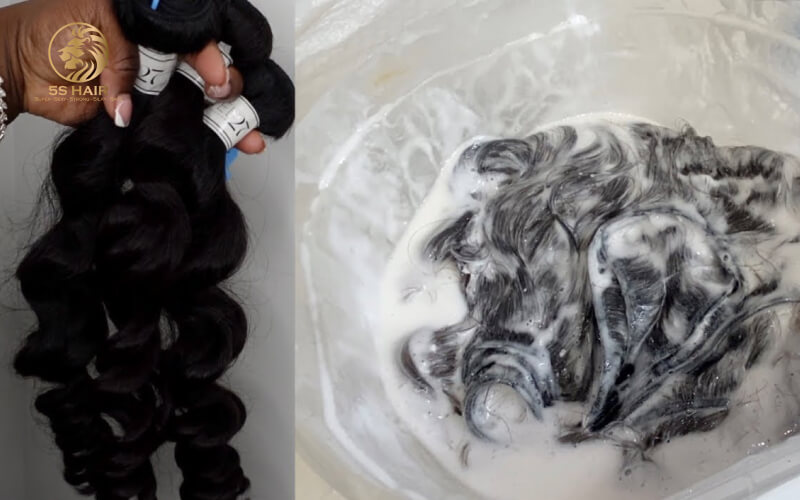
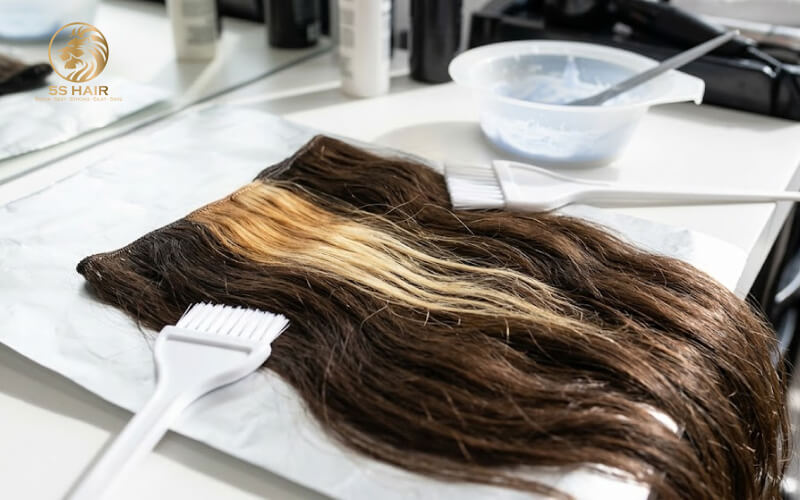
A bleach bath, often called a “bleach wash,” is the gold standard for gently lifting extension color by 1-2 levels. By mixing bleach powder and developer with a clarifying shampoo, you dilute the harshness of the chemicals. This allows for a slower, more even lift that is easier to monitor in real-time.
To execute this, submerge the extensions in the mixture and gently “milk” the strands from top to bottom. This method is ideal for removing stubborn factory dyes or shifting the hair from a dark brunette to a warm honey tone. Because it is less aggressive, it preserves the hair’s “bounce” and shine better than a standard bleach application.
Step-by-step guide:
- Step 1: Lightly dampen the hair extensions with lukewarm water. Do not soak them; they should be “towel-damp” to allow the cuticle to open slightly.
- Step 2: In a plastic bowl, mix 1 part bleach powder, 1 part 20-volume developer, and 1 part sulfate-free clarifying shampoo. Stir until the consistency is smooth and creamy.
- Step 3: Lay the extensions flat on a piece of foil. Starting from the bottom and working your way up, “milk” the mixture into the hair strands using your fingers. Stop about 2 inches away from the bonds or tapes.
- Step 4: Check the color every 5 minutes. Gently scrape off a bit of product to see the true shade. Once it reaches a pale yellow or your desired level, move to the next step.
- Step 5: Rinse thoroughly with lukewarm water. Immediately apply a pH-balancing conditioner or a deep-conditioning mask to stop the oxidation process and seal the cuticle.
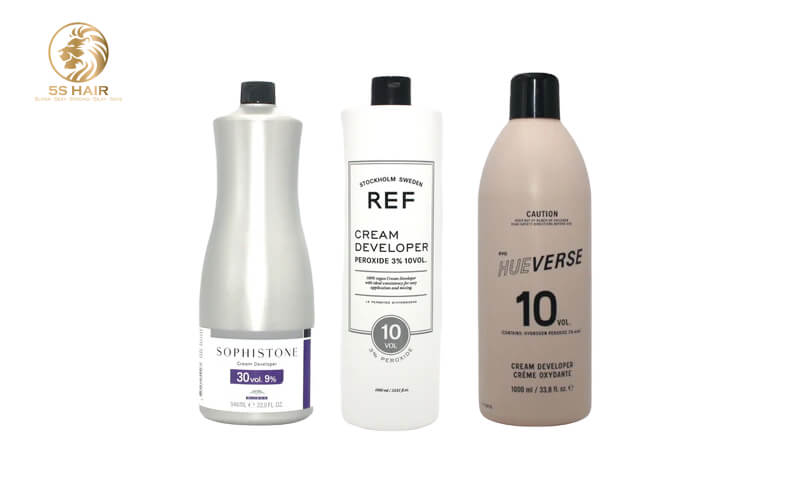
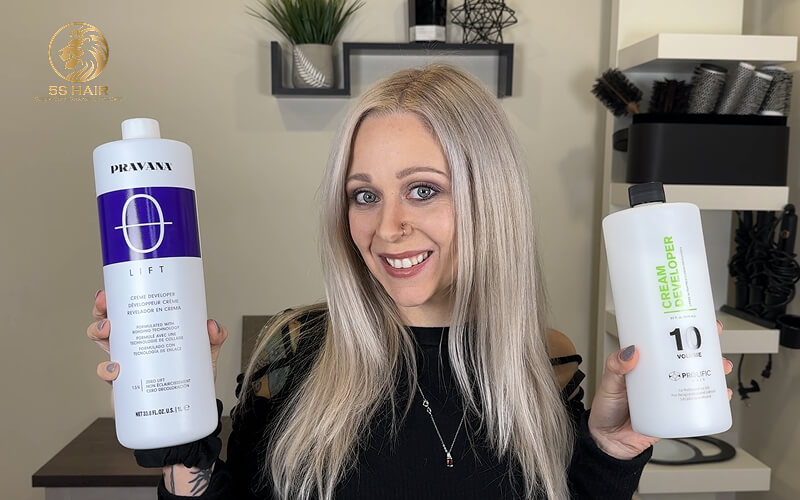
Using developer only
This method uses the oxidizing power of a 20-volume developer alone to slightly lift the color or “break” a dark toner. It is less aggressive than bleach but only offers a very minor change in shade.
This method works best on extensions that have been previously toned too dark. By applying the developer and letting it sit for 15–20 minutes, you can “break” the dark pigment. However, keep in mind that “color cannot lift color,” so if the extensions were dyed with a dark permanent ink, a developer alone may not be enough.
Step-by-step guide:
- Step 1: Dry prep: Ensure the extensions are dry and detangled using a wide-tooth comb.
- Step 2: Saturation: Pour the 20-volume developer into a bowl. Using a tint brush, apply the developer generously to the hair. The hair must be fully saturated to ensure an even lift.
- Step 3: Let the developer sit on the hair for 20 to 30 minutes. You may notice the hair becoming slightly warmer in tone as the dark pigment oxidizes.
- Step 4: Rinse the extensions under cool water. Since the developer is alkaline, follow up with an acidic hair rinse (like diluted apple cider vinegar or a professional sealing spray) to restore the hair’s natural pH.
Using purple & blue shampoo
Purple shampoo/ Blue shampoo is a non-chemical way to achieve an “optical lift”. It doesn’t actually remove pigment. Instead, purple shampoo uses violet micro-pigments to cancel out yellow and brassy tones (blue neutralizes orange). By neutralizing these warm colors, the hair appears cooler, brighter, and “lighter” to the naked eye.
The best approach is a “purple bath”. This is the safest way to “lighten” blonde extensions that have turned dull or “muddy” over time. It provides a refreshed, salon-bright look without any structural damage to the keratin.
How to lighten hair extensions by Purple shampoo:
- Step 1: Fill a clean sink or basin with lukewarm water. Add 2–3 pumps of high-pigment purple shampoo and whisk it until the water is a deep violet color.
- Step 2: Holding the extensions by the bonds, submerge the hair into the purple water. Submerge it around for 30–60 seconds. Do not leave it too long, or the porous hair may turn lilac. This prevents “over-toning” in which the hair turns a muddy grey or purple.
- Step 3: Lift the hair out of the water and check the tone. If it still looks brassy, dip it for another 30 seconds.
- Step 4: Once the yellow tones are neutralized, rinse the hair in cold water to “lock in” the cool pigments and add shine.
If you’d like to know what purple shampoo to use, check out this article Top 7 Best Purple Shampoo for Hair Extensions
Hybrid blending hack
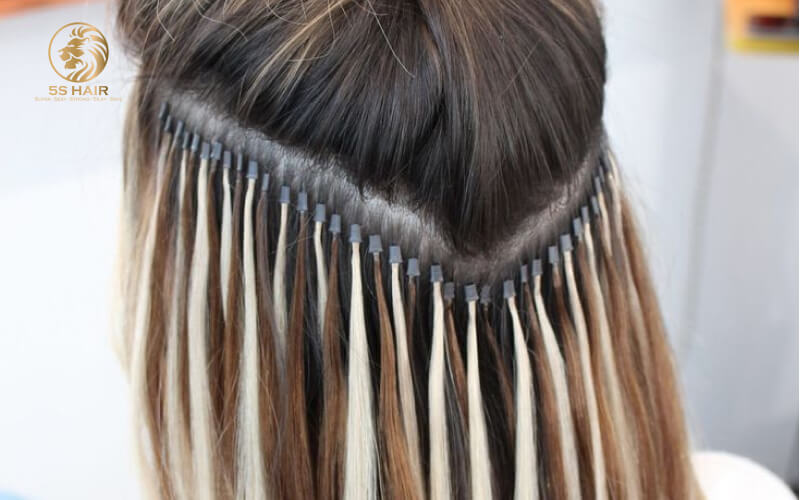
Hybrid blending is a non-chemical method of “lightening” your hair’s appearance by mixing different colored extension wefts. Instead of using chemicals to lift the pigment, you strategically integrate lighter strands to create a multi-dimensional, highlighted, or balayage effect that is completely safe for the hair’s integrity.
The safest chemical is the one you never use. “Hybrid blending” mimics the artistic technique of a professional colorist without the risk of “chemical cut” or permanent cuticle damage. It is the only 100% predictable method for achieving a lighter look.
Because it requires precise placement and an eye for color dimensions, this method is highly recommended to be done in a salon to ensure a seamless blend and to protect your natural hair from improper weight distribution.
The guide for lightening extensions by hybrid blending hack:
- Step 1: Select your accent shade – Because it requires precise placement and an eye for color dimensions, this method is highly recommended to be done in a salon to ensure a seamless blend and to protect your natural hair from improper weight distribution.
- Step 2: Identify your hair into the sections that frame your face. Install the lighter extensions in these front-facing rows. This creates an immediate “brightening” effect on your complexion, which is a core goal of most lightening treatments.
- Step 3: Instead of stacking light on dark randomly, use a “ribboning” method—placing thin, lighter wefts between layers of darker hair. This creates the illusion of a high-end salon balayage.
- Step 4: To ensure the two different colors look like one cohesive style, use a wide-tooth comb to blend the fibers. If the extensions are 100% human hair, a light wave with a curling iron will help the “light” and “dark” pigments merge seamlessly.
Expert advice when lightening your hair extensions
From the perspective of hair experts, we summed up our 3 secrets to help you lighten hair extensions without damage.
Taking the strand test
Taking the strand test is the most critical step for quality control. Cut a tiny snippet of hair or use one small weft to test your chemical mixture. This reveals how the hair reacts – if it turns gummy, snaps or lifts unevenly before you risk the entire set of extensions.
Maintaining the pH balance
Maintaining the pH balance is the must. Chemicals are alkaline, which causes the hair cuticle to swell and roughen. After lightening, you must use an acidic bonding treatment or a pH-balancing conditioner. This “closes” the cuticle, locking in moisture and preventing the extensions from becoming a tangled, matted mess.
Protect the bonds and tapes
Keep your lightening mixture at least an inch away from the attachment points. Chemicals can eat away at the medical-grade adhesives or weaken the thread of the weft, leading to shedding or the extensions falling out entirely.
FAQs
Lighter, brighter, and still 100% healthy. Get the facts on how we evolve your color while preserving the life of your extensions.
1. Can you dye extensions lighter without bleach?
As we mentioned before, the Salon Hybrid Blending method is the superior alternative for lighter lightening options. It allows you to achieve a multi-tonal, lighter aesthetic through strategic installation rather than chemical stripping, preserving the 100% health of the hair.
2. How many times can I lighten my hair extensions?
Ideally, you should only lighten hair extensions once. Every chemical session thins the protective cuticle layer. Attempting to lighten them multiple times usually results in “chemical cut,” where the hair becomes so brittle that it snaps off mid-strand.
Final thoughts
Lightening extensions is a great way to customize your style, but it risks permanent dryness and breakage. While methods like bleach baths, developer lifts, or hybrid blending work, the safest option is starting with the right shade. To avoid chemical damage and save time, we recommend 5S Hair for premium, 100% human hair in any color at an affordable, factory-direct price.
