
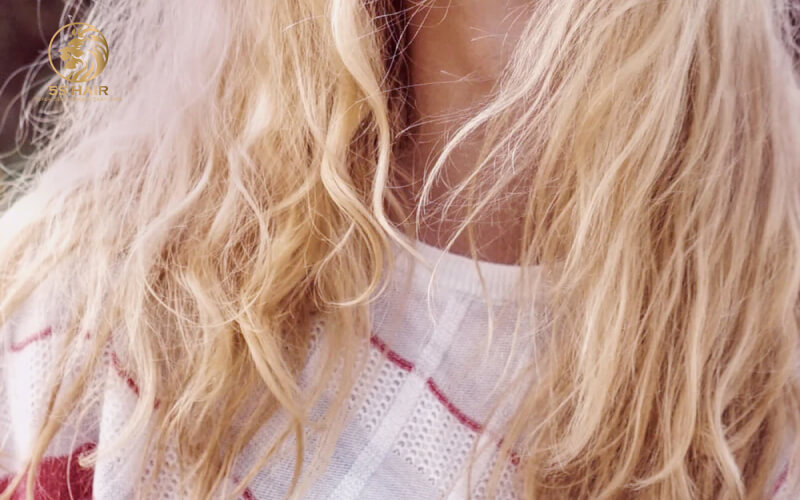
Is your hair looking a little “crispy” lately? Don’t panic. You can restore your hair’s natural movement and glow without leaving your kitchen. Through years of trial and error, I’ve discovered that you don’t need expensive salon treatments to fix the frizz.
This post covers the most effective DIY fixes for how to make hair extensions soft again at home. Whether you’re dealing with clip-ins or tape-ins, these tips will fix the frizz and restore the silkiness in no time.
Why are your hair extensions not silky and always dry?
The main reason extensions lose their silkiness is simple: lack of natural oils. While your natural hair stays hydrated via sebum produced by your scalp, extensions are “disconnected” from that source. Without those natural oils to coat the cuticle, the hair becomes parched and brittle.
Beyond the lack of natural moisture, several other factors contribute to that “crunchy” feeling:
- Product buildup: Overuse of hairsprays, dry shampoos, and heavy silicones can create a film that traps dirt and makes the hair look dull and stiff.
- Hard water minerals: If you live in an area with hard water, minerals like calcium and magnesium can attach to the hair, causing it to become rough and prone to tangling.
- Weather and UV damage: Just like your skin, extensions are sensitive to the environment. Harsh sun, wind, and humidity can strip away the moisture that keeps them flowing.
- High porosity from processing: If the extensions have been heavily bleached or dyed before you bought them, the cuticles are permanently “lifted,” making it nearly impossible for the hair to retain the moisture you put into it.
Understanding these causes is the first step in learning how to make hair extensions soft again at home. By identifying what is stripping the silkiness away, you can apply the right DIY restoration method to bring back that velvet-smooth texture.
How to make your hair extensions soft again at home?
Once you understand why your extensions have lost their luster, you can perform a “hair resurrection” right in your kitchen. Restoring softness is all about deep hydration and smoothing the hair cuticle back down. Here are the most 5 effective DIY methods to bring that silkiness back:
The deep conditioning soak
Think of your extensions like a dry sponge. If you just splash water on a sponge, the middle stays dry. A long soak gives the conditioner enough time to really sink deep into the hair strands.
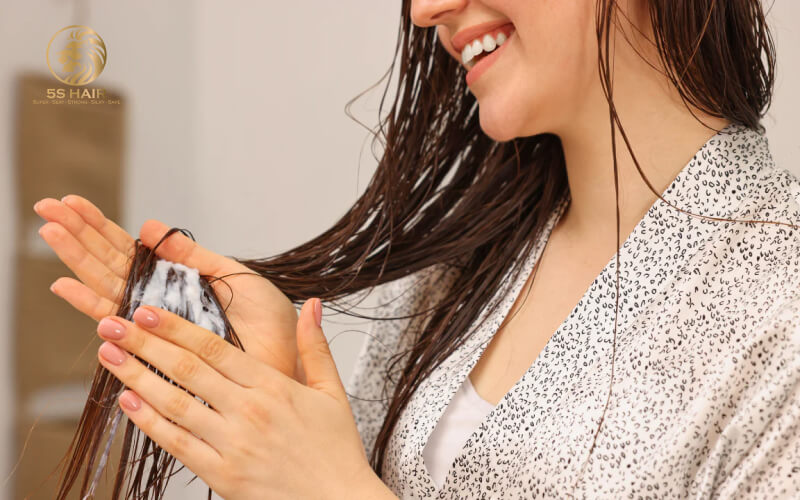
Fill a basin with lukewarm water and add a generous amount of sulfate-free, moisturizing conditioner or a dedicated hair mask. Submerge the extensions (keeping the clips or bonds out of the water) and let them soak for at least 3 to 5 hours—or even overnight. This gives the parched strands enough time to absorb the moisture they can no longer produce themselves.
To make this work even better, you can add a spoonful of honey to the water. Honey helps the hair grab onto moisture and hold it. While the hair is in the basin, gently run a comb through it. This makes sure every single hair is covered in conditioner, not just the ones on the outside of the bundle.
The apple cider vinegar rinse
Hair feels “crunchy” when the outer layer of the hair is ruffled up instead of lying flat. Vinegar is slightly acidic, which acts like a “reset” button. It forces that outer layer to snap shut and lay flat. When the hair is flat and smooth, it reflects light better, which is why it looks so much shinier after this rinse.
If your extensions feel “crunchy” due to product buildup or hard water minerals, an ACV rinse is a lifesaver. Mix one part ACV with three parts water (1:3 ration). Dip the hair into the mixture for a few minutes, then rinse them thoroughly with cool water. This closes the hair cuticle and restores the natural pH balance, instantly increasing shine.
Things like minerals from hard water or leftover hairspray can build up and make the hair feel stiff. The vinegar eats away that invisible film, leaving the extensions feeling light and soft again without using any harsh chemicals.
The hot oil treatment
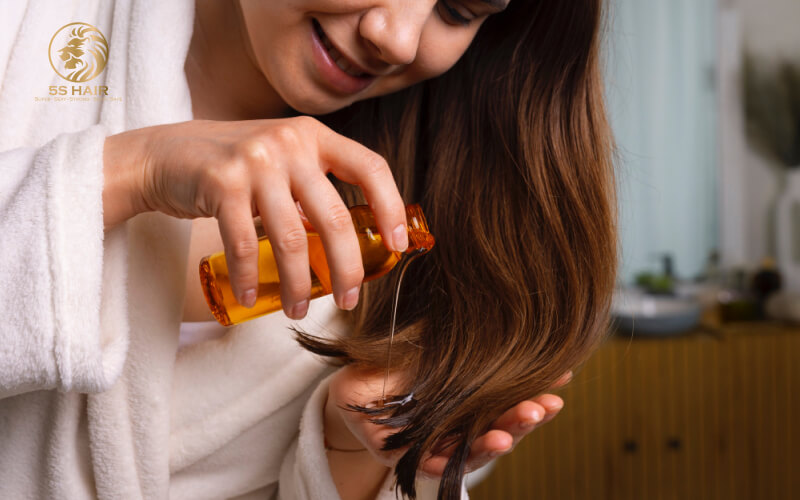
The goal here is to replace the natural oils the hair is missing. Thin oils like Argan or Jojoba are best because they are light enough to actually go inside the hair. Thick oils usually just sit on top and make the hair feel greasy. Using a warm towel helps “open up” the hair in a sealed plastic bag for 30 minutes so the oil can get in and do its job.
The gentle heat helps the oil penetrate the hair shaft deeper than a standard conditioner can. When you do this, only put the oil on the middle and the ends. You want to keep oil far away from the clips, tape, or glue at the top.
Oil is very good at breaking down adhesives, and you don’t want your extensions sliding out of your head the next time you wear them!
The boiling method
This is a “last resort” for hair that feels like straw. When you put the hair in very hot water with a heavy conditioner, the heat makes the hair swell up. This allows a massive amount of moisture to rush into the hair all at once.
For extremely matted or dry extensions, some pros suggest dipping the hair into hot (not boiling) water mixed with a heavy conditioner and a few drops of hair oil. This intensive heat treatment softens the fibers rapidly, like a heavy-duty spa treatment for hair that seems like it’s ready to be thrown away .
Caution: Only use this on high-quality human hair; synthetic fibers will melt!
Pro-tip for longevity of your extensions:
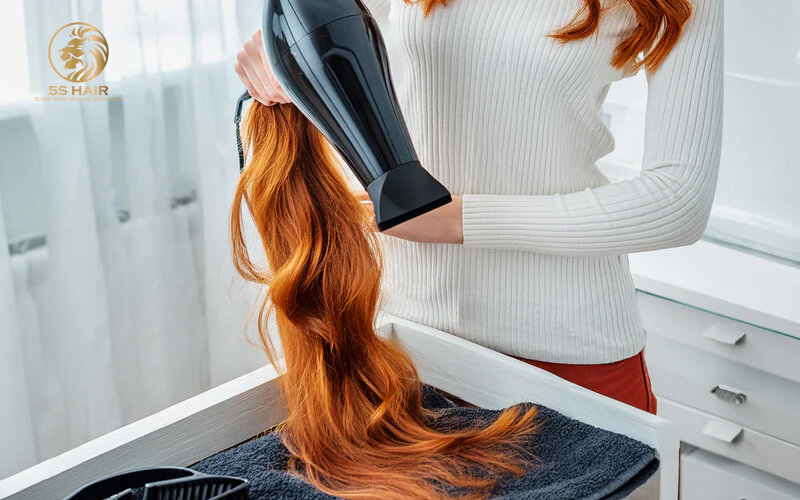
After your treatment, always air-dry your extensions. The worst thing you can do to wet extensions is blow-dry them or pull on them. Hair is very weak when it is wet.
Lay them flat on a microfiber towel instead of using a blow dryer. Avoiding “mechanical stress” while the hair is wet is the best way to ensure the softness you just restored actually lasts.
Once the hair is almost dry, use a tiny drop of hair serum. Think of this like a protective coat. It seals the moisture you just added inside the hair and creates a slippery surface. This prevents the hair from rubbing together and tangling up during the day.
What to do to keep your extensions soft
Maintaining that silkiness isn’t a matter of luck but about consistently replacing the natural hydration. This is the key because extensions simply can’t produce on their own.
Implement daily moisture replenishment
A lightweight leave-in conditioner spray or a few drops of Marula oil applied daily will provide the essential lubrication that extensions lack. This lightweight oil penetrates the hair shaft to lock in hydration without causing heavy buildup or leaving a greasy finish on the strands. Meaning it will prevent the “crunchy” texture that occurs when the hair becomes parched by the environment.
Daily hair extensions brushing
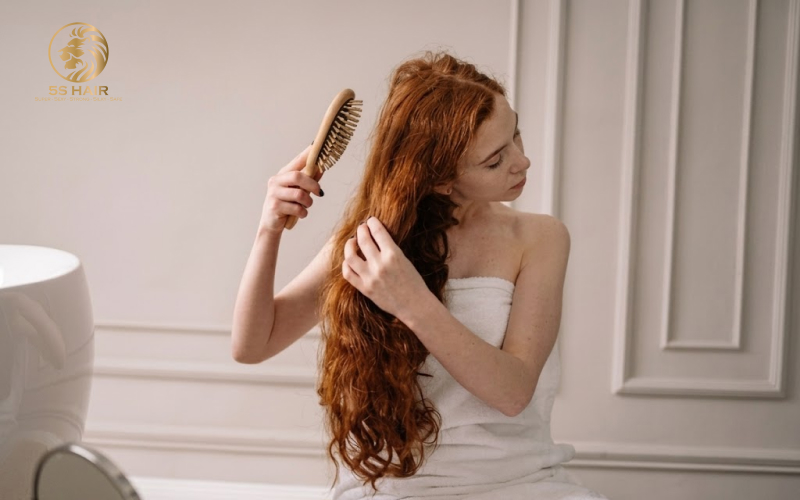
Always use a wide-tooth comb or a specialized loop brush to prevent unnecessary pulling. Start detangling from the ends and gradually work your way up to the roots. This “bottom-up” approach prevents the formation of massive knots and ensures the cuticle remains flat, which is the secret to keeping that glossy, light-reflective shine.
You can learn more about choosing the right tools in our comprehensive walkthrough on How to brush hair extensions correctly?
Friction-free
Friction is a major cause of dryness and frizz. Switch to a silk or satin pillowcase to allow the hair to glide smoothly while you move during the night. Additionally, braid your extensions loosely or with a low ponytail before bed to keep the strands organized and prevent the mechanical stress caused by tossing and turning which make you wake up in a crispy or tangled state.
Washing strategy
Frequency is key, wash your extensions as little as possible to preserve their factory coating. Use only sulfate-free shampoos and apply conditioner exclusively from the mid-lengths to the ends. Avoid getting heavy products on the bonds or tape, as this can cause slipping and build up near the scalp.
What to avoid to protect your extensions
Protecting your investment is often more about what you leave out of your routine than what you put in,as a single wrong product or habit can turn luxury hair into a matted mess.
High heat damage
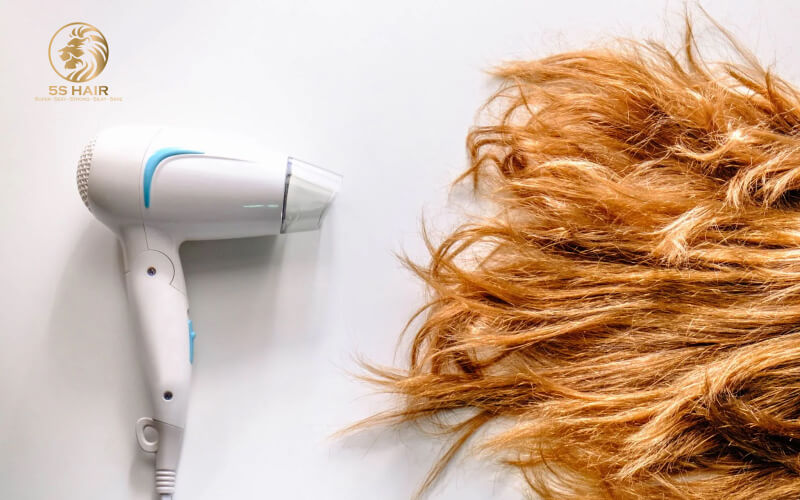
High-temperature styling tools are the most common cause of permanent dryness and frayed ends. Heat exceeding 180°C can scorch the hair fibers and permanently lift the cuticles, making it nearly impossible for the hair to retain any moisture you apply.
Air-drying extensions flat on a microfiber towel is always the safest option, as the high-velocity heat from a blow dryer can quickly strip away the hair’s silkiness.
Aggressive Detergents
Sulfates and alcohol-based products act as aggressive detergents that ruin extension quality (according to National Library of Medicine) . These ingredients are designed to strip away oils, which is disastrous for extensions that cannot regenerate their own moisture.
Avoid using heavy silicones or cheap hairsprays that create a stiff film, as this buildup traps dirt and minerals, making the hair look dull and feel like straw over time.
Chlorine and hard water minerals should be kept away from the hair to prevent chemical damage and extreme tangling. Swimming in pools or showering in unfiltered water allows calcium and magnesium to attach to the hair fibers, resulting in a rough, dry texture.
FAQs
1. How do I make my extensions silky again?
The key to restoring silkiness is a deep conditioning soak in a basin of lukewarm water for 3-5 hours. This allows the parched strands to absorb moisture deeply. In addition, you can also use a final cool-water rinse with apple vinegar to seal the cuticle to create a smooth, reflective shine.
2. How do you rehydrate dry extensions?
Use a hot oil treatment with Argan oil or Marula oil to mimic your lack of extension oils. Applying the oil and wrapping the hair in a warm, damp towel for 30 minutes helps nutrients penetrate the hair shaft, instantly softening the frayed, dry and “crunchy” texture.
3. How to revive old hair extensions at home?
Boiling method – which is dipping human hair extensions into hot water mixed with a heavy hair mask. This intensive heat treatment rapidly breaks down buildup and softens fibers. Don’t forget to air-dry them afterward to avoid further stress.
Final thoughts
Soft extensions require a proactive approach to hydration since they cannot produce their own natural oils. By mastering some methods like delicate brushing, moisture replenishment, and heat protection, you can transform brittle hair into a smooth and long-lasting asset.
To get the most helpful content and best quality of hair extensions with an affordable price, don’t miss us out on 5S Hair!
