Hair grading is often associated with letter-and-number systems such as 5A, 7A, or 10A, but these labels are not standardized and can vary between suppliers around the world. The Vietnamese hair industry, however, uses a different method to classify hair bundles.
Let’s figure out the three main Vietnamese hair grades – Single Drawn, Double Drawn, and Super Double Drawn – and compare their characteristics and appearance.
What Does Hair Grade Mean?
Hair grade is commonly used in the hair extension and wig industry. Brands and manufacturers love to use grading systems to classify their products, yet there is no universal or regulated industry standard for hair grades.
In general, hair grades are intended to indicate characteristics such as thickness from root to tip, softness, resistance to tangling and shedding, durability, and how minimally processed the hair is.
In theory, a higher grade represents better quality – thicker ends, longer-lasting performance, and less processed hair. However, because the hair extension industry has no standardized grading system, the same grade can have different meanings depending on the vendor.
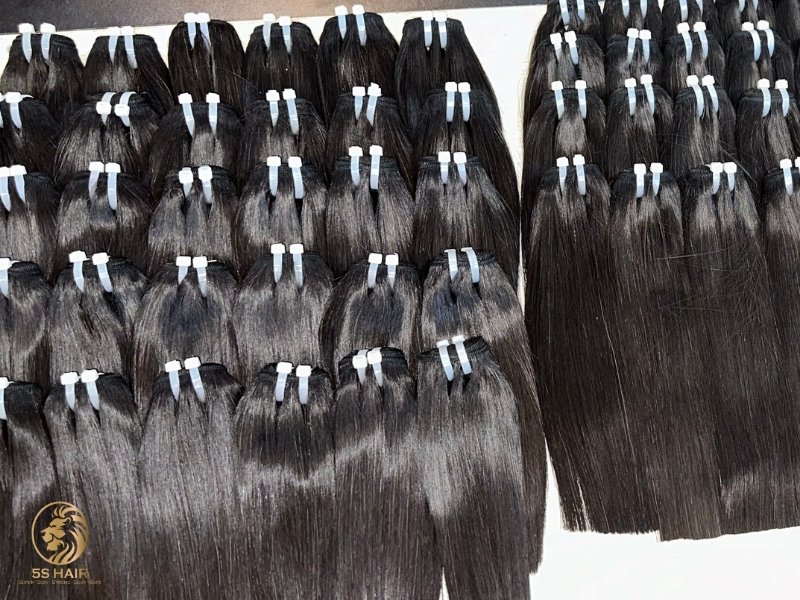
In fact, hair grading is more about a marketing system than any industry standard. The numbers you see, like 5A, 7A, or 10A, are just marketing terms vendors use based on their own criteria. There’s no official system behind them.
The Three Main Vietnamese Hair Grades Explained
Unlike hair grading systems in other regions, such as China (e.g., 5A, 7A, or 10A), Vietnamese hair manufacturers generally classify bundles using a different approach that focuses on strand-length uniformity and overall bundle fullness, commonly referred to as the drawn grade.
In other words, the Vietnamese hair grading system primarily evaluates how full and even the hair remains from root to tip. Hair grade does not tell the quality of hair – the best Vietnamese hair is generally raw hair, which remains in its natural state.
Below, let’s take a glance at three main Vietnamese hair grades – Single Drawn, Double Drawn, and Super Double Drawn.
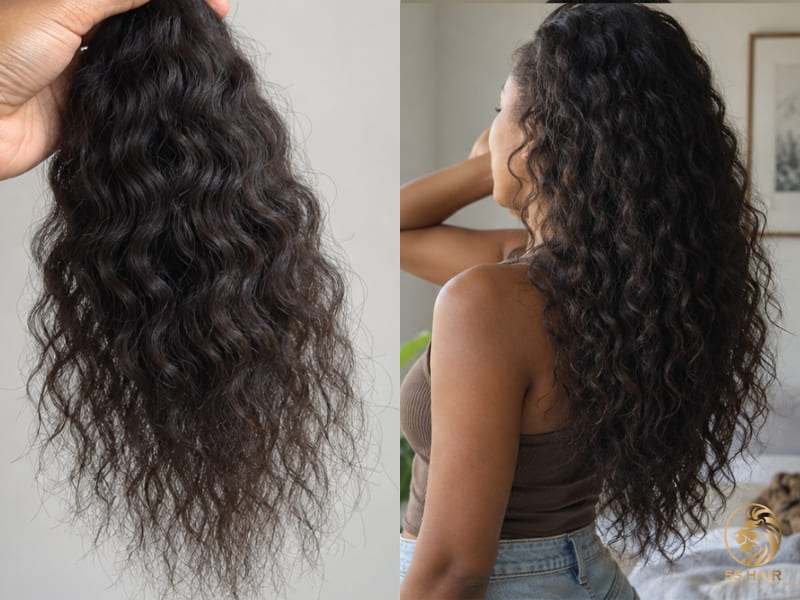
Single Drawn Hair
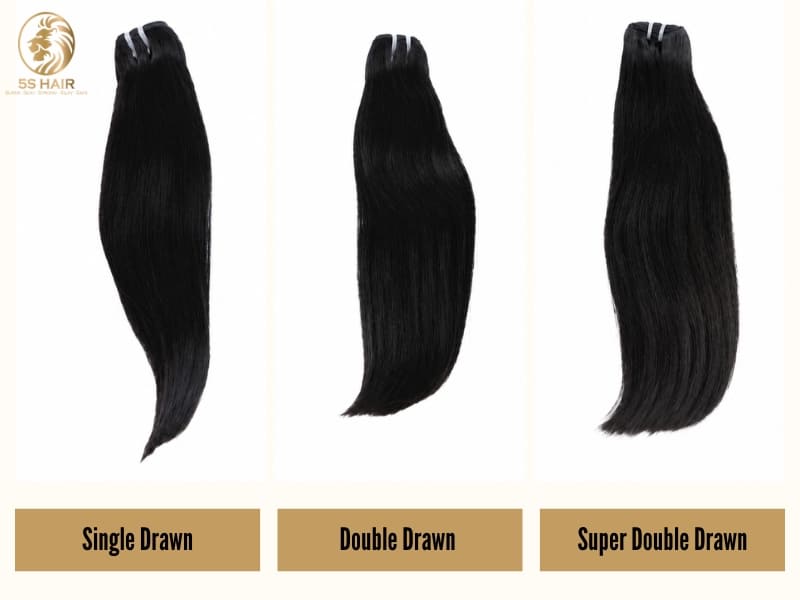
Single drawn Vietnamese hair bundles include about 50%* of the strands at the specified length, with the remaining strands naturally shorter.
Features:
- Mimics the natural growth pattern of human hair.
- Thick at the root with a gradual taper toward the ends.
- The result is lightweight hair with a naturally soft, layered appearance.
Use Case: Best for anyone who prefers a natural, everyday style or is shopping on a budget. Single drawn hair is especially popular for curly and wavy textures, where extra thickness at the ends is not essential.
Double Drawn Hair
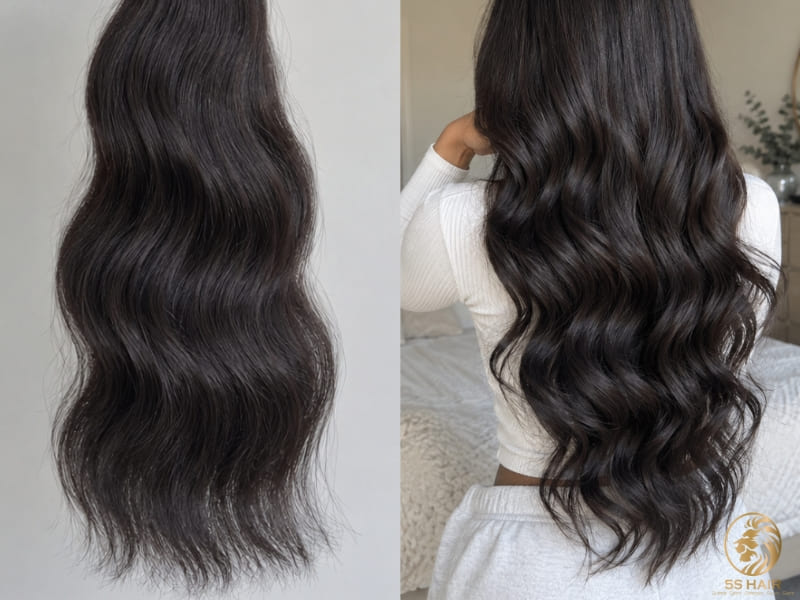
Double drawn hair contains approximately 60–70%* of strands at the specified length, with the remaining 40% to 30% consisting of shorter strands.
Features:
- Fuller and thicker compared to single drawn hair.
- Shorter hairs are manually sorted out to create more consistent density.
- Maintains healthy-looking volume further from root to tip.
Use Case: Double drawn hair is a good pick if you want a balance between premium fullness and price. It works for straight, body wave, and bouncy styles that benefit from a fuller appearance.
Super Double Drawn Hair
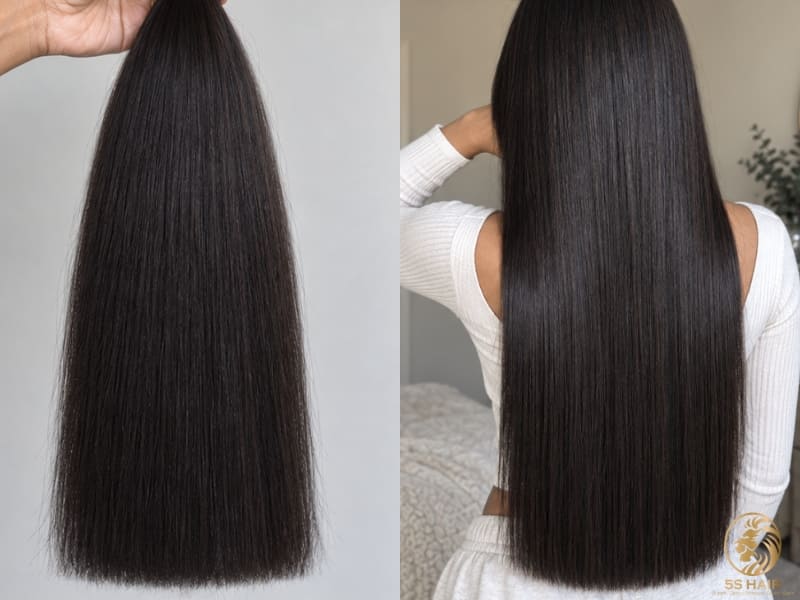
Super double drawn hair contains approximately 80–90%* of strands at the same specified length.
Features:
- This is typically the highest drawn grade offered by most Vietnamese manufacturers.
- Short hairs are carefully hand-sorted to create exceptional thickness and uniformity.
- Maintains consistent density from the roots to the ends with virtually no tapering.
Use Case: Super double drawn hair is best suited for luxury installations, sleek bone-straight hairstyles, blunt cuts, and thick weaves that require maximum fullness and a highly uniform appearance.
* The exact percentages can vary slightly between manufacturers based on their grading criteria.
Read more: How to Import Hair from Vietnam & Estimate Total Costs
Vietnamese Hair Grade Review: Which Vietnamese Hair Grade Should You Choose?
Trying to figure out which one is best for you? This is a quick summary:
- Best grade for salons and professional stylists: Super double drawn hair is the top choice for salons. It’s the go-to for luxury installs.
- Best grade for wig makers and extension businesses: Double drawn hair strikes the perfect balance between fullness and cost. It gives wig makers and extension businesses a premium yet practical option for repeat production.
- Best grade if you’re shopping on a budget: Single drawn hair is often the most budget-friendly option. Its natural taper and lightweight, layered look make it a good fit for everyday wear.
Expert Tips to Identify Authentic Vietnamese Hair
To verify whether Vietnamese hair is genuinely Single Drawn, Double Drawn, or Super Double Drawn, evaluate the hair’s physical characteristics.
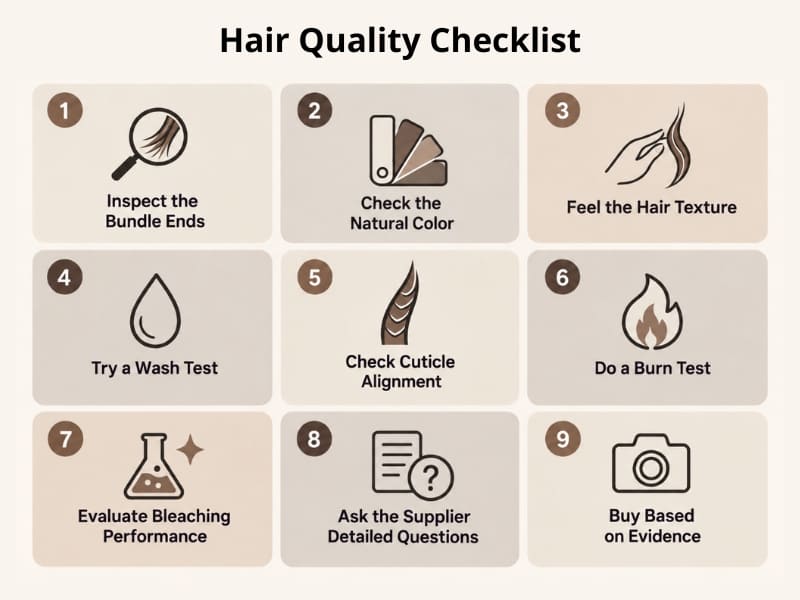
#1. Inspect the Bundle Ends:
- Single Drawn Hair usually forms a soft “V” shape with many shorter strands blended throughout the bundle.
- Double Drawn Hair appears much fuller, but you’ll still see a slight natural taper remaining at the tips.
- Super Double Drawn Hair has thick, blunt, and highly uniform ends with very few shorter strands.
#2. Check the Natural Color: It’s normal for bundles to have slight color variations. However, if the hair looks perfectly uniform or unnaturally jet black, it’s probably been heavily processed or factory dyed.
#3. Feel the Hair Texture: Good Vietnamese hair feels naturally soft and smooth, but not slippery or greasy.
#4. Try a Wash Test: Wash a small piece with clarifying shampoo. If the hair becomes very dry, tangles easily, or changes texture significantly after one wash, it may have been treated with chemical coatings.
#5. Check Cuticle Alignment: Slide your fingers from root to tip on a strand – it should feel smooth. Going from tip to root, you’ll feel a bit of resistance if the cuticles are intact.
#6. Do a Burn Test: Burn a small strand. Real human hair burns slowly, smells like burning hair, and leaves soft ash.
#7. Evaluate Bleaching Performance: Raw Vietnamese hair is naturally dark but responds well to chemical lifting. When tested on a small hidden section, authentic hair can generally lift to light blonde shades while maintaining elasticity and strength.
#8. Ask the Supplier Detailed Questions:
A reputable supplier should be able to explain:
- Whether the hair is raw, virgin, or Remy.
- The donor source and collection process.
- How the bundles were sorted into Single Drawn, Double Drawn, or Super Double Drawn grades.
#9. Buy Based on Evidence:
Ask for photos in natural light, and request results from wash, heat, or bleach tests. Evaluate the bundle’s fullness before making a purchase. These steps give you a much better idea of what you’re really getting.
Final Thoughts
We hope this guide helps you better understand the main Vietnamese hair grades and make a more informed decision. If you’d like to learn more about Vietnamese hair sourcing and quality standards, you can explore our other guides.
Frequently Asked Questions
What is the difference between Single Drawn and Double Drawn Vietnamese hair?
Typically, Single Drawn Vietnamese hair contains approximately 50% full-length strands; Double Drawn hair contains around 60–70% full-length strands.
What is the difference between Single Donor hair and Double Drawn hair?
Single donor hair refers to the source of the hair, which means all the hair in a bundle comes from one person. Double drawn hair refers to the bundle’s fullness – about 60–70% of the strands are the same length.
Does a higher hair grade mean better hair quality?
Not always. In theory, higher hair grades show better quality. However, there is no universal hair grading system. Grading standards vary between manufacturers, and a higher grade can not guarantee better hair quality. When evaluating hair, the best choice depends on factors such as hair origin, cuticle integrity, processing methods, the supplier’s reputation, and your specific needs.
What hair type is Vietnamese hair?
Vietnamese hair is human hair sourced from Vietnamese donors. It is straight, strong, thick, and smooth, with intact cuticles that contribute to its durability and natural shine.
Does the price per gram differ significantly between grades?
The higher the drawn grade, the more you’ll pay per gram. Single Drawn is the affordable option, while Super Double Drawn is the most expensive.
