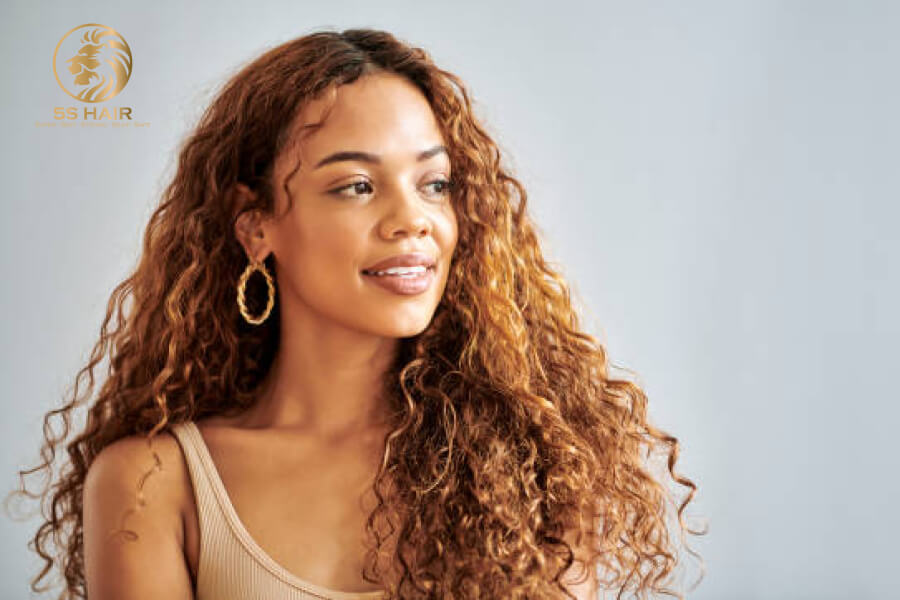
Perming hair extensions is a common question for anyone looking to add permanent texture to their style. So, can you perm hair extensions? It is technically possible to perm certain types of extensions. I know from experience that doing it without the right knowledge leads to matted, frizzy, and expensive disasters.
In this post, we’ll share 6 steps to achieve a long-lasting new look for your extensions in the article below!
Can you perm your hair extensions?
You can perm hair extensions only if they are made of 100% human hair. The reason you cannot perm synthetic hair comes down to basic chemistry.
Synthetic extensions are made from polymers like acrylic, nylon, or polyester. These are essentially fine strands of plastic. Unlike human hair, which is made of protein, plastic does not have “bonds” that can be reshaped.
When you apply a perm solution to synthetic hair, it doesn’t curl the plastic. Instead, it starts to break down the chemical structure of the polymer itself. Because perm solution usually contains a strong chemical called ammonium thioglycolate.
This causes the “hair” to soften, sizzle, and eventually melt. Instead of beautiful curls, you end up with a clump of fused plastic that is impossible to brush or save.
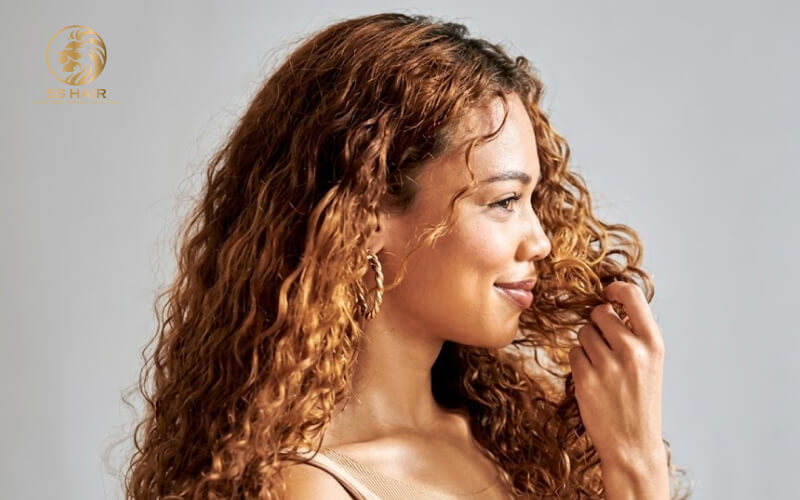
What extension can be permed?
Determining which hair extensions can safely withstand a perm requires a thorough understanding of hair origin and previous chemical history. There is only one type of hair extensions that can be permed which is 100% human hair extensions.
Human hair is the only material that can be successfully permed. Because it is organic matter, it contains the disulfide bonds necessary for a perming solution to break and reform into a new shape. Within this category, however, the “grade” of the human hair matters:
- Virgin hair: The “Gold Standard” for perming. Since it has never been colored or chemically treated, it has the strength to handle the perming process with minimal damage.
- Processed human hair: Most extensions are pre-colored. While they can be permed, they are more porous and fragile. You must use a gentler, acid-balanced perm solution to avoid “frying” the already-processed strands.
Virgin hair is the most resilient candidate for perming. Since this hair has never been chemically processed, bleached, or dyed before being harvested, its cuticle remains fully intact. Moreover, its internal protein structure is strong.
You can not perm synthetic hair. These extensions are essentially fine strands of plastic or acrylic. The chemicals in a perm – typically ammonium thioglycolate react violently with plastic, causing the strands to melt, frizz or dissolve into a matted mess.
Composite rule – The most vital factor is whether the hair is human or synthetic. 100% human hair extensions can be permed because they process a natural cortex and cuticle that can be reshaped by chemical bonds.
However, most extensions have already been heavily processed such as bleached, dyed or acid-washed during manufacturing, they are significantly more porous than the hair growing from your scalp. This means they will absorb the perming solution much faster, increasing the risk of over-processing.
Expert tips: To protect your hair extensions, always perform a strand test first and consider perming the hair off-head to ensure the chemicals don’t comprise the attachment bonds.
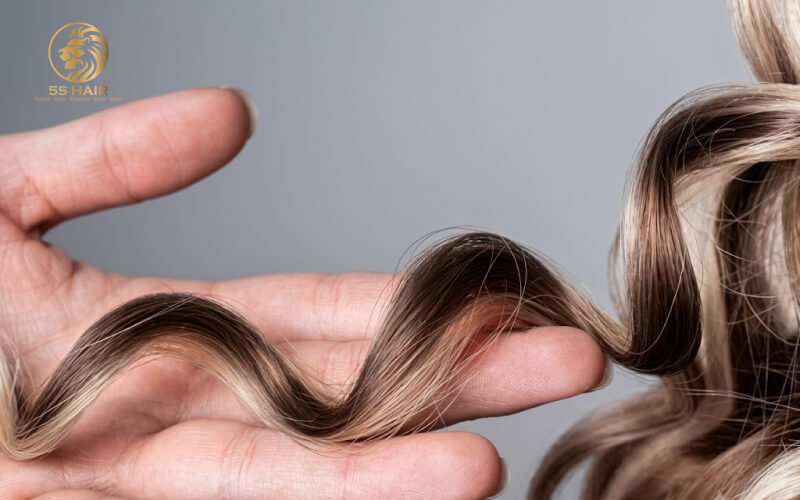
How to perm your hair extensions
Disclaimer: Because hair extensions have already been chemically processed during manufacturing, they are highly unpredictable. We strongly recommend taking this guide to a licensed professional stylist rather than attempting a DIY perm, as mistakes at home often result in permanent hair loss and ruined extensions.
Step 1: Preparation and the strand test before perming hair extensions
Never skip the strand test when perm your hair extensions. This is your only way to know if the hair will survive or disintegrate.
- Step 1: Cut a tiny, about 1 inch section of hair from a hidden area of the weft.
- Step 2: Apply the perm solution. If the hair becomes gummy, changes color or snaps when you pull it, stop immediately – the extensions can not be permed.
Step 2: Deep cleaning
Extensions are usually coated in silicone to make them shiny in the package. This coating blocks chemicals. You must remove this barrier so the perm takes evenly.
If you don’t remove this coating, the perm solution will slide right off the hair or penetrate unevenly, leaving you with curls in some spots and straight frizz in others.
Use a high-pH clarifying shampoo. Scrub the hair gently (avoiding tangling) until the hair feels slightly “rough” to the touch. This indicates the cuticle is open and ready to receive the chemicals.
Expert tips: Never use conditioner, as it reseals the cuticle and defeats the purpose of the wash.
Step 3: Wrap hair
How you wrap the hair determines the final curl architecture. If you wrap the hair too tightly around the rod, the hair will swell when the chemical hits it and snap against the tension of the rod. If it’s too loose, the curl won’t take.
Using end papers to extend past the tips of the hair. This ensures the ends – the oldest and most fragile part of the extension – don’t bend or “fish-hook.” A fish-hook is a permanent, jagged kink that cannot be brushed or heat-styled out.
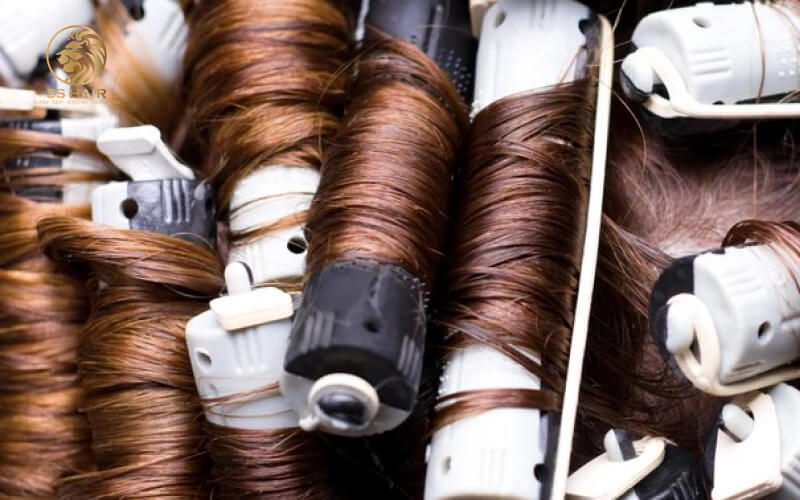
Step 4: Applying the solution
Extensions are far more porous than natural hair, meaning they act like a sponge for chemicals. Most “box perms” are alkaline (ammonium thioglycolate), which is far too aggressive for extensions.
A professional acid-balanced perm (Glyceryl Monothioglycolate) is required because it has a lower pH and works more slowly, giving you a wider window of safety.
Caution: You must perform a “test curl” every 5 minutes by slightly unwrapping one rod. If the hair forms an “S” shape that matches the diameter of the rod, it’s done. Over-processing by even 120 seconds can lead to permanent cuticle loss.
Step 5: Neutralizing and rinsing
Once the curl has set, rinse the hair thoroughly with lukewarm water for at least 5 minutes while it is still on the rods. The neutralizer (hydrogen peroxide) isn’t just a rinse; it’s the “glue” that reforms the hair bonds into their new curly shape.
Apply the neutralizer and let it sit for the recommended time (usually 5-8 minutes). This “locks” the hair into its new curly shape.
The rinse is the most underrated step. If any perming solution remains on the hair when the neutralizer is applied, it creates a heating reaction that can cook the hair from the inside out.
Step 6: The stabilization phase
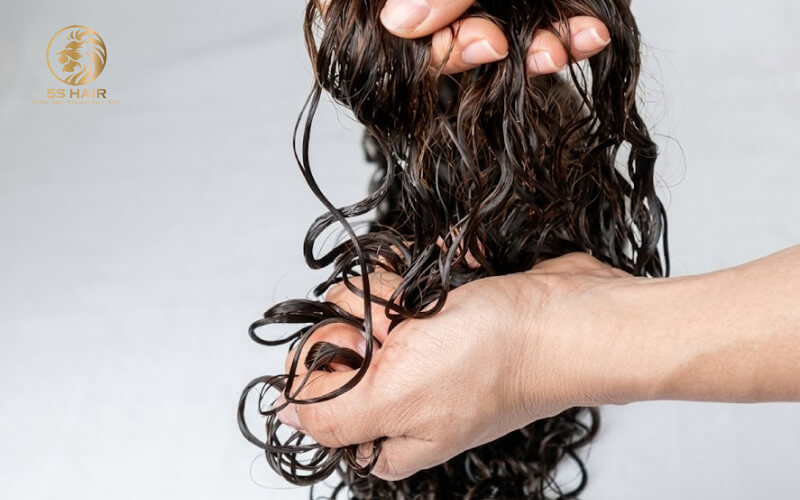
After removing the rods, rinse again and apply a protein-rich conditioner to restore the moisture that chemicals stripped away. Do not wash those extensions with shampoo for at least 48 hours. This process allows the chemical bonds to fully stabilize.
FAQs
1. What hair extensions can not be permed?
Not all extensions are created equal, and some will literally disintegrate if they touch perming chemicals. Avoid perming the following:
- Synthetic hair: Made of nylon, acrylic, or polyester, these fibers are plastic. Perming solution will melt or frizz them instantly.
- Synthetic blends: Even a small percentage of synthetic fiber will ruin the look, as the human hair will curl while the plastic hair melts.
- Platinum or heavily bleached hair: If the hair has been lifted to a level 10 blonde, its internal structure is likely too weak to survive another chemical process.
- Extremely budget extensions: Low-quality hair is often coated in thick industrial silicone or has been “acid-washed,” making it too brittle for a perm.
2. What is the most natural looking perm?
If you want your extensions to look like they grew out of your head that way, the technique and rod size are everything:
- The multi-textured wrap: Instead of using one rod size, a stylist uses a mix of medium and large rods. This mimics natural hair, which rarely has a perfectly uniform curl pattern.
- The beach wave perm: Uses large, soft rollers to create “S” waves rather than tight ringlets. This is currently the most popular choice for extensions as it blends seamlessly with natural hair.
- The digital perm (hot perm): Hot perm usually done on natural hair, if performed on high-quality virgin extensions, it creates soft, bouncy curls that look like a fresh blowout once dry.
Final thoughts
Ultimately, perming hair extensions is a high-risk procedure that is only possible if you are working with 100% human hair, as synthetic fibers will melt or frizz instantly. For the safest and most seamless result, always have a professional perform the perm “off-head” to protect the attachment bonds and ensure the hair remains healthy and wearable.
Purchase the best Vietnamese virgin human hair at 5S Hair to get the best permed extensions quality!
