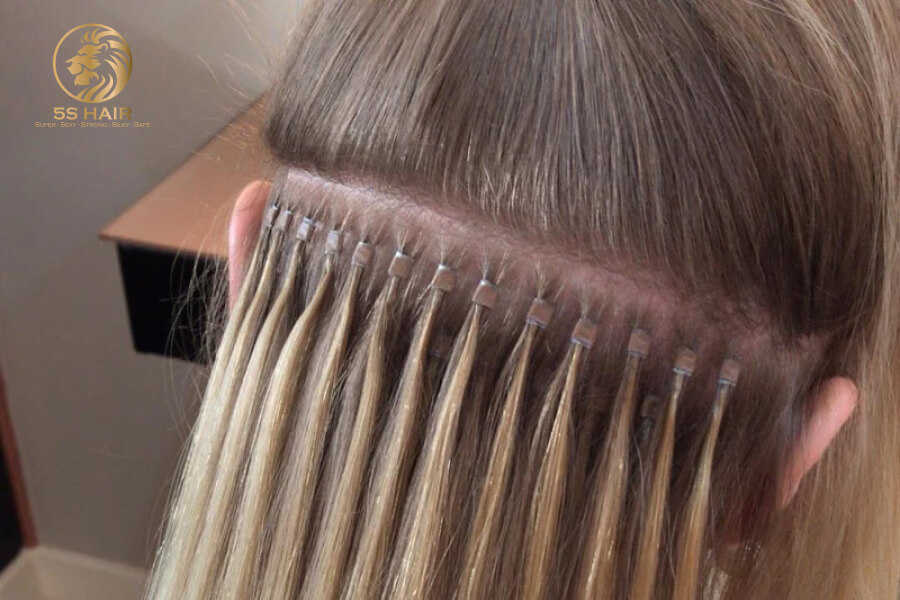
We understand that the initial excitement of a new install often meets a turning point at the 14-day mark. If you find your hair extensions itchy after 2 weeks, you are not alone! It is a clear signal that your scalp environment is shifting, the natural hair growth begins to create tension and product buildup settles in.
Below, we’ll dive into these common causes and provide actionable, professional solutions to restore your scalp’s comfort instantly.
Why your hair extensions are itchy after 2 weeks
Why does the irritation start exactly on day 14? The primary reason is that a gap from new hair growth causes bonds to pull on your scalp, while trapped oils and shed hairs trigger persistent irritation. There are 4 specific reasons in total:
The natural hair growth
In 2 weeks, your natural hair grows approximately 0.5cm. This small gap creates “leverage”. The extension bond, which was originally flush against the scalp, now hangs slightly.
This weight pull can cause traction irritation, where the hair follicle is constantly being tugged at a new angle, leading to an itchy inflammatory response.
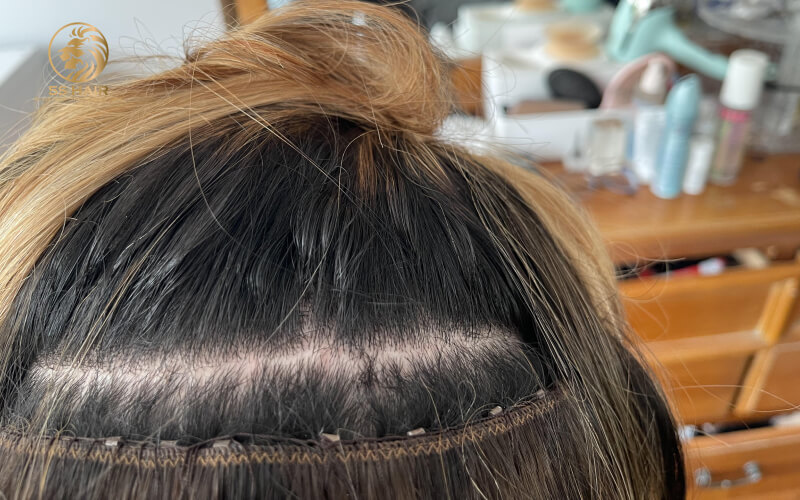
Trapped shedding and mechanical tickling
We naturally lose 50-100 hairs per day, according to the American Academy of Dermatologists. Normally, these fall onto your brush or the floor but with extensions, they stay trapped inside the bond or bead.
By day 14, roughly 700-1,400 shed hairs are sitting at the scalp level. The “bulbs” of these loose hairs can poke your scalp or start to mat. This will cause a persistent “mechanical tickle” that feels like a deep itch.
Biofilm and oil buildup
Many people are afraid to scrub near their bonds for fear of loosening them. This “fear-based washing” leads to a buildup of sweat, oils (sebum), and dead skin. This creates a Biofilm – a thin layer of bacteria that can cause mild fungal irritation or dandruff-like symptoms right at the attachment site.
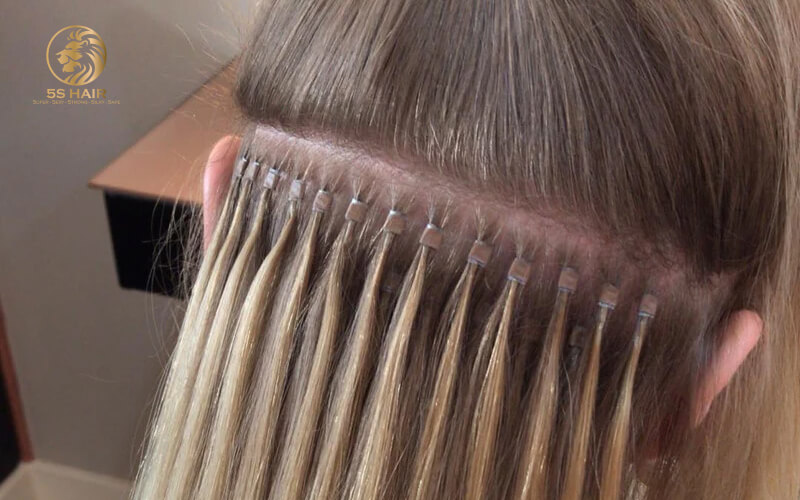
Product entrapment
If you haven’t rinsed your hair for twice as long as usual, shampoo and dry shampoo residues have now spent 14 days crystallizing around the bonds. These chemicals fry out the skin, causing the scalp to tighten and itch.
How to relieve the itch
To address the itch, you must treat both the mechanical pull and the biological environment of the scalp. There are 4 methods to relieve the itch for your hair extensions after 14 days.
The diluted ACV rinse (pH balancing)
The scalp has a natural pH of 4.5 – 5.5. Product buildup is often alkaline. Mix apple cider vinegar and filtered water with 1:4 ratio. Using a pointed nozzle bottle to apply this directly to the bonds.
Let it sit for 3 minutes and rinse thoroughly. This process breaks down the biofilm and restores the scalp’s acid mantle.
Expert tip for Bonds safety: Strict adherence to the 1:4 dilution ratio is non-negotiable; excessive acidity can cause premature degradation of keratin bonds or weaken the adhesive integrity of tape-in extensions. Direct application via a precision nozzle is required to minimize contact with the hair lengths, preventing cuticle dehydration.
Targeted antimicrobial smoothing
The “smoothing” component of the treatment is equally important for claiming the physical inflammation of the skin. Ingredients like Witch Hazel or Salicylic Acid (in low concentrations) works to chemically dissolve the crust of dry shampoo and skin cells which often forms around the beads or braids. These ingredients act as natural anti-inflammatories and mild antiseptics.
Additionally, serums containing Menthol or Peppermint Oil provide an immediate cooling sensation. This will “distract” the nerves from the tension of the extensions and offer instant relief while the antimicrobial agents work on the underlying cause.
Because you cannot easily reach the scalp with chemical exfoliants to smooth the skin surface and antimicrobial agents to neutralize the causes of irritation. Some products are recommended for you such as Philip Kingsley Flacky/ Itchy Scalp Toner, The Ordinary Glycolic Acid 7% Toning Macron or dpHUE Apple Cider Vinegar Scalp Scrub,…
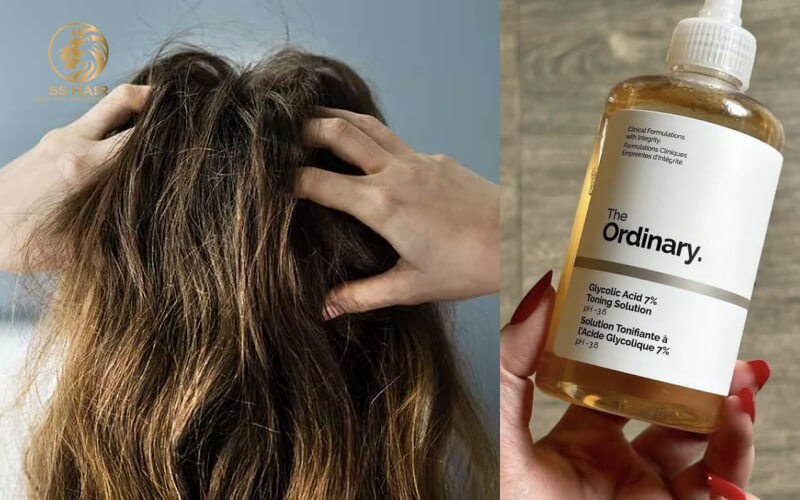
Expert tip: When utilizing Salicylic Acid (BHA), limit concentrations to 2% or less. BHA is lipid-soluble, allowing it to penetrate the sebaceous environment around the bonds more effectively than water-soluble AHAs.
The cold blast technique
The cold blast technique utilizes the rapid application of cold air to constrict blood vessels and calm the “over-firing” nerves. It has been under constant tension from the weight of the extensions.
By lowering the temperature of the scalp, you effectively numb the itching sensation and reduce the localized heat that often accompanies bacterial or fungal growth. Beyond that, this method serves a critical mechanical purpose in maintaining a healthy scalp environment.
By the 14 days mark, moisture from sweat or improper drying after a shower can become trapped against the skin. This also creates a damp,. stagnant environment where microorganisms thrive. The cold blast forces this trapped humidity out, effectively “starving” the fungi and bacteria of the moisture they need to multiply, which stops the itching at its sources.
To perform this technique correctly, use your hairdryer on the “Cool” setting and aim it directly at the itchy areas for 30 to 60 seconds. Especially after physical activity or immediately after a shower, this action should be done.
For the most effective consequence, we recommend applying a liquid, antimicrobial scalp toner first, leaving ingredients active in place.
Strategic brushing with a loop brush
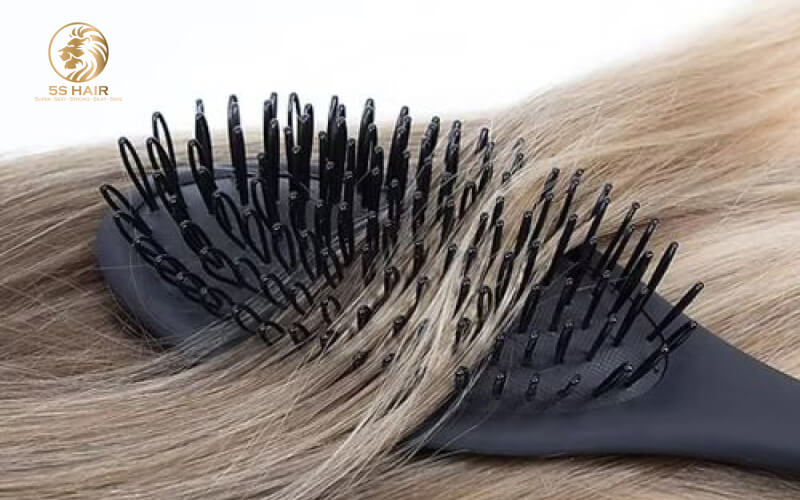
Use a professional extension loop brush to gently stimulate the scalp between the bonds. This helps “re-align” the shed hairs that are poking the scalp and increases blood flow to help the skin heal from tension.
Caution: Limit scalp stimulation to 30-second intervals per quadrant. Excessive mechanical friction can lead to “reactive hyperaemia,” which potentially exacerbating the sensation of heat and throbbing in a sensitized scalp.
FAQs
1. How to prevent itchy hair extensions?
There are 3 main ways to prevent itchy hair extensions:
- Clarify regularly: use a sulfate-free clarifying shampoo every third wash to ensure no reindue stays trapped in the bonds.
- the double rinse rule: always rinse your hair for 5 minutes longer than you did before you had hair extensions.
- Dry the “roots” thoroughly: never let the attachment points stay damp. Fungal growth thrives in the dark, moist environment behind a thick weft or bond. Use a blow-dryer on the roots immediately after washing.
2. How long does it take for hair extensions to settle?
Typically, the “settling” period is from 3 to 7 days. During this time, your scalp adjusts to the weight. However, the 14 days milestone is a secondary “adjustment phrase” where the hair has grown enough to shift the weight. If itching persists beyond week 3 after following a deep-cleaning routine, the extensions may be applied too tight or too close to the hairline.
Final thoughts
Itching after 2 weeks is essentially a signal from your scalp that needs a bit more care and ventilation. By adopting these professional strategies like smoothing cold blast methods and targeted antimicrobial care, you can relieve the itch simply. Once you integrate these easy scalp-health habits into your hair routine, your extensions will feel just as seamless and comfortable as your own hair. Follow 5S Hair for hair care on our Blog right here!
