
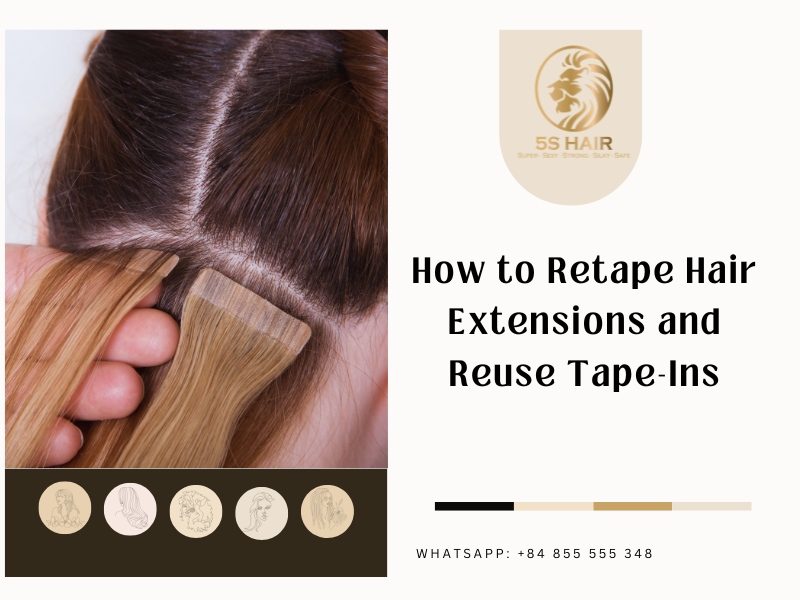
Tape-in extensions can be reused. However, the main challenges in retaping tape-ins include safely removing the extensions without pulling or breaking them and ensuring the new tape bonds properly. Here’s how to retape hair extensions, step by step.
What Does Retaping Hair Extensions Mean?
Thinning or lifeless hair remains a common unmet concern for many women, prompting increased interest in methods like hair care products, styling techniques, and high-quality tape-in extensions to instantly enhance volume, thickness, and shine.
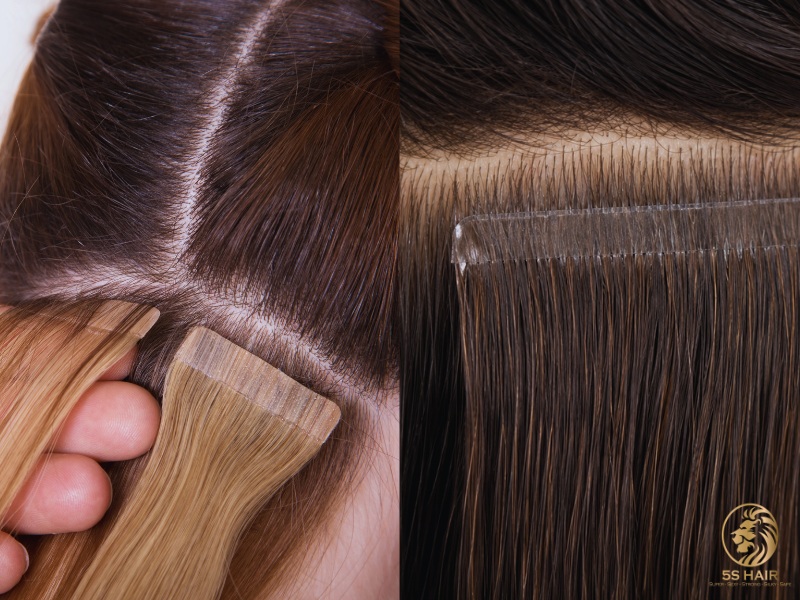
Retaping is a routine part of maintaining tape-in extensions, allowing you to reuse the same hair multiple times. As your natural hair grows, tape-in extensions gradually move farther away from the scalp. To keep them looking natural and secure, you’ll need to remove, clean, and reapply the extensions closer to the roots.
The term “retaping” specifically refers to preparing the extension wefts with new adhesive so they can be reinstalled. This approach is cost-effective because a good set of human hair extensions can last several months with proper care.
How many times you can retape extensions largely depends on the quality of the hair and how well they have been maintained. For example, Standard Remy hair extensions are usually good for 3 to 4 reapplications; premium Invisible Tape extensions can even be repositioned 3 to 6 times.
How much does it cost to retape hair extensions?
When it’s time to retape or move up my hair extensions, I usually budget $120 to $250 for a salon visit. I’ve seen some places charge as much as $450. The cost largely depends on the salon’s location, the stylist’s expertise, and the amount of hair being maintained.
Schedule these move-up appointments every 6 to 8 weeks, as your natural hair grows, helping keep the extensions secure and properly blended.
What You Need Before Retaping Hair Extensions
There are a few things you’ll always want on hand to keep your tape-in extensions looking fresh – like quality replacement tape and a clean setup. And if you wonder how to retape hair extensions correctly, here’s what you’ll need:
Removal and Cleaning Supplies:
| Item |
Purpose |
| Hair extension clips | Sectioning hair |
| Adhesive remover | Breaks down tape bonds |
| Tail comb | Lifting and separating bonds |
| Fine-tooth comb | Removing residue |
| Clarifying shampoo | Deep cleaning of wefts |
| Clean towel | Drying hair extensions |
| Replacement tape tabs | Retaping wefts |
How to Retape Hair Extensions and Reuse Tape-Ins Without Damage
Make sure everything is organized before starting retaping. You’ll need a clean workspace surface. If you lay out your tools and extensions ahead of time, you’ll save yourself from a lot of tangling and confusion.
Now, check how to retape hair extensions the right way:
Step 1: Remove Tape-In Extensions
- Start by dividing your hair into clean sections with clips. Work methodically from the lowest layers at the back of your head, gradually moving upward to ensure each tape bond is safely accessed.
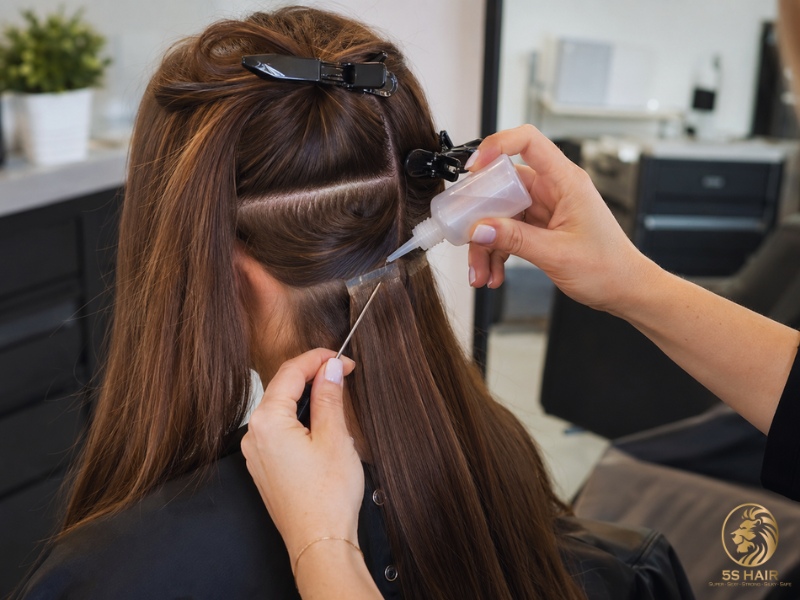
- Next, apply a generous amount of adhesive remover directly onto each tape bond. Allow it to fully soak in so the adhesive begins to loosen.
- Once the remover has had time to work, gently use the tail of a comb to ease the tape bonds apart. Do not force or pull them. If you encounter resistance, add more remover and wait a little longer, then gently massage the area to help break down the adhesive.
Step 2: Remove Old Tape and Sticky Residue
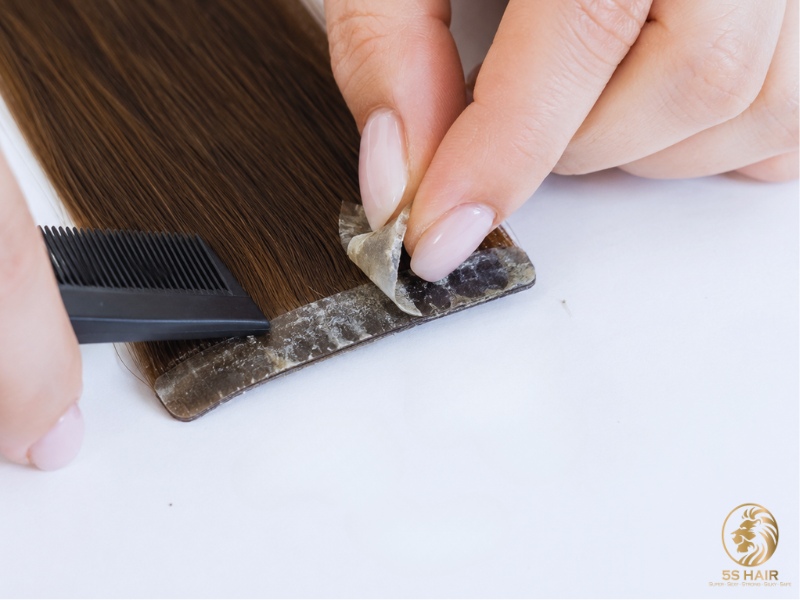
- After the weft is detached, focus on removing leftover adhesive. On the extension wefts, carefully peel or lightly scrape off any remaining glue with your fingers or the edge of a comb.
- For your natural hair, apply adhesive remover again as needed and use a fine-tooth comb to gently work out any sticky residue until the hair is clean.
The entire process should be done slowly, gently, and carefully, without pulling, to avoid damage.
Step 3: Wash and Prepare Extensions for New Tape
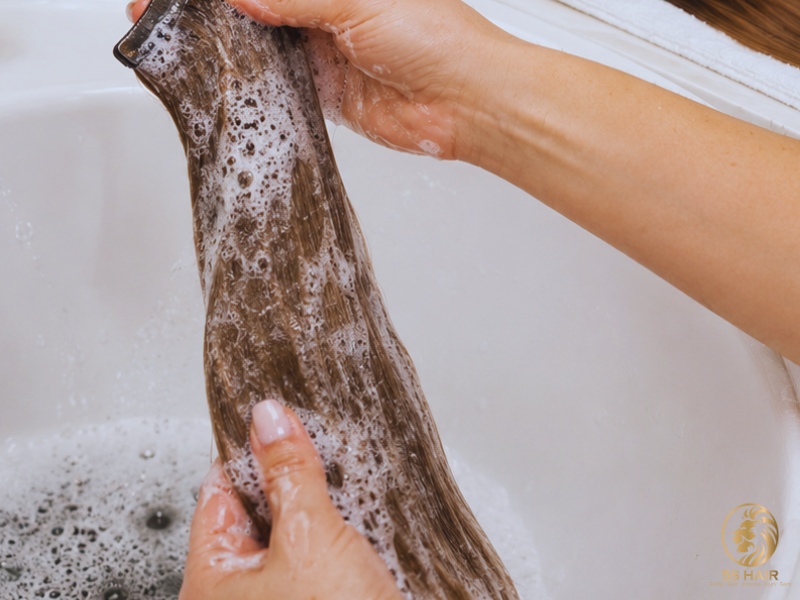
- Thoroughly wash the wefts with a clarifying shampoo. This is the step that removes any remaining adhesive residue, product buildup, oils, dirt, and sweat accumulation. It also helps eliminate traces of adhesive remover, which can leave an oily film that may cause new tape to slip.
- Once washed, dry the extensions completely. The wefts must be 100% dry before retapping. Use a blow-dryer to remove any moisture trapped in the base of the weft, then allow the extensions to dry fully. If there’s even a little bit of moisture left, the new tape just won’t stick the way it should.
Step 4: Apply New Tape Tabs
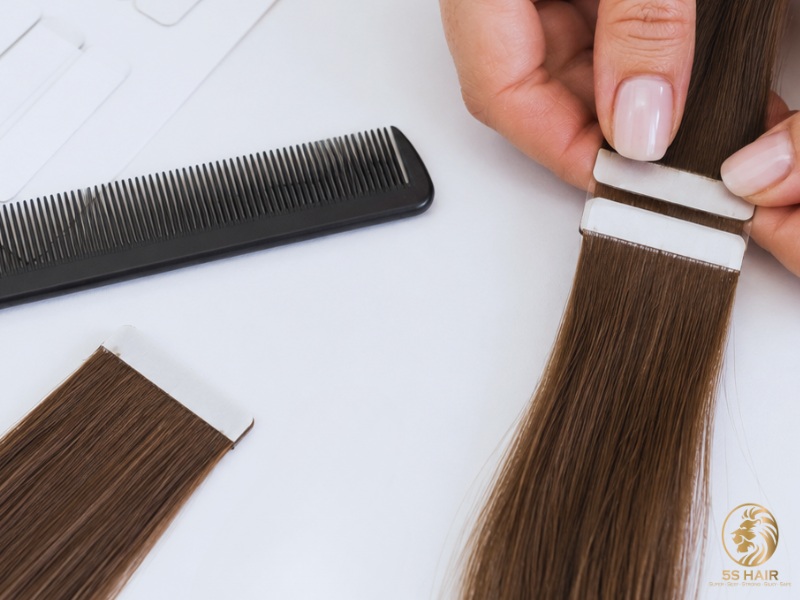
- How to retape hair extensions properly: Lace each clean, dry weft flat on the table before starting to retape. Take a pre-cut replacement tape tab and peel away one side of the backing. Position the tape on top of the weft, ensuring it is applied to the same side as the previous tape and aligned correctly. Press the tape firmly onto the base of the weft to secure it in place, then repeat the process for all wefts.
- Always check the edges and trim the tape if necessary to ensure there is no adhesive overhang. Exposed tape can stick to surrounding hair, causing tangling or knotting when the extensions are reinstalled.
- When you are ready to reinstall the extensions, remove the second backing paper from the tape. Place the retaped weft against a clean section of natural hair, then position the second weft on top to sandwich the natural hair between the two pieces. Press the tapes together firmly.
- To help secure the bond, press each tape lightly with your fingers. Finally, brush the extensions and natural hair separately, then brush them together after installation to create a smooth, seamless blend.
When taking out tape-ins, it’s strongly recommended to map each weft as you go by placing it on a foam board or labeled organizer in the exact order they were removed. It might take a few extra minutes to keep everything in order while you’re taking them out, but it makes reinstalling them so much faster and easier.
Read more: How do You Brush Your Hair with Extensions in 5 easy steps?
How to Keep Retaped Hair Extensions Looking Their Best
Tape-in extensions can often be reused as long as the hair is still in good condition. If the hair remains soft, manageable, and full, and the wefts are still intact, they can usually be retaped and worn again. Some shedding trapped in the tape is normal because natural hair sheds every day. However, if the hair has become dry, tangled, thin, or shed excessively, it is time to replace the extensions.
To keep your extensions looking as natural as possible and to avoid unnecessary tension on your natural hair, tape-in extensions should be removed, retaped, and repositioned every 4 to 8 weeks. Once the hair quality has deteriorated to the point that it no longer supports another retaping cycle, get a new set of extensions.
Some level of shedding is completely normal. This happens because everyone naturally loses hair every day as part of the hair growth cycle. When you wear tape-in extensions for a while, some of these naturally shed hairs can become trapped inside the taped sections or “sandwich.”
That’s not the same thing as hair breakage or damage, though. Most of the time, it’s just your regular shed hair hanging out until you take the extensions out.
Conclusion
If you’ve tried this method – how to retape hair extensions the right way – we’d love to hear what worked for you, what didn’t, and any tips you learned along the way. And if you took any before-and-after photos of your extensions, share them with others!
Frequently Asked Questions about Tape-in Hair Extensions
There are a few common questions that come up when it comes to retaping and reusing tape-in hair extensions.
How to retape hair extensions at home?
You can retape hair extensions at home by following the same basic steps salon professionals use. If you are not comfortable working on the back of your head, it is safer to clean and prepare the wefts yourself and have a stylist reinstall them.
How many times can you retape tape-in hair extensions?
Tape-in hair extensions usually need to be removed, retaped, and moved up every 6 to 8 weeks. The number of times you can reuse them depends on how well you care for the hair. With proper maintenance, many quality tape-in extensions can even be retaped and reused up to 5 or 6 times before needing replacement.
Why won’t the new tape stick to my hair extensions?
New tape usually will not stick because of oil, residue, product buildup, or moisture on the extensions or natural hair. Everything must be completely clean and fully dry before reinstallation.
How do I know when my tape-in extensions are too damaged to reuse?
If the hair stays dry, frizzy, coarse, and brittle; tangles badly; sheds excessively; or no longer blends well, it is time to replace it. If deep conditioning no longer improves the hair, the extensions have likely reached the end of their usable life.
